
Chronic hip tightness, whether from prolonged sitting or athletic activity, can significantly impact mobility and comfort. Foam rolling the hip flexors particularly the psoas and rectus femoris serves as an effective myofascial release technique to alleviate tension and restore optimal range of motion.
Chronic hip tightness has become a modern epidemic. Whether it stems from prolonged sitting at a desk, the demands of intense athletic activity, or a combination of both, restricted hip flexors can significantly impact your mobility, comfort, and overall quality of life. The hip flexors – a group of muscles including the psoas and rectus femoris – are essential for almost every movement, from walking and running to simply standing up straight.
When these muscles become tight and develop adhesions (often called “knots”), they can pull on your pelvis, leading to lower back pain and poor posture. This muscular tension doesn’t exist in a vacuum; it often contributes to a chain reaction of issues. For example, tight hips can alter your gait and contribute to conditions like shin splints, which is why learning proper stretches for shin splints is crucial for runners. The constant pull can also limit blood flow and nerve function, sometimes manifesting as discomfort elsewhere, such as tension in the neck and shoulders – areas we target with specific neck workouts to relieve that built-up stress.
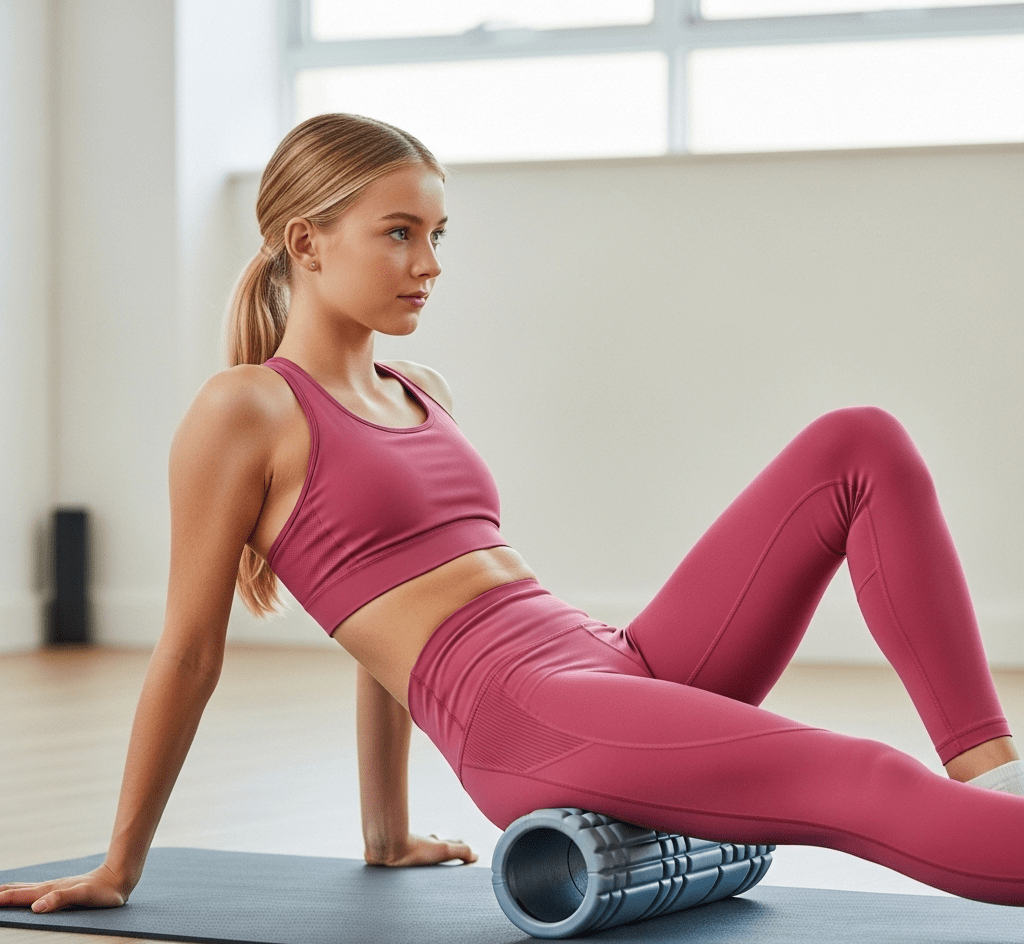
✔ Melts Away Stiffness – Releases knots and adhesions for smoother movement.
✔ Restores Full Motion – Say goodbye to that “stuck” feeling when standing up.
✔ Speeds Up Recovery – Flushes out soreness for faster post-workout bounce-back.
✔ Corrects Posture – Loosens hips to ease lower back strain and stand taller.
✔ Chills You Out – Rolling = instant stress relief (it’s like yoga for your muscles).
✔ Prevents Injuries – By releasing chronic tension and improving tissue quality, it helps keep muscles supple and resilient, reducing the risk of strains and pulls during activity.
✔ Enhances Mind-Muscle Connection – The focused pressure improves proprioception, helping you better sense and control your hip muscles during exercises like squats and lunges.
✔ Improves Circulation – The mechanical pressure helps flush out metabolic waste and delivers fresh, oxygenated blood to tight areas, promoting overall tissue health.
Foam rolling applies gentle, sustained pressure to the muscle tissue, fascia (the connective tissue surrounding muscles), and trigger points. This pressure is thought to have several beneficial effects:
Inhibits Overactive Muscles: The pressure can signal the nervous system to reduce muscle tone, effectively “relaxing” a tight, overactive hip flexor.
Breaks Up Adhesions: It helps separate layers of fascia and muscle tissue that may have become “stuck” together, restoring normal gliding and function.
Increases Blood Flow: The pressure and release action flushes the area with fresh, oxygenated blood, which aids in recovery and reduces soreness.
Stimulates Mechanoreceptors: This can improve proprioception—your brain’s awareness of your body’s position in space—leading to better movement control.
✔ Grab Your Roller: Use a medium-firm foam roller (softer for beginners).
✔ Get in Position: Lie face-down, propped on your forearms (think sphinx pose).
✔ Place the roller just below your hip bone (where thigh meets pelvis).
✔ Slow & Steady Wins: Glide from thigh to hip bone in tiny pulses.
✔ Pause on Tight Spots: Hold for 5 secs and breathe tension will melt.
✔ Switch Sides: 30–60 secs per side (no rushing!).
✔ Newbie? Stay on elbows to lighten pressure.
✔ Veteran? Lift one leg to intensify the release (brace for the “ohhh yeah” burn).
Consistency is more important than intensity when it comes to myofascial release. Treat foam rolling like ironing out wrinkles—the more consistent you are, the smoother your movement becomes.
Post-Workout: This is an ideal time to roll, as your muscles are warm and more pliable. It aids in recovery and reduces next-day soreness.
As Part of a Cool-Down: Integrate it with static stretches like the kneeling hip flexor stretch for maximum effect.
During Active Recovery: On rest days, a gentle foam rolling session can improve blood flow and maintain mobility.
Even During Downtime: Sneak it into your routine while watching TV—”Netflix & Roll,” anyone?
Foam rolling is a powerful tool, but it works best as part of a comprehensive mobility routine. After rolling, consider performing these stretches:
Kneeling Hip Flexor Stretch: From a half-kneeling position, gently squeeze your glutes and push your hips forward until you feel a stretch in the front of the hip of your back leg.
Pigeon Pose: A deep stretch for the external rotators and glutes, which also helps balance the hips.
90/90 Stretch: Excellent for improving overall hip rotation and mobility.
Target Area | Difficulty | Pro Tip |
Hip flexors (psoas, rectus femoris) | Beginner → Advanced | “Less is more”—gentle pressure works best! |
🚫Skip If: You have acute hip injuries, hernias, or severe back issues.
⚠️ Don’t roll too fast: slow, controlled movements melt tension, not speed! 🐢🔥
⚠️ Skipping the breath? Breathe deep to loosen tight hips no breath = no release! 🌬️😤
⚠️ Rolling just the quads? Target the real hip flexor (near the pelvis) for true relief! 🎯🦵
⚠️ Too much pressure? Ease in brutal force = bruises, not results! 🛑💢
⚠️ Rolling at the Wrong Angle? Keep your body square and the roller perpendicular to the muscle – twisting or angling it wrong can bypass the flexor and irritate surrounding tissues! 📐🚫
⚠️ Ignoring the “Psoas” Pop? If you feel a deep “pop” or click, don’t panic – but do slow down. That’s your psoas releasing, not something to rush through! 🎯👂
⚠️ Expecting Instant Miracles? One session won’t undo years of tightness. Consistency beats intensity – think marathon, not sprint, for lasting hip freedom! 🏃♂️📆
Yes, it can be a valuable part of your routine. Tight hip flexors can contribute to pelvic imbalances that affect your gait. Foam rolling helps release this tension, which can complement the targeted Trendelenburg gait exercises found in our complete guide. Releasing the front of the hip allows the stabilizing muscles to work more effectively.
While foam rolling targets the muscles, knee health is closely linked to hip and thigh flexibility. Tight hip flexors, like the rectus femoris, can pull on the knee and limit its movement. Incorporating this release can support exercises that focus on terminal knee extension by ensuring the muscles above the joint are loose and functioning properly.
Absolutely. Foam rolling is excellent for myofascial release, but for comprehensive hip health, it should be paired with strengthening and stretching. We recommend combining it with a full routine of hips exercises to build stability in the glutes and core, which work in tandem with the hip flexors for pain-free movement.
Definitely. The hip flexors and inner thighs (adductors) work as a team. Tension in one area often affects the other. While foam rolling the hip flexor, you might also benefit from stretches that target the inner thighs. For a great complementary movement, check out our guide on how to get rid of inner thigh fat, which features the Butterfly Stretch to open the adductors and hips.
Great question! After releasing the hip flexors, it’s crucial to strengthen the surrounding muscles, particularly the glutes, for joint stability. Compound movements like lunges workout are fantastic for this. They challenge your balance and build strength in the glutes and quads, which helps maintain the flexibility you’ve just gained and supports proper alignment.
Treat foam rolling like ironing out wrinkles the more consistent you are, the smoother your movement becomes. Sneak it into your post-workout cool-down or even during your favorite show (Netflix & Roll, anyone?).