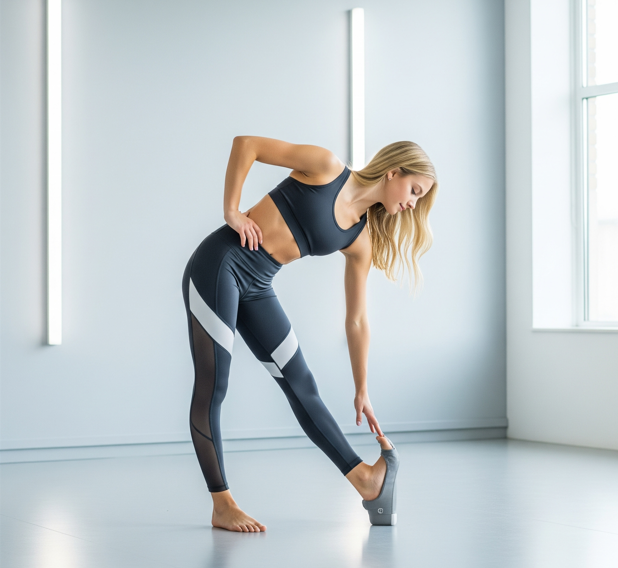
Struggling with stiff calves after long runs or hours on your feet? The gastroc stretch targets your gastrocnemius, the powerhouse muscle of your calf, to improve flexibility, ease tension, and keep you moving smoothly.
✅ Relieves Tightness: Ideal for runners, desk workers, or anyone who spends their day on their feet.
✅ Boosts Ankle Flexibility: Helps with squats, jumps, and everyday movement.
✅ Reduces Injury Risk: Loosens calves to prevent strains and Achilles pain.
✅ Enhances Post–Workout Recovery: Stretch away soreness faster.
✅ Improves Posture: Tight calves can pull on your feet and back keep them happy!

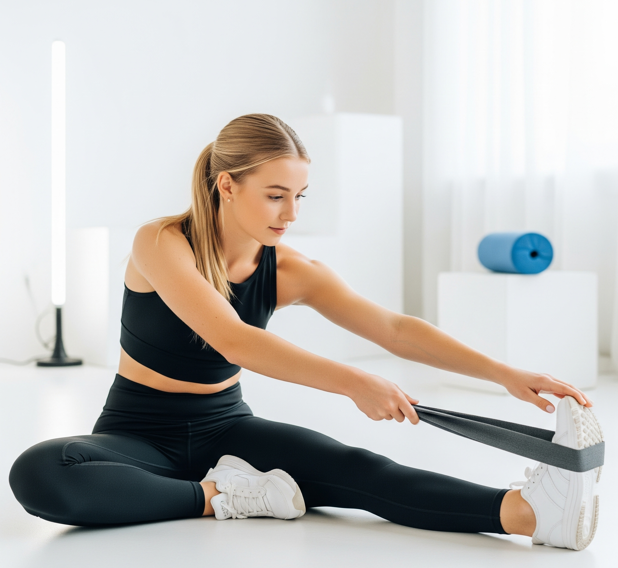
Perfect for office workers or post-workout cool-downs! Sit with one leg straight, loop a towel or band around your foot, and gently pull toes toward you while keeping the knee locked. This isolates the calf without needing to stand.
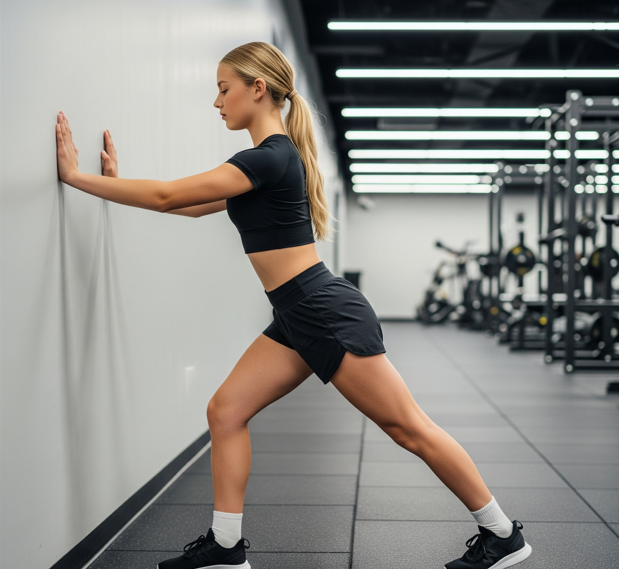
Ideal for quick relief anytime, anywhere! Face a wall, step one foot back, press the heel down, and lean forward. A classic stretch that targets tight gastrocnemius muscles after running or long periods on your feet.
Muscles Worked | Difficulty Level |
Gastrocnemius, Soleus | Beginner to Advanced |
🛡️ Warm up first – Walk for 2-3 minutes or do ankle circles
🛡️ Progress gradually – Increase stretch depth over weeks, not minutes
🛡️ Use support – Hold a wall/chair for balance if needed
🛡️ Check alignment – Keep hips squared forward
🛡️ Hydrate well – Proper hydration improves muscle elasticity
❌ Avoid These Mistakes
❌ Bouncing – Causes microtears instead of gradual lengthening
❌ Arching back – Reduces stretch effectiveness (engage core!)
❌ Turning feet out – Must keep toes pointing straight ahead
❌ Lifting heels – Back foot must stay completely flat
❌ Rushing holds – Need 30+ seconds for collagen remodeling
Why It’s Essential:
Running places enormous demand on the calves with every stride
The gastrocnemius works eccentrically to control ankle motion
Tight calves are a leading cause of plantar fasciitis and Achilles tendinopathy
Without stretching, calves adaptively shorten over miles of training
How It Helps:
Maintains proper ankle range for efficient running form
Reduces risk of calf strains and pulls
Improves shock absorption through flexible calves
Essential preparation for speed work and hills
Why It’s Essential:
Wearing heels keeps the calves in a shortened position for hours
This creates adaptive shortening over time
When you switch to flat shoes, tight calves cause discomfort
Chronic tightness can lead to plantar fasciitis and Achilles issues
How It Helps:
Counteracts the shortening effect of heels
Eases the transition between heel heights
Prevents the “morning sting” of plantar fasciitis
Restores natural ankle range of motion
Why It’s Essential:
Sitting with feet flat shortens the calves
Hours of seated work create adaptive shortening
Tight calves affect your gait when you finally stand up
Can contribute to lower back pain through pelvic compensation
How It Helps:
Releases tension accumulated during sitting
Improves standing posture and walking mechanics
Prevents the “tight calf” feeling at the end of the day
Complements the cat cow stretch for complete spinal and lower body release
Why It’s Essential:
Squats and deadlifts require adequate ankle dorsiflexion
Tight calves limit squat depth and proper form
Calf raises without stretching create muscle boundness
Many lifters neglect calf flexibility entirely
How It Helps:
Improves squat depth through better ankle mobility
Enhances stability in double leg calf raise exercises
Reduces compensation patterns that stress knees and hips
Balances strengthening with flexibility
Why It’s Essential:
Basketball, volleyball, and jumping events stress the calves
The gastrocnemius stores and releases energy during jumps
Tight calves reduce explosive power
Landing impact is poorly absorbed by stiff calves
How It Helps:
Improves jump height through better elastic recoil
Enhances landing mechanics and shock absorption
Reduces risk of Achilles injuries
Maintains the spring in your step
Why It’s Essential:
Calf flexibility naturally decreases with age
Tight calves contribute to balance issues and fall risk
Ankle mobility is essential for stair climbing and walking
Plantar fasciitis becomes more common with age
How It Helps:
Maintains ankle range for safe walking
Reduces fall risk through better balance
Preserves independence for daily activities
Gentle enough with chair support
Why It’s Essential:
Tight calves are the #1 contributor to plantar fasciitis
The gastroc connects to the Achilles, which connects to the plantar fascia
Stretching the calf directly reduces tension on the heel
Often provides more relief than stretching the foot itself
How It Helps:
Reduces strain on the plantar fascia
Alleviates morning heel pain
Addresses the root cause, not just symptoms
Essential for long-term recovery
Upon Waking:
Standing Gastroc Stretch: Stand facing a wall, place hands on wall at shoulder height. Step right foot back, keeping it straight with heel firmly planted. Bend left knee, shifting weight forward. Hold for 30 seconds. Switch legs. Feel the stretch in your upper calf.
Downward Dog Variation: From standing, fold forward and walk hands out into Downward Dog. Pedal your feet by bending one knee and then the other, stretching each calf alternately. Do this for 60 seconds.
Seated Gastroc Stretch: Sit on the floor with legs extended. Loop a towel around your right foot and gently pull toes toward you while keeping knee straight. Hold for 30 seconds. Switch sides.
Why Morning Matters: Your calves tighten overnight, especially if you sleep with pointed feet. Morning stretching prevents the “first steps of the day” pain that plagues many people.
Mid-Morning (10-11am):
Standing Desk Calf Stretch: Stand up, place hands on desk, step one foot back with heel down. Hold for 20 seconds. Switch. Do 2 rounds per side.
Seated Towel Stretch: Keep a towel at your desk. While seated, loop it around your foot and gently pull toes toward you. Hold for 20 seconds per side.
After Lunch (1-2pm):
Stair Stretch: Find a step or low platform. Place the ball of your foot on the edge, letting heel drop down. Hold for 20 seconds per side. This is the most effective calf stretch for deep release.
Walking Break: Take 2 minutes to walk, focusing on landing softly and letting your heels touch down fully.
Late Afternoon (3-4pm):
Wall Stretch: 30 seconds per side against a wall. Focus on keeping the back leg straight and heel down.
Ankle Circles: 30 seconds in each direction to maintain mobility.
Before Workout (Dynamic Warm-Up):
Walking Lunges: 10 per leg, focusing on letting the back heel stretch down
Ankle Circles: 30 seconds each direction
Light Jogging: 1-2 minutes to warm calf tissues
Downward Dog Pedaling: 30 seconds of alternating heel drops
Why Before: Dynamic calf preparation improves ankle mobility for squats, lunges, and running, while reducing injury risk during double leg calf raise exercises.
After Workout (Static Stretch):
Standing Gastroc Stretch: Hold each side for 45-60 seconds
Stair Stretch: 45 seconds per side for deeper release
Seated Towel Stretch: 45 seconds per side
Downward Dog: 60 seconds of gentle calf stretching
Why After: Your calves are warm and primed for lengthening post-workout. This is when you’ll make lasting flexibility gains.
After Dinner:
Reclined Calf Stretch: Lie on your back near a wall. Place your right foot on the wall, heel down, toes pointing up. Gently straighten your leg to feel the calf stretch. Hold for 60 seconds. Switch sides.
Seated Forward Fold with Strap: Sit with legs extended, loop a strap around your feet, and gently fold forward. Hold for 60 seconds.
Before Bed:
Gentle Gastroc Stretch: 30 seconds per side, focusing on relaxation rather than intensity
Foot Circles: 30 seconds each direction to release the ankles
Child’s Pose: 60 seconds to integrate the lower body release with upper body relaxation, complementing any upper body work like thread the needle stretch
| Stretch/Exercise | How Gastroc Stretch Complements It |
|---|---|
| Calf Stretches | The foundation of lower leg health use daily |
| Double Leg Calf Raise | Balances strengthening with flexibility |
| Cat Cow Stretch | Connects spinal mobility with lower body release |
| Thread the Needle Stretch | Complements upper back work with lower body care |
| Squats | Improves ankle mobility for better depth |
| Running | Maintains stride length and reduces injury risk |
A: For general maintenance, 3-5 times weekly is sufficient. If you’re a runner, wear heels, or have plantar fasciitis, daily stretching produces the best results. Even 2-3 minutes daily makes a significant difference.
A: The gastroc stretch requires a straight knee because this muscle crosses the knee joint. The soleus stretch uses a bent knee because the soleus doesn’t cross the knee. Both are essential for complete calf flexibility.
A: Absolutely! Tight calves pull on the Achilles tendon, which pulls on the plantar fascia. This tension is the primary cause of plantar fasciitis for many people. Regular gastroc stretching often resolves heel pain more effectively than stretching the foot itself.
A: For general flexibility, 20-30 seconds per side is sufficient. For deeper release and addressing chronic tightness, work up to 45-60 seconds. For plantar fasciitis, longer holds (60-90 seconds) are most effective.
A: Some sensation in the upper Achilles is normal, but the primary stretch should be in the belly of the calf muscle. If you feel sharp pain in the tendon, ease off and check your form.
Stand on a curb or step, lower one heel until you feel a stretch, then pulse lightly (1-inch movements) for 10 reps. Doubles as a strength-flexibility combo! 🦶💥