
Nordic Quad Stretch
Nordic Quad & Reverse Nordic Curls: The Athlete's Secret Weapon
Unlock superhero level leg mobility! The reverse Nordic stretch and Nordic quad exercises are game-changers for athletes, dancers, and fitness enthusiasts seeking next-level flexibility.
The reverse nordic cursl intensely stretches your quadriceps, hip flexors, and knee joints, while the nordic quad variation strengthens these areas through eccentric control.
💪 Key Benefits of Chin Tuck Stretches
✅ Dramatically improves quad flexibility (essential for kicks, squats, and sprints)
✅ Strengthens knee joints through controlled eccentric movement
✅ Counters tight hip flexors from prolonged sitting
✅ Enhances athletic performance in sports requiring deep knee flexion
✅ Builds body awareness through challenging balance and contro
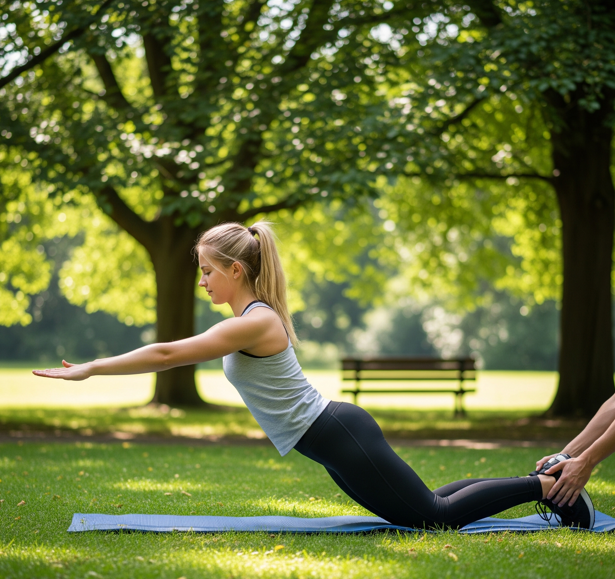
Nordic Quad Exercise
Nordic Quad Exercises
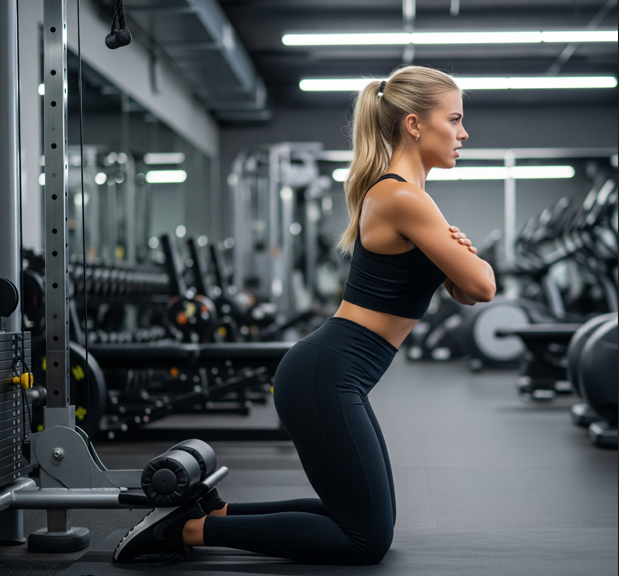
Reverse Nordic Stretch
The beginner-friendly quad opener! Kneel and gently lean back to stretch tight thigh muscles. Perfect for improving knee flexibility safely.
Full Reverse Nordic Stretch
The ultimate quad challenge! Control your backward lean using just muscle strength. Athletes use this to build explosive leg power.
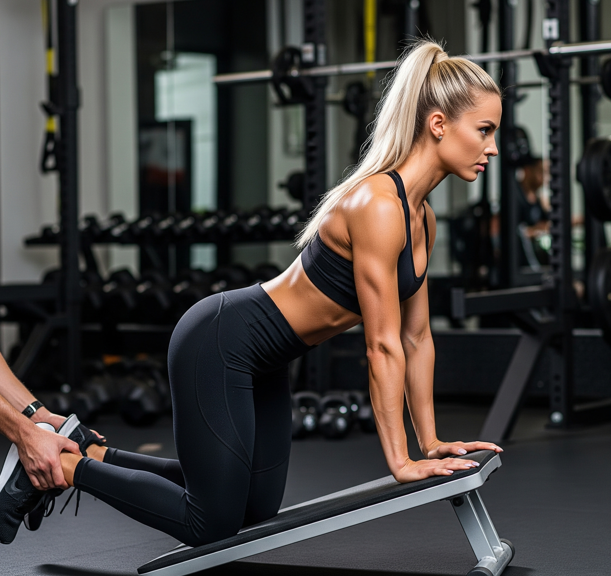
Nordic Quad Eccentric Training
Knee supercharger! Strengthens quads through slow lowering movements. Essential for injury prevention in runners and jumpers
How to Do Nordic Quad & Reverse Nordic Stretch📝
1️⃣ Reverse Nordic Stretch (Beginner-Friendly Version)
- Kneel on soft surface, knees hip-width apart
- Tuck toes under or keep tops of feet flat
- Slowly lean back, hands supporting your descent
- Stop when you feel moderate stretch in quads
- Hold 15-30 seconds, push through heels to return
2️⃣ Full Reverse Nordic Curl (Advanced)
- Start kneeling upright, arms crossed over chest
- Engage core and slowly lower torso backward
- Control descent until thighs and torso form straight line
- Use hamstrings/glutes to pull back up
- Too hard? Use bands for assistance
3️⃣ Nordic Quad Eccentric Training
- Anchor ankles under sturdy object or with partner
- Slowly lower body forward from knees
- Catch yourself with hands at challenging point
- Push back up to starting position
Modifications:
- Beginner: Place yoga block behind you for support
- Intermediate: Use resistance band around waist
- Advanced: Add weight plate on thighs
Quick Reference Table
Exercise | Primary Focus |
Reverse Nordic Stretch | Quad flexibility |
Reverse Nordic Curl | Eccentric strength |
Nordic Quad | Knee stabilization |
Safety Tricks 🛡️
✔ Warm up quads thoroughly first
✔ Progress range gradually (5° more each session)
✔ Use padding for knee comfort
❌ Avoid These Mistakes
✖ Force range beyond comfortable stretch
✖ Lock knees during movement
✖ Rush the eccentric phase
👥 Who Should Do Nordic Curls?
🏃 Runners and Sprinters
Why It’s Essential:
Sprinting puts enormous eccentric load on the hamstrings during the deceleration phase
Hamstring strains are the most common running injury
Nordic curls specifically target the eccentric strength that prevents pulls
How It Helps:
✅ Builds the exact type of strength needed to prevent hamstring tears
✅ Improves stride length and running economy
✅ Reduces injury risk during speed work and sprints
✅ Complements glute stretch and butterfly stretch for complete posterior chain health
🏋️ Weightlifters and Strength Athletes
Why It’s Essential:
Heavy squats and deadlifts rely on strong, resilient hamstrings
Imbalanced quad-to-hamstring strength leads to knee issues
Nordic curls build the “forgotten” eccentric strength
How It Helps:
✅ Balances quad and hamstring development
✅ Improves knee stability for heavy lifts
✅ Prevents lower back compensation in deadlifts
✅ Pairs well with lying quad stretch for balanced leg development
⚽ Field Sport Athletes (Soccer, Football, Rugby)
Why It’s Essential:
Cutting, pivoting, and deceleration demand eccentric hamstring strength
Hamstring strains are the #1 injury in field sports
Nordic curls are proven to reduce injury rates by up to 70% in studies
How It Helps:
✅ Dramatically reduces hamstring injury risk
✅ Improves change-of-direction ability
✅ Builds resilience for high-speed movements
✅ Complements sleeper shoulder stretch for full-body athletic preparation
🏀 Basketball and Tennis Players
Why It’s Essential:
Jumping and landing place enormous eccentric load on hamstrings
Quick changes of direction stress the posterior chain
Injury prevention is essential for season longevity
How It Helps:
✅ Improves landing mechanics through stronger eccentric control
✅ Reduces risk of hamstring strains during explosive movements
✅ Builds the strength needed for rapid direction changes
✅ Pairs with cross body stretch for balanced upper and lower body preparation
🧘 Yoga Practitioners
Why It’s Essential:
Many yoga poses require strong, flexible hamstrings
Forward folds and standing poses rely on hamstring function
Strength at end range is often neglected in yoga
How It Helps:
✅ Builds strength in the lengthened hamstring position
✅ Deepens forward folds through controlled eccentric strength
✅ Creates stability in standing poses
✅ Complements cat cow stretch for complete spinal and posterior chain mobility
🏔️ Hikers and Trail Runners
Why It’s Essential:
Descending steep terrain eccentrically loads the hamstrings
Fatigue on long descents increases injury risk
Nordic curls build the resilience needed for mountainous terrain
How It Helps:
✅ Prepares hamstrings for the demands of downhill movement
✅ Reduces soreness after long descents
✅ Builds endurance for technical terrain
✅ Pairs with lat stretches for full-body trail readiness
👴 Older Adults
Why It’s Essential:
Hamstring strength declines with age, increasing fall risk
Eccentric strength is crucial for controlled sitting and standing
Maintaining posterior chain function preserves independence
How It Helps:
✅ Preserves the ability to control descent when sitting
✅ Reduces fall risk through better lower body control
✅ Gentle enough to modify with assistance
✅Complements thread the needle stretch for gentle upper body mobility
📅 Daily Nordic Curl Routine
🟢 Week 1-2: Foundation Building
2-3 Sessions Per Week
Session Structure:
Warm-Up: 5 minutes of dynamic movement (leg swings, cat cow stretch, light jogging)
Nordic Curls: 3 sets of 3-5 reps, partial range only
Focus: Perfecting the descent, maintaining body alignment, building awareness
Rest: 60-90 seconds between sets
Cool-Down: 5 minutes of gentle stretching including butterfly stretch and glute stretch
Progression Goal: Complete 3 sets of 5 controlled partial reps without form breakdown
🟡 Week 3-4: Building Range
2-3 Sessions Per Week
Session Structure:
Warm-Up: Dynamic movement plus cat cow stretch for spinal mobility
Nordic Curls: 3 sets of 4-6 reps, increasing depth gradually
Focus: Controlling deeper descent, resisting longer, maintaining hip extension
Rest: 60-90 seconds between sets
Cool-Down: Lying quad stretch and thread the needle stretch for full-body recovery
Progression Goal: Complete 3 sets of 5 controlled reps at 60-70% of full range
🔴 Week 5-6: Strength Building
2-3 Sessions Per Week
Session Structure:
Warm-Up: Full dynamic warm-up including lat stretches for upper body preparation
Nordic Curls: 3 sets of 6-8 reps, full range with control
Focus: Slow, controlled descents (4-5 seconds), clean resets without hand assist when possible
Rest: 90 seconds between sets
Cool-Down: Sleeper shoulder stretch and cross body stretch for complete upper body mobility
Progression Goal: Complete 3 sets of 6 full-range controlled reps
🏆 Week 7+: Advanced Practice
1-2 Sessions Per Week for Maintenance
Session Structure:
Warm-Up: Full dynamic warm-up
Nordic Curls: 2-3 sets of 5-8 reps, adding pauses or slow tempos
Advanced Variations: Tempo reps (5-second descent), weighted (holding a plate), or single-leg variations
Cool-Down: Full body stretching including butterfly stretch, glute stretch, and cat cow stretch
🔄 Sample Weekly Schedule
Monday (Lower Body/Strength)
Warm-up: 5 minutes dynamic movement
Nordic Curls: 3 sets of 5-8 reps
Cool-down: Lying quad stretch, glute stretch, lat stretches
Wednesday (Full Body)
Warm-up: Cat cow stretch + light movement
Nordic Curls: 3 sets of 5-8 reps
Cool-down: Thread the needle stretch, butterfly stretch
Friday (Post-Workout)
After main workout
Nordic Curls: 2-3 sets of 5-8 reps
Cool-down: Sleeper shoulder stretch, cross body stretch, full body stretching
FAQ's
Q1: How often should I do Nordic curls?
A: For injury prevention, 2-3 sessions per week is ideal. For performance, 1-2 sessions per week during season. The eccentric nature of the exercise creates significant muscle damage adequate recovery is essential.
Q2: Why are Nordic curls so hard?
A: They’re hard because they build eccentric strength the exact type of strength needed to prevent hamstring injuries. Your hamstrings are working while lengthening, which creates more tension than concentric contractions. Start with partial range and build gradually.
Q3: Can I do Nordic curls if I have knee pain?
A: Approach with caution. The exercise loads the knees in a kneeling position. If you have anterior knee pain, start with padding under your knees and use assisted or partial-range versions. If pain persists, consult a healthcare provider.
Q4: How do Nordic curls compare to hamstring curls on a machine?
A: Machine hamstring curls are concentric-focused. Nordic curls are eccentric-focused they build strength in the lengthened position where most injuries occur. Both have their place, but Nordic curls are superior for injury prevention.
Q5: How does this connect to butterfly stretch?
A: The butterfly stretch opens the inner thighs and hips, complementing the hamstring focus of Nordic curls. Use it in your cool-down to maintain hip flexibility while building hamstring strength.
Quick Tip:
Pair reverse Nordic exercise with hip flexor stretches for complete anterior chain mobility!