

Pelvic tilts are a gentle yet powerful stretch that targets your lower back, hips, and core muscles, helping improve flexibility, relieve tension, and promote better spinal alignment. Often called the “foundation of core stability,” this simple movement acts like a reset button for your pelvis, making it perfect for those who sit all day or struggle with lower back stiffness. Whether you’re a beginner or a fitness enthusiast, pelvic tilts can help you move more freely and comfortably.
Despite their simplicity, pelvic tilts are one of the most foundational and therapeutic movements for spinal health. They re-teach your body how to find a neutral pelvis – a position where your lower back isn’t overly arched (anterior tilt) or flattened (posterior tilt). Most people, especially those who sit for long hours, develop an anterior pelvic tilt that contributes to lower back compression and tight hip flexors.
By practicing pelvic tilts regularly, you retrain your body to return to this neutral position, creating a domino effect of improved posture, reduced pain, and more efficient movement in everything from walking to weightlifting. For a complete approach to core stability, understanding how this movement complements exercises like the bird dog exercise can help you build a balanced routine that addresses stability from multiple angles.
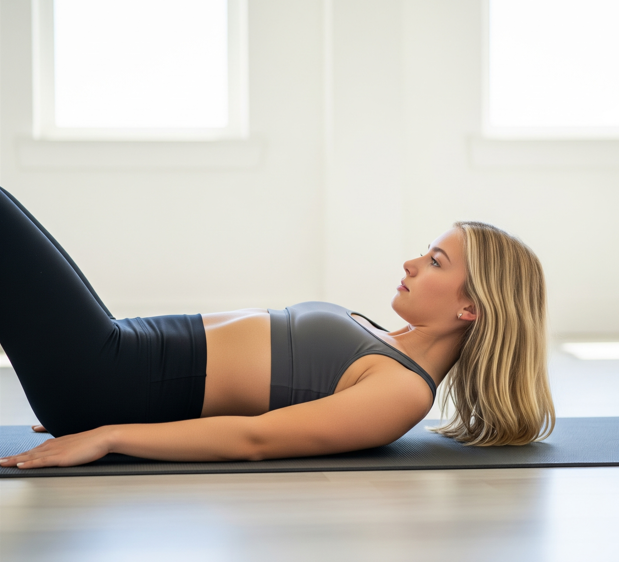
Pelvic tilts might look subtle, but they create profound changes in how your pelvis, spine, and core work together – affecting everything from your daily comfort to your athletic performance.
✅ Eases Lower Back Pain – Great for desk workers or anyone with stiffness.
✅ Improves Flexibility – Loosens tight hip muscles for better movement.
✅ Strengthens Core – Engages your abs and pelvic floor for stability.
✅ Enhances Posture – Aligns your spine naturally.
✅ Stress Relief – Gentle rocking motion calms the mind.
✅ Restores Pelvic Neutral – Trains your body to find and maintain the optimal pelvic position, reducing chronic strain patterns
✅ Improves Diaphragmatic Breathing – Connects breath to pelvic floor movement, enhancing oxygen flow and core coordination
✅ Prepares for Advanced Movement – Creates foundation for safe squats, deadlifts, and lifts by teaching spinal control under load
✅ Alleviates Hip Flexor Tightness – Gently stretches the front of hips while strengthening the posterior chain
✅ Supports Digestive Function – Rhythmic movement stimulates abdominal organs and encourages healthy peristalsis
From pain relief to better breathing, these ten benefits transform a simple tilt into a comprehensive tool for core health – addressing root causes of discomfort while building the foundation for all future movement.
While nearly everyone benefits, these groups find pelvic tilts especially transformative:
🧑💼 Desk Workers – Sitting for hours locks the pelvis in a fixed position. Pelvic tilts reintroduce movement and counteract the “sitting posture” that leads to back pain. Pair with a chair workout for complete office-based mobility.
🏋️♂️ Weightlifters – Before loading the spine with squats or deadlifts, you must know how to brace and position your pelvis. This exercise teaches that control. It’s an essential part of any leg workouts warm-up.
🤰 Pregnant & Postpartum Women – Pregnancy shifts pelvic alignment; postpartum recovery requires retraining these muscles. Pelvic tilts are often recommended for gentle rehabilitation (with doctor approval). They complement core workouts designed for prenatal and postnatal care.
🧓 Older Adults – Maintaining pelvic mobility supports balance, prevents falls, and preserves independence for daily activities like getting out of chairs.
🏃♀️ Runners – A stable pelvis improves running economy and prevents compensatory injuries in the knees and hips. Use after runs alongside calf stretches for complete recovery.
💊 Chronic Back Pain Sufferers – Pelvic tilts are often the first exercise prescribed in physical therapy because they’re safe, gentle, and address root causes. For a comprehensive approach, explore our exercises for lower back pain guide.
Do 10-15 reps, moving slowly like a rocking chair.
| Time | Benefit | Best Practice |
|---|---|---|
| Morning | Wakes up spine after sleep stiffness | Gentle, slow reps while still in bed |
| Pre-Workout | Activates core before loading | 10-15 reps as part of warm-up |
| Midday Break | Resets posture after sitting | Quick 60-second reset at desk |
| Post-Workout | Calms lower back, aids recovery | Slow, breath-focused reps |
| Before Bed | Releases day’s tension, prepares for sleep | Combine with deep breathing |
For a complete morning routine, combine this exercise with ten morning stretches that awaken your entire body.
Muscles Worked | Difficulty Level |
Lower back, Core, Hips | Beginner-Friendly |
🔹 Warm Up First – Do light stretches or walk for 5 mins.
🔹 Move Slowly – No jerky motions; think “smooth waves.”
🔹 Listen to Your Body – Stop if anything feels off.
🔹 Neck Support – If your neck feels strained, place a small folded towel or cushion under your head. Maintain a neutral cervical spine throughout.
🔹 Avoid After Heavy Meals – Wait at least an hour after eating before performing pelvic tilts to allow for digestion and avoid abdominal discomfort.
🔹 Knee Comfort – If your knees feel pressure, place a small rolled towel under them or adjust foot position closer or farther from hips.
🔹 Post-Surgery Caution – If you’ve had recent abdominal or back surgery, consult your doctor before attempting this exercise. Modified versions may be appropriate.
🔸 Rushing the Movement – Pelvic tilts are about control, not speed.
🔸 Over-Tilting – Small movements are effective; no need to lift hips high.
🔸 Ignoring Breathing – Exhale as you tilt, inhale as you release.
🔸 Holding Tension Elsewhere – Relax your shoulders, jaw, and face. Tension in these areas signals that you’re not fully releasing into the movement.
🔸 Lifting the Hips – This isn’t a bridge. The movement comes from tilting the pelvis, not lifting the entire lower back off the floor.
🔸 Inconsistent Practice – Pelvic tilts work best with daily consistency. Sporadic practice won’t retrain muscle patterns effectively.
🔸 Forgetting to Release – Some people hold tension in the tilted position. Remember to fully release back to neutral on each inhale.
You should feel a gentle pressing of your lower back into the floor on the tilt, and a slight release back to neutral on the return. Your abs should feel engaged, but you shouldn’t feel strain. If you’re unsure, place one hand under your lower back—you should feel it press against your hand during the tilt and release away during the return. For additional guidance, our physical therapy exercises for headaches guide includes similar foundational movements with detailed form cues.
Yes, they’re often recommended during pregnancy to maintain pelvic mobility and ease lower back discomfort. However, always check with your healthcare provider first. In later stages, you may need to modify or avoid lying on your back. The standing version against a wall is a safe alternative.
If you’ve spent years in an anterior pelvic tilt (arched lower back), the muscles needed for posterior tilt may be weak and inhibited. It’s like learning a new movement pattern – it takes time and consistent practice. Be patient; the difficulty means you’re waking up underused muscles.
Start with 10-15 slow, controlled reps once or twice daily. As the movement becomes easier, you can increase to 20-25 reps or add multiple sets. Consistency matters more than volume.
Mild glute engagement is normal, especially if you’re also working on posterior chain activation. If you feel only glutes and no abs, focus more on drawing your belly button in as you tilt.
Pair pelvic tilts with deep breathing for maximum flexibility and relaxation. Your lower back will thank you! 🌟