
The plank is a powerhouse exercise that targets your entire core including your abs, obliques, lower back, and even your shoulders and glutes! Think of it as pressing “pause” on movement while your muscles work overtime like a paused push-up that builds endurance and strength simultaneously. Whether you’re an athlete or a beginner, master the planking can transform your core strength! More than just a static hold the plank plank exercise is a full-body powerhouse that builds rock-solid core stability and endurance!”
Abdominal plank exercises primarily engage your deep core muscles (transverse abdominis, obliques, rectus abdominis), shoulders, back, and glutes think of it as a full-body tension exercise that teaches your muscles to work together in harmony.
✅ Builds rock-solid core strength (hello, six-pack muscles!)
✅ Improves posture by combating desk slump and back pain
✅ Enhances overall stability for sports and daily activities
✅ Boosts mental toughness – holding a plank plank plank is a mind game!
✅ No equipment needed – your body is your gym
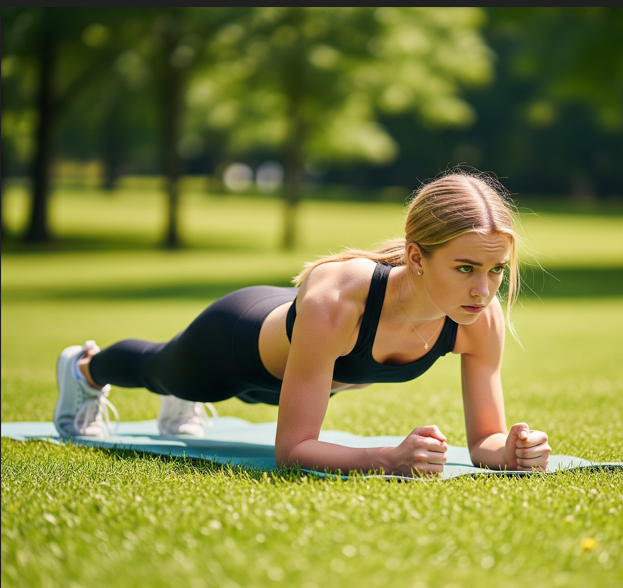
Place hands under shoulders (or elbows for forearm plank), legs extended behind you.
Squeeze your abs like you’re bracing for a gentle punch, and tuck your pelvis slightly.
Keep your body rigid from head to heels no sagging hips or lifted butt!
Maintain tension for 20–60 seconds (or longer for advanced). Breathe steadily, don’t hold your breath!
Muscles Worked | Difficulty Level |
Rectus Abdominis (abs) | Beginner to Advanced |
Obliques (side abs) | Adjustable Intensity |
Transverse Abdominis (deep core) | Stability Focus |
Shoulders & Glutes | Full-Body Engagement |
✔ Neck Neutral – Look at the floor, not up, to avoid strain.
✔ Glutes & Quads Engaged – Prevents hip sagging and protects your lower back.
✔ Start Short, Progress Slow – Even 10-second holds build flexibility and endurance over time.
✔ Use a Mirror – Check that your body forms a straight line.
❌ Common Mistakes:
✖ Hips Sagging or Too High – Keep that rigid “plank” shape!
✖ Holding Your Breath – Steady breathing = better endurance.
✖ Overarching Your Back – Tuck your pelvis slightly to protect your spine.
✖ Shrugging Shoulders – Keep them down and away from your ears.
“The plank is more than just an ab exercise it’s a full-body posture corrector that trains your body to stand, sit, and move with perfect alignment.”
The Mechanism: Your transverse abdominis (deep core muscle) acts like a corset when strong, it naturally pulls everything in and up.
Posture Problems & How Plank Fixes Them:
Slouched shoulders – Strengthens deep core that anchors posture
Forward head position – Builds endurance in postural muscles
Hips tilted forward – Trains neutral pelvis position
Weak back muscles – Balances front/back core strength
Why This Matters: When your core corset is weak, your posture collapses. The plank pose rebuilds this foundation, creating the internal support structure you need to stand tall without effort. Combined with mobility work like cat cow stretch, you get both the strength AND flexibility for perfect posture.
The Carryover: This “straight line” awareness carries into how you stand, sit, and move all day.
Before Plank:
Hips sag or pike
Lower back arches
Head droops forward
Shoulders round inward
After Consistent Plank Practice:
Maintains straight line instinctively
Engages core to protect spine
Neck aligned with spine
Shoulders stacked over wrists
The Connection: The body awareness you build in plank pose translates directly to better form in other exercises like cat cow stretch, where spinal articulation requires similar core control. Together, they create a body that knows what “neutral” feels like.
Sitting Does This:
Shortens hip flexors
Weakens core
Rounds shoulders
Compresses spine
Plank Does This:
Engages glutes (antagonists to hip flexors)
Strengthens entire core
Opens chest through engagement
Decompresses through extension
The Result: Regular plank practice literally reverses the damage of hours spent sitting. For complete spinal health, pair your planks with cat cow stretch to mobilize the spine in the opposite direction, and lat stretches to open the sides of your body that also tighten from desk work.
The lower abs (below the belly button) are notoriously hard to target. Here’s why the plank works where crunches fail:
Lower Ab Challenge vs. Plank Solution:
Crunches miss lower fibers – Isometric hold catches ALL abdominal fibers, including the hard-to-reach lower section
Lower abs fatigue quickly – Builds endurance gradually through sustained holds
Pelvic tilt compensation – Maintains neutral pelvis, teaching proper lower ab engagement
Hard to feel activation – Creates clear “drawing in” sensation that you can actually feel
The Key: To engage lower abs in plank, slightly tuck your tailbone and pull your belly button UP toward your spine. This subtle adjustment transforms the exercise from a general core hold into a targeted lower ab workout.
The Truth: You can’t spot-reduce lower belly fat—but you CAN strengthen the muscles underneath for a firmer, tighter appearance. When people ask “are planks good for abs?”, the answer is a resounding YES especially for that stubborn lower abdominal area.
How It Works:
Strengthens the transverse abdominis (deep corset muscle)
Creates muscle tone underneath the fat layer
Improves posture so your stomach appears flatter
Builds the foundation for a more defined midsection
Plank Benefit & Visual Result:
Stronger transverse abdominis – Acts as natural girdle, pulling your waist in
Better posture – Stomach appears flatter when you stand tall
Core endurance – Holds its shape all day, not just during exercise
Reduced bloating – Improved digestion through better core function
The Complete Picture: While are planks good for abs is a common question, the answer extends beyond aesthetics. Combined with lat stretches to open your side body and cat cow stretch to maintain spinal mobility, planks create a core that looks good AND functions well.
The Answer: People with lower back pain can benefit greatly from planks when done correctly. The key is starting with modified versions and focusing on perfect form to strengthen the core without straining the lower back.
Start with incline plank (hands on bench/wall) – Reduces load on spine while you build strength
Keep holds SHORT (10-15 seconds max) – Prevents fatigue-related form breakdown
NEVER let hips sag – Sagging compresses lower back and defeats the purpose
Engage core BEFORE lifting hips – Protects spine from the very start of the movement
Stop immediately if pain increases – Pain = warning sign, not something to push through
Breathe continuously – Holding breath increases intra-abdominal pressure, which can aggravate back issues
Counters 8+ hours of sitting damage by reactivating dormant core muscles
Prevents the “sitting posture” that leads to chronic back pain
Can be done during work breaks for a quick posture reset
Builds endurance in postural muscles that weaken from prolonged sitting
Stabilizes core for efficient running form and power transfer
Prevents the “runner’s lean” that develops from tight hip flexors
Reduces energy-wasting torso rotation during runs
Builds the core endurance needed for maintaining form during long distances
Builds foundation for heavy compound lifts like squats and deadlifts
Teaches full-body tension essential for heavy lifting
Prevents the lower back from taking over during heavy loads
Creates the intra-abdominal pressure needed for spinal protection
Essential for arm balances and inversions like handstands and forearm stands
Builds the shoulder stability required for advanced poses
Develops core control for floating and transitioning
Creates the full-body connection central to yoga practice
Prevents falls through improved core stability and balance
Maintains ability to perform daily activities independently
Builds bone density through weight-bearing on arms
Gentle enough when modified with incline versions
Rebuilds deep core safely with modifications (after medical clearance)
Addresses diastasis recti when performed with proper technique
Restores core function lost during pregnancy
Can be progressed gradually as strength returns
Strengthens the support system for the spine
Builds the deep core muscles that protect the lower back
Provides a safe entry point when modified correctly
Teaches neutral spine awareness that reduces pain triggers
Accessible to almost anyone with proper modifications
Scalable from wall planks to full holds
Foundational movement that builds confidence
Teaches core engagement before advancing to harder exercises
Best For: Building confidence, reducing load on spine
How To: Place hands on elevated surface, maintain straight line
Progression: Lower the incline as strength improves
Best For: Learning core engagement without full body weight
How To: Start on knees, maintain straight line from head to knees
Progression: Gradually increase hold time before advancing
Best For: Standard hold, building endurance
How To: Elbows under shoulders, forearms forward, body straight
Focus: Quality over quantity perfect form for longer holds
Best For: Wrist preparation, transition to push-ups
How To: Hands under shoulders, body straight, engage core
Focus: Distribute weight evenly through hands
Best For: Lower abs focus, glute activation
How To: From high plank, lift one leg 6-8 inches, hold, switch
Focus: Keep hips level no rotation
Best For: Dynamic stability, anti-rotation training
How To: From high plank, tap opposite shoulder with hand
Focus: Minimize hip movement, stay tight
Best For: Maximum strength, progressive overload
How To: Place weight plate on upper back, maintain perfect form
Focus: Start light, prioritize form over weight
Best For: Cardio + core combination
How To: From high plank, jump feet out and in like jumping jacks
Focus: Keep upper body stable, core engaged throughout
❌ Sharp lower back pain – Not normal, indicates form breakdown
❌ Pain radiating down legs – Could indicate nerve involvement
❌ Numbness or tingling – Stop immediately, reassess position
❌ Muscle spasms – Sign of过度 exertion or electrolyte issues
❌ Feeling of “giving way” in back Your body saying “stop now”
If you experience any of these, stop, rest, and consult a professional if symptoms persist.
A: Quality over quantity! For beginners, 20-30 seconds with perfect form beats 60 seconds with poor form. Aim to gradually build to 60-90 seconds over 4-6 weeks.
A: Plank alone won’t spot-reduce belly fat, but it STRENGTHENS the muscles underneath, IMPROVES posture (making stomach appear flatter), and BOOSTS overall metabolism. Combine with nutrition and cardio for visible results.
A: Plank exercise targets the front core and full-body stability. Side plank for abs specifically targets obliques and lateral stability. Use BOTH for complete core development.
A: Do Cat Cow stretch FIRST as a warm-up (5-8 rounds), then move into plank exercise for strength work. This prepares your spine for the static hold.
Mix planking exercises with dynamic moves like plank jacks or shoulder taps for even better results!