
The Standing Side Bend is a fantastic stretch that targets your obliques (side abs), stretches your intercostal muscles (between ribs), and improves overall flexibility in your torso. 🏋️♀️ Whether you’re an athlete, a desk worker, or just looking to move better, this stretch helps release tension from hours of sitting or repetitive movements. Imagine your spine like a tall tree gently swaying in the wind this stretch mimics that natural motion, promoting better posture and mobility. Plus, it’s a quick way to wake up your core before a workout or unwind after a long day!
✅ Enhances Side Body Flexibility 🤸♂️ – Lengthens tight obliques and improves lateral movement.
✅ Strengthens Core Stability 🏋️ – Engages deep abdominal muscles for better balance and posture.
✅ Relieves Lower Back & Hip Tension 😌 – Perfect for counteracting stiffness from sitting or standing too long.
✅ Improves Breathing Capacity 🌬️ – Opens the ribcage, helping you take deeper, more relaxed breaths.
✅ Quick & Equipment-Free ⏱️ – Do it anywhere, anytime great for office breaks or warm-ups!
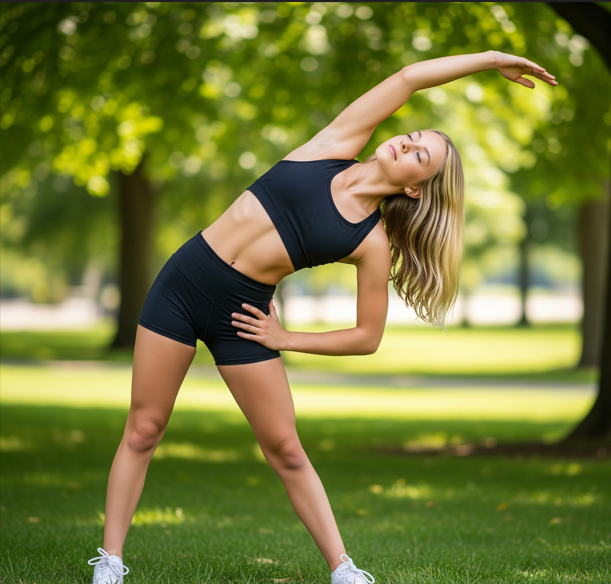
Stand with feet hip-width apart, knees soft, and core lightly engaged. Imagine a string pulling your head toward the sky.
Inhale deeply and stretch your right arm overhead, keeping it close to your ear. Your left hand can rest on your hip or thigh.
Exhale as you bend to the left, keeping your hips stable (no sticking your hip out!). You should feel a stretch along your right side like a slow, smooth wave.
Hold for 15–30 seconds, breathing into the stretch. Avoid collapsing your chest keep it open!
Slowly return to center and repeat on the other side.
Muscles Worked | Difficulty Level |
Obliques (side abs) | Beginner-Friendly |
Intercostals (ribs) | Easy to Modify |
Erector Spinae (lower back) | Great for All Levels |
✔ Engage Your Core – Prevents lower back strain.
✔ Move Slowly – No jerking or bouncing; smooth = better flexibility.
✔ Keep Hips Stable – Avoid sticking them out to the side.
✔ Listen to Your Body – Mild stretch = good; sharp pain = stop!
❌ Common Mistakes:
✖ Overarching the Back – Keep ribs slightly tucked to protect your spine.
✖ Leaning Forward/Backward – Bend directly sideways for maximum stretch.
✖ Holding Your Breath – Deep breathing = deeper stretch!
✖ Rushing Through It – Slow and steady wins the flexibility race.
The Problem Areas & What Lies Beneath:
Love handles – External & Internal Obliques lie underneath
Side belly pooch – Transverse Abdominis (deep core “corset” muscle)
Lower side back – Quadratus Lumborum (defines side waist)
The Truth: Fat sits ON TOP of muscle. When you strengthen the obliques underneath through exercises like Standing Side Bend for Abs Improve Side Body Flex, you:
✅ Create a firmer foundation for your midsection
✅ Improve muscle definition that becomes visible when overall body fat decreases
✅ Enhance the “corset effect” that naturally pulls your waist IN
Why It Works: Unlike exercises that only target the front of your core (like Cobra for Abs), the Standing Side Bend specifically targets the often-neglected side body muscles that create waist definition.
How Standing Side Bend Contributes to Better Curves:
Narrower waist – Strengthens obliques that pull your waist IN (not OUT), complementing the work of Side Plank for Abs
Defined side body – Creates visible vertical lines along your torso for a more sculpted appearance
Improved posture – Helps you stand taller, which automatically makes your waist appear smaller
Enhanced hip-waist ratio – Develops the V-taper illusion that creates the appearance of curves
The Visual Impact: When your obliques are toned and your posture is tall, your waist looks narrower even at the same weight. This is why combining Standing Side Bend with a Plank for Abs creates comprehensive core transformation.
This is the benefit people feel RIGHT AWAY after just a few reps:
How It Helps Digestion:
Bloating relief – Gentle compression and release massages digestive organs, helping move trapped gas
Constipation support – Stimulates peristalsis (the wave-like intestinal movements that push waste through)
Gas release – Helps move trapped air through the digestive tract for quick relief
Sluggish digestion boost – Increases blood flow to the abdominal region, awakening sluggish digestion
The 5-Minute Bloat Fix:
Do 5 Standing Side Bends on each side, moving slowly with your breath
Take deep inhales as you return to center, long exhales as you bend
Notice the immediate reduction in bloated feeling often within minutes
Your stomach appears visibly flatter, making this perfect before events or at the end of the day
Pro Tip: For enhanced digestive benefits, pair this movement with Cat-Cow Stretch to stimulate both the side body and the entire digestive tract.
Poor posture makes your stomach look BIGGER than it actually is. Here’s how Standing Side Bend fixes it:
Posture Problems & Their Visual Effects:
Anterior pelvic tilt (pelvis tilted forward) – Makes your belly stick out, creating a “pooch” even when you’re lean
Rounded shoulders – Collapses your chest, making your torso appear shorter and wider
Slouched spine – Compresses your abdomen, pushing contents forward and outward
How Standing Side Bend Corrects These Issues:
Lengthens hip flexors – Releases the front-of-hip tightness that pulls the pelvis forward, reducing anterior tilt
Opens side body – Counters the forward collapse of rounded shoulders by creating space through your ribs and waist
Elongates torso – Creates vertical space between your ribs and hips, making you appear taller and leaner
The Combined Effect: When you regularly practice Standing Side Bend alongside back-opening movements like Standing Back Bend Stretch, you create a body that naturally stands tall with a flatter, more toned midsection.
| Core Exercise | Primary Focus | How Standing Side Bend Complements It |
|---|---|---|
| Plank for Abs | Front core endurance | Adds lateral (side) movement to your routine |
| Side Plank for Abs | Static oblique strength | Adds dynamic flexibility through side bending |
| Cobra for Abs | Back extension, front core stretch | Balances front/back work with side-to-side movement |
| Cat-Cow Abdominal Focus | Spinal mobility front-to-back | Adds lateral plane to complete spinal health |
| External Obliques Stretch | Direct oblique targeting | Deepens the stretch through active movement |
| Standing Back Bend Stretch | Opens front body | Complements the side-opening work |
“Consistency transforms a simple stretch into a powerful tool for waist definition, posture improvement, and lasting flexibility. Here’s how to weave Standing Side Bend into your daily life.”
Why Morning Matters: Your side body tightens overnight. Morning stretching sets the tone for mobile movement all day and prevents the “stiff start” that leads to compensation.
Upon Waking:
Perform 5 Standing Side Bends on each side while still in your pajamas
Keep movements gentle your muscles are cold
Focus on waking up the side body, not forcing depth
This activates your obliques and prepares your upper back for the day’s postural demands
Before Breakfast:
Hold each side for 20 seconds with deeper intention
Lengthen through the entire side of your body from hip to fingertips
Imagine creating space between your ribs
This counteracts overnight tightness in your hip flexors and side waist
During Coffee (or Tea):
While waiting for your morning beverage, do 3 slow rounds per side
Use this waiting time productively
Coordinate breath with movement inhale to center, exhale to bend
Prevents the morning slouch before your day even begins
Pro Tip: Place a sticky note on your coffee maker or bathroom mirror as a visual reminder. Within two weeks, this morning ritual will become automatic.
Why Midday Matters: Hours of sitting compress your side body and shorten your hip flexors. Brief movement breaks prevent this damage from accumulating.
Mid-Morning (10-11am):
Do 3 Standing Side Bends on each side after 2+ hours of sitting
Focus on opening the side that’s been compressed by your mouse arm
Feel the stretch travel from your hip through your upper back
This 60-second break resets your posture for the next work block
After Lunch (1-2pm):
Perform 5 rounds on each side to aid digestion
The gentle compression and release massages digestive organs
Prevents the dreaded afternoon food coma
Helps move trapped gas and reduce bloating
Late Afternoon (3-4pm):
Do 3 deep holds of 20-30 seconds per side
Focus on releasing accumulated tension from the day
Pay extra attention to the side that feels tighter
Prepares your body for the commute home or evening activities
Stand up (even at your desk you don’t need to move away!)
Reach one arm straight overhead, palm facing the opposite direction
Lean gently to the opposite side, keeping hips facing forward
Hold for 15-20 seconds, breathing into the stretch
Switch sides and repeat
Feel the opening through your side waist and upper back
Why This Works: This quick version takes just 60 seconds but interrupts the sitting-induced shortening of your side body and hip flexors.
Why Workout Integration Matters: Using Standing Side Bend strategically around exercise maximizes both performance and recovery.
For Abs Workout:
For Running:
Perform 5 gentle rounds per side before heading out
Opens the side body for better arm swing mechanics
Reduces the “tight side” feeling that runners often experience
Complements hip flexor work and prepares the single leg RDL muscles worked for the demands of running
For Weight Training:
Use between sets as active recovery
Keeps the side body mobile during rest periods
Prevents the stiffness that can occur during longer training sessions
Particularly beneficial on leg days when hip flexors and side body tighten
For Running:
Hold each side for 30-45 seconds post-run
Releases the side body tension accumulated during miles
Aids in recovery by flushing metabolic waste
Complements deeper hip flexor work
For Any Workout:
Use as part of your cool-down sequence
Hold longer (30-45 seconds) when muscles are warm
Focus on deepening the stretch with each exhale
Creates lasting flexibility gains
A: The Standing Side Bend alone won’t spot-reduce belly fat (no exercise can). However, it STRENGTHENS the oblique muscles underneath, IMPROVES posture (making stomach appear flatter), and BOOSTS digestion (reducing bloating). Combine with full-body movement and nutrition for visible results.
A: For visible waist definition, aim for daily practice even just 2-3 minutes. Consistency matters more than intensity. Pair with plank for abs and side plank for abs for complete core development.
A: They serve different purposes! Side plank for abs is a static strength builder for obliques. Standing Side Bend is a dynamic flexibility and mobility exercise. Use BOTH for complete oblique development—Side Plank for strength, Side Bend for length.
A: Yes! The gentle compression and release of Standing Side Bend massages digestive organs, stimulates peristalsis, and helps move trapped gas. Many people feel immediate relief after a few rounds.
The Standing Side Bend is a flexibility game-changer simple yet super effective! Whether you’re warming up, cooling down, or just need a midday mobility boost, this stretch keeps your side body happy and mobile. Try it today and feel the difference!