
The standing soleus stretch specifically targets your soleus muscle (the deeper calf muscle) to improve ankle flexibility and relieve tightness from prolonged sitting, running, or wearing heels.
✅ Boosts flexibility in ankles and calves (essential for squats & stairs)
✅ Reduces stiffness from sitting all day (“office worker’s salvation”)
✅ Enhances mobility for runners and dancers
✅ Prevents injuries by improving lower-leg flexibility
✅ Promotes relaxation by releasing tension knots
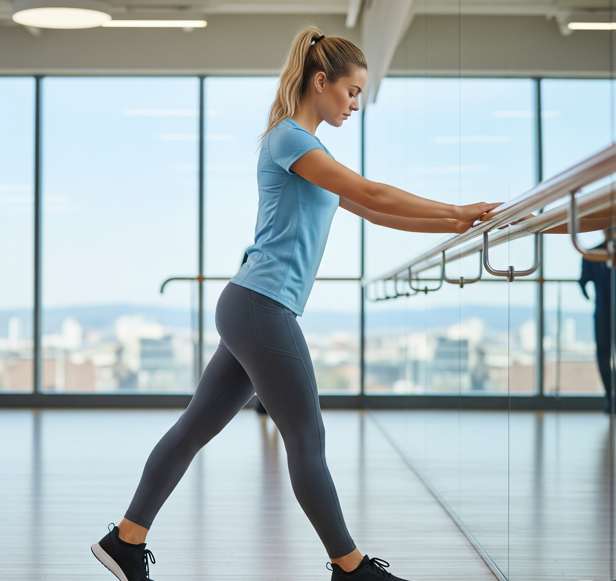
Stand facing a wall, hands at chest height for support.
Place one foot 12-18″ behind you (like a shallow lunge).
Keep both heels down as you bend your back knee toward the wall (feel the stretch in your lower calf).
Maintain for 20-30 seconds per side. Imagine “melting” your calf muscle.
Muscles Worked | Difficulty Level |
Soleus (deep calf) | Beginner-friendly |
Achilles tendon | Adjustable intensity |
✔ Warm up first – Walk for 2 mins before stretching
✔ Progress slowly – Increase depth gradually
✔ Use a wall – For balance if needed
❌ Avoid These Mistakes
✖ Bouncing – Smooth holds only (no jerking!)
✖ Lifted heels – Both feet must stay flat
✖ Overarching back – Keep core gently engaged
Why It’s Essential:
The soleus is heavily engaged during running, especially during the push-off phase
Tight soleus limits ankle dorsiflexion, shortening your stride
Fatigue in this muscle contributes to shin splints and Achilles strain
How It Helps:
✅ Maintains ankle range for efficient running form
✅ Reduces risk of soleus strains and pulls
✅ Improves shock absorption through flexible calves
✅ Essential recovery after long runs
Why It’s Essential:
Wearing heels keeps the soleus in a shortened position for hours
Unlike the gastrocnemius, the soleus adapts quickly to this shortened state
When you switch to flat shoes, tight soleus causes discomfort
How It Helps:
✅ Counteracts the specific shortening effect of heels on the soleus
✅ Eases the transition between heel heights
✅ Prevents the deep calf ache at the end of the day
Why It’s Essential:
Sitting with feet flat shortens the soleus specifically
The soleus is a postural muscle that works even when seated
Hours of desk work create adaptive shortening
How It Helps:
✅ Releases tension accumulated during sitting
✅ Improves standing posture and walking mechanics
✅ Pairs well with doorway chest stretch for full-body desk break relief
Why It’s Essential:
Squats and deadlifts require adequate ankle dorsiflexion
The soleus must lengthen during the descent of a squat
Tight soleus limits depth and proper form
How It Helps:
✅ Improves squat depth through better ankle mobility
✅ Enhances stability during heavy lifts
✅ Essential for anyone incorporating lat stretches into their upper body routine
Why It’s Essential:
Basketball, volleyball, and jumping events stress both calf muscles
The soleus provides endurance while the gastrocnemius provides power
Tight soleus affects landing mechanics
How It Helps:
✅ Improves landing mechanics through better shock absorption
✅ Reduces risk of Achilles injuries
✅ Maintains the spring in your step
Why It’s Essential:
Soleus strength and flexibility naturally decrease with age
This muscle is crucial for balance and fall prevention
Tight soleus contributes to the “stiff ankle” feeling
How It Helps:
✅ Maintains ankle range for safe walking
✅ Reduces fall risk through better balance
✅ Gentle enough when performed near a wall for support
Why It’s Essential:
The soleus connects to the Achilles tendon alongside the gastrocnemius
Tight soleus increases tension on the Achilles and plantar fascia
Many people stretch their gastrocnemius but neglect the soleus
How It Helps:
✅ Reduces strain on the Achilles tendon
✅ Addresses the deep calf component of plantar fasciitis
✅ Often provides relief that gastrocnemius stretching alone couldn’t achieve
Upon Waking:
Gentle Standing Soleus Stretch: Stand facing a wall, place hands on wall. Step right foot back, bend BOTH knees, and press right heel down. Hold for 30 seconds. Switch legs. Feel the stretch low in the calf, close to the Achilles.
Ankle Circles: 30 seconds in each direction to mobilize the ankle joint
Walking in Place: 30 seconds with emphasis on letting heels touch down fully
Why Morning Matters: Your soleus can tighten overnight, especially if you sleep with pointed feet. Morning stretching prevents the “stiff ankle” start to your day.
Mid-Morning (10-11am):
Standing Soleus Stretch: 30 seconds per side against a wall or even your desk
Calf Raises: 10 slow raises to activate and stretch the soleus through movement
After Lunch (1-2pm):
Seated Soleus Stretch: Sit in a chair, cross one ankle over the opposite knee, and gently press the crossed knee down. This stretches the soleus in a seated position.
Ankle Mobility: 30 seconds of writing the alphabet with your toes
Late Afternoon (3-4pm):
Standing Soleus Stretch: 30 seconds per side, focusing on the bent-knee position
Foot Rolls: Roll a tennis ball under your foot for 60 seconds
Before Workout (Dynamic Warm-Up):
Walking Lunges with Bent Back Knee: 10 per leg, focusing on letting the back heel stretch down
Ankle Circles: 30 seconds each direction
Light Jogging: 1-2 minutes with emphasis on heel-toe contact
Cat Cow Stretch: 5 rounds to connect spinal mobility with lower body preparation
After Workout (Static Stretch):
Standing Soleus Stretch: Hold each side for 45-60 seconds
Downward Dog Pedaling: Alternate bending one knee and then the other to stretch both calf layers
Seated Soleus Stretch: 45 seconds per side for deeper release
Why This Matters: Your soleus works during every walking step and many exercises. Stretching after activity maintains flexibility and aids recovery.
After Dinner:
Standing Soleus Stretch: 45 seconds per side, focusing on relaxation rather than intensity
Reclined Calf Stretch: Lie on your back, loop a towel around your foot, and gently pull toes toward you while keeping a slight knee bend to target the soleus
Before Bed:
Gentle Soleus Stretch: 30 seconds per side
Foot Massage: 60 seconds of self-massage on each foot
Deep Breathing: 5 breaths, imagining tension leaving your lower legs
| Time | Stretch | Focus |
|---|---|---|
| 0:00-1:00 | Standing Soleus Stretch (Right) | 60 seconds, bent knee, heel down |
| 1:00-2:00 | Standing Soleus Stretch (Left) | Equal attention to both sides |
| 2:00-2:30 | Ankle Circles | 30 seconds each direction |
| 2:30-3:00 | Seated Soleus Stretch | Both feet, 30 seconds total |
A: The key difference is knee position. A regular calf stretch (gastrocnemius) requires a straight back leg. The standing soleus stretch requires a BENT back knee, which isolates the deeper soleus muscle that doesn’t cross the knee joint.
A: For general maintenance, 3-5 times weekly is sufficient. If you’re a runner, wear heels, or have Achilles issues, daily stretching produces the best results. Even 2-3 minutes daily makes a significant difference.
A: Absolutely! The soleus and gastrocnemius merge to form the Achilles tendon. When the soleus is tight, it increases tension on the Achilles, contributing to tendinopathy. Stretching the soleus is essential for Achilles health.
A: For general flexibility, 20-30 seconds per side is sufficient. For deeper release and addressing chronic tightness, work up to 45-60 seconds. For Achilles issues, longer holds (60-90 seconds) are most effective.
A: Yes, the bent-knee position is actually gentler on the knees than straight-leg stretches. However, if you have specific knee issues, keep the bend modest and avoid locking. Use wall support if needed.
Pair this with a gastrocnemius stretch (straight-leg calf stretch) for full lower-leg flexibility!