
Wall Biceps Stretch
Bicep Muscle Stretch Warm-up Exercises
The biceps stretch wall (also known as the standing biceps stretch) specifically targets the biceps brachii to improve arm flexibility and relieve tightness caused by weightlifting, typing, or carrying heavy loads.
If you’ve ever finished a workout with tight, shortened arms, or spent hours typing only to feel stiffness in your shoulders, your biceps may be the hidden culprit. The biceps brachii – the large muscle at the front of your upper arm – crosses both the shoulder and elbow joints. When it becomes tight, it pulls your shoulders forward, contributing to rounded posture and limiting your ability to fully extend your arms.
Tight biceps don’t just affect your arms – they create tension that travels up to your shoulders and down to your forearms. This chain reaction can impact your form during push exercises, pull day exercises, and even your ability to perform kettlebell workouts with proper technique. By incorporating the wall biceps stretch into your routine, you’re not just improving arm flexibility – you’re restoring balance to your entire upper body.
Regular biceps stretching also plays a key role in preventing overuse injuries like biceps tendinitis and shoulder impingement. For a complete upper body approach, combine this stretch with scapular retractions to improve shoulder blade stability and upper trap stretch to release tension that often accompanies biceps tightness.

Bicep Wall Stretch
✨ Key Benefits of Bicep Wall Stretch
✅ Boosts flexibility in arms and shoulders (key for full range of motion)
✅ Reduces stiffness from repetitive arm movements (“desk worker’s best friend”)
✅ Enhances mobility for gym-goers and athletes
✅ Prevents injuries by improving biceps flexibility
✅ Promotes relaxation by releasing arm tension
✅ Improves Posture – Releases the biceps, allowing shoulders to settle back into proper alignment
✅ Enhances Overhead Mobility – Essential for movements like wall push-ups, chest workouts at home, and overhead presses
✅ Reduces Elbow Strain – Prevents tension in the biceps tendon that can lead to elbow pain
✅ Supports Grip Strength – Flexible biceps improve performance inpull day exercises and back workouts with dumbbells
✅ Complements Triceps Work – Balanced arm flexibility prevents muscle imbalances that lead to injury
🧠 Anatomy Deep Dive: The Biceps Brachii
The biceps brachii is one of the most recognized muscles in the body, but its anatomy is more complex than many realize:
| Structure | Location | Function | Why It Gets Tight |
|---|---|---|---|
| Long Head | Outer biceps, attaches to shoulder blade | Flexes elbow, assists shoulder flexion | Overhead lifting, pulling movements |
| Short Head | Inner biceps, attaches to shoulder blade | Flexes elbow, assists shoulder adduction | Curls, gripping, carrying loads |
| Brachialis | Deep to biceps, connects to ulna | Primary elbow flexor | Any pulling or curling movement |
| Biceps Tendon | Attaches biceps to shoulder and elbow | Transmits force for arm movement | Repetitive overhead work, weightlifting |
🧠 Muscles Worked in the Wall Biceps Stretch
The wall biceps stretch targets several important muscles in the upper arm and shoulder. These include:
Biceps Brachii (Long & Short Heads) – the primary muscle at the front of the upper arm responsible for elbow flexion and shoulder movement
Brachialis – the deep muscle beneath the biceps that drives elbow flexion
Brachioradialis – the muscle on the thumb-side of the forearm that assists in elbow flexion
Anterior Deltoid – the front shoulder muscle, gently stretched during the movement
Pectoralis Minor – the small chest muscle that can restrict posture when tight
If your arms feel tight, you can also include triceps stretches and forearm stretching exercises before or after to release tension and improve overall upper arm mobility.
👥 Who Should Do the Wall Biceps Stretch
This stretch is ideal for:
Weightlifters and gym-goers – especially those who perform curls, rows, and pull-ups
Desk workers and remote professionals – counteracts the “rounded shoulder” posture
Rock climbers and gymnasts – maintains flexibility after intense gripping and pulling
Yoga practitioners – prepares arms for weight-bearing poses like Downward Dog and Chaturanga
Runners and cyclists – releases upper body tension that affects arm swing
Musicians – guitarists, pianists, and string players benefit from flexible arms
Anyone recovering from elbow or shoulder strain – gentle stretching restores mobility
Older adults – maintains arm function for daily activities like lifting and reaching
It works especially well when combined with stretches like triceps stretches, forearm stretching exercises, and scapular retractions for complete upper body mobility.
Wall Biceps Exercises

Seated Biceps Stretch
The ultimate seated flexibility boost! While sitting, grip the chair edge behind you and rotate your torso to stretch each arm. Ideal for office workers and gym recovery."
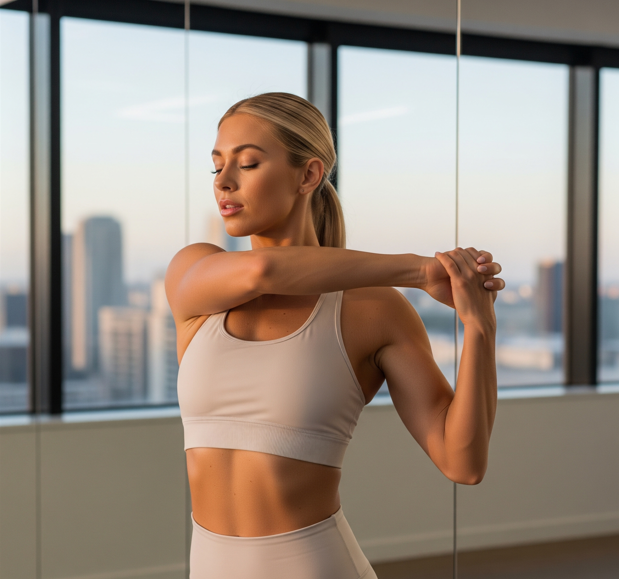
Standing Biceps Stretch
A quick tension-reliever for tight arms! Stand facing a wall, press your palm back with fingers down, then gently rotate away to feel the stretch. Perfect for post-workout or desk breaks.
How to Stretch Your Biceps 📋
1️⃣ Seated Biceps Stretch (Chair Version)
• Sit upright on a stable chair, feet planted
• Extend one arm straight back, grip seat edge
• Keep palm facing down for maximum stretch
• Rotate torso slowly away from stretched arm
• Hold 20-30 seconds, breathing deeply
• Keep shoulders relaxed (no shrugging)
• Switch arms and repeat
2️⃣ Standing Biceps Stretch (Wall Version)
• Stand 6-12 inches from wall
• Press palm flat against wall, fingers down
• Keep arm straight at shoulder height
• Gently rotate torso away from wall
• Maintain slight elbow bend (don’t lock)
• Hold 20-30 seconds per side
• Adjust distance from wall for intensity
Quick Reference Table
Muscles Worked | Difficulty Level |
Biceps Brachii | Beginner-friendly |
Shoulders (mild stretch) | Adjustable intensity |
Safety Tricks 🛡️
✔ Warm up first – Do arm circles for 30 seconds.
✔ Progress slowly – Increase stretch depth gradually.
✔ Use a wall – For stability and control.
❌ Avoid These Mistakes
✖ Locking elbows – Keep a slight bend to avoid strain.
✖ Over-rotating – Move only until you feel a gentle stretch.
✖ Holding breath – Breathe deeply to relax into the stretch.
FAQ
How often should I do the wall biceps stretch?
For best results, aim for 2-3 times daily, especially if you lift weights, type for long hours, or spend time in a rounded posture. Hold each stretch for 20-30 seconds. Incorporate into your 5-minute daily stretching routine for consistency.
Can tight biceps cause shoulder pain?
Yes. Tight biceps pull the shoulder forward into internal rotation, which can compress the rotator cuff and contribute to impingement. Stretching the biceps allows the shoulder to sit in a more neutral position. Combine with rotator cuff exercises and scapular retractions for complete shoulder health
Is the wall biceps stretch safe for elbow pain?
If you have elbow pain, consult a healthcare provider first. When performed gently with a slight elbow bend, this stretch can help relieve tension in the biceps tendon. Avoid locking the elbow or forcing the stretch. For complementary relief, explore forearm stretching exercises and triceps stretches.
What's the difference between seated and standing biceps stretch?
The seated version is ideal for office workers – it can be done at a desk and targets the biceps with a gentle torso rotation. The standing wall version provides a deeper, more targeted stretch and is excellent post-workout. Both are featured in arm stretches and full body stretching routines.
Can this stretch improve my bench press or push-up form?
Absolutely. Tight biceps limit your ability to fully extend your arms during pressing movements. Flexible biceps allow for better lockout and reduce strain on the elbows. Pair with push exercises, wall push-ups, and chest workouts at home for balanced upper body development
Quick Tip:
Keep your palm flat and fingers pointing down for maximum biceps stretch. Breathe deeply as you rotate imagine lengthening your arm muscle