
Scapular Retractions
Fix Rounded Shoulders & Boost Flexibility with Scapular Retractions
Ever notice how your shoulders creep up toward your ears after hours at the computer? 🤯 Scapular retractions (aka shoulder blade squeezes) are your secret weapon against hunchback posture! This simple but powerful exercise targets the rhomboids, trapezius, and rear deltoids, the key muscles that pull your shoulders back into proper alignment.
Think of it as hitting the “reset button” for your upper body, improving both flexibility and stability in your shoulder girdle. Whether you’re an athlete, office worker, or just looking to move with more ease, this move is a game-changer for upper body health!
Scapular retractions are a foundational strength upper back exercise that improves posture, shoulder stability, and pulling strength. This movement is essential for anyone performing bodyweight training, resistance band workouts, or posture correction routines.
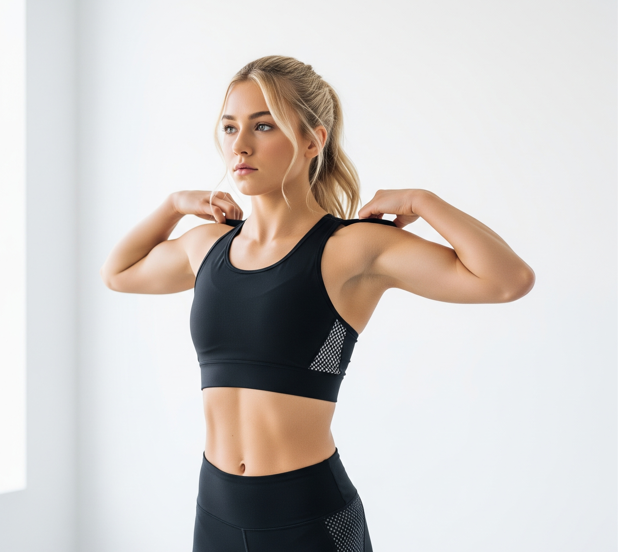
Scapular Retractions
Key Benefits ✨
✅ Improves Posture
Counters rounded shoulders from sitting/slouching
✅ Enhances Shoulder Flexibility 🧘
Allows greater range of motion for lifts and reaches
✅ Reduces Neck & Upper Back Pain
Takes pressure off strained muscles
✅ Boosts Mind-Muscle Connection
Teaches proper shoulder mechanics
✅ Prevents Future Injuries
Strengthens often-neglected back muscles
✅ Enhances Pulling Strength
Scapular control improves performance in rows, pull-ups, and resistance exercises.
✅ Reduces Shoulder Injury Risk
Strengthening stabilizers protects the shoulder joint during pressing and overhead movements.
✅ Improves Mind-Muscle Connection
Better awareness of scapular positioning leads to improved upper body mechanics.
Muscles Worked in Scapular Retractions
Scapular retractions primarily target the muscles responsible for pulling the shoulder blades together and stabilizing the upper back. Strengthening these muscles improves posture and supports stronger pushing and pulling movements.
Primary Muscles Activated:
Rhomboids – Retract the shoulder blades and improve posture alignment.
Middle Trapezius – Supports scapular control and upper back strength.
Lower Trapezius – Enhances shoulder stability and posture balance.
Secondary Muscles:
Posterior deltoids
Erector spinae
Core stabilizers
This exercise pairs well with movements like band pull-aparts and prone cobra exercise for complete upper back development.
Who Should Do Scapular Retractions?
Scapular retractions are ideal for office workers, athletes, students, and anyone with rounded shoulders. If you spend long hours sitting or performing pressing exercises, this movement helps restore muscular balance.
Recommended for:
Individuals with poor posture
People doing push-up variations
Beginners starting upper body strength training
Athletes needing shoulder stability
Anyone recovering from upper back weakness
They are especially useful in calisthenics workout routines and resistance band training routines.
When to Perform Scapular Retractions
You can include scapular retractions in warm-ups, strength sessions, or posture-focused mobility routines. They prepare the shoulders for pulling movements and help activate key stabilizer muscles.
Best Times to Perform:
Before pull-ups or rows
During upper body workouts
As part of posture correction routines
On recovery days for mobility work
After long hours of sitting
Performing them consistently improves shoulder control and reduces injury risk.
📝How To Do Standing Scapular Retractions
1️⃣Stand or Sit Tall
Maintain neutral spine (imagine a string pulling you up from head)
2️⃣Relax Shoulders
Gently roll them down away from ears
3️⃣Squeeze Shoulder Blades
Pull them together like pinching a pencil
4️⃣Hold & Breathe
Maintain for 5-10 seconds while breathing normally
5️⃣Release Slowly
Control the return to starting position
🔥 Modifications:
- Beginner: Do seated against a chair back for feedback
- Advanced: Add resistance bands or perform during pull-ups.
How Many Reps Should You Do?
The number of repetitions depends on your fitness level and goals.
Beginners: 2-3 sets of 10-12 reps
Intermediate: 3 sets of 12-15 reps
Advanced: 3-4 sets with slower tempo control
Focus on controlled scapular movement rather than rushing repetitions. Quality contraction is more important than quantity.
Benefits of Scapular Retractions for Daily Posture
Scapular retractions help counteract the effects of prolonged sitting and screen time by strengthening the upper back muscles responsible for proper shoulder alignment. Performing them regularly improves posture awareness, reduces neck tension, and enhances shoulder stability. This makes them an excellent addition to both strength workouts and daily mobility routines.
📊 Quick Reference Table
Muscles Worked | Difficulty Level |
Rhomboids | Beginner-Friendly |
Trapezius | Adjustable Intensity |
Rear Deltoids | No Equipment Needed |
⚠️Safety Tricks
✅ Keep Chin Tucked – Avoid jutting head forward.
✅ Engage Core – Protects lower back during movement.
✅ Move Smoothly – No jerky motions
✅ Squeeze Shoulder Blades Fully – Focus on controlled scapular retraction for maximum upper back activation.
✅ Keep Shoulders Down – Depress the shoulders to avoid unnecessary neck tension.
✅ Maintain Neutral Spine – Avoid leaning back or rounding forward during the movement.
✅ Control the Tempo – Slow, steady repetitions improve muscle engagement and stability.
❌ Common Mistakes:
❌ Shrugging Shoulders – Keep them depressed
❌ Overarching Lower Back – Maintain neutral spine
❌ Holding Breath – Continuous breathing maximizes flexibility benefits
❌ Bending the Elbows Excessively – The movement should come from the shoulder blades, not the arms.
❌ Rushing Repetitions – Fast reps reduce muscle activation and effectiveness.
❌ Incomplete Retraction – Failing to fully squeeze the shoulder blades limits results.
❌ Looking Up or Down Excessively – Keep the neck neutral to prevent strain.
FAQ
What are scapular retractions good for?
Scapular retractions strengthen the upper back muscles responsible for shoulder blade control and posture. They help reduce rounded shoulders and improve pulling strength. This exercise pairs well with band pull-aparts and the prone cobra exercise for better scapular stability and posture correction.
Can beginners perform scapular retractions?
Yes, scapular retractions are beginner-friendly and require minimal equipment. They are often included in an at home calisthenics workout plan to build foundational upper body strength. Beginners can also combine them with wall push ups to improve shoulder control.
How often should I do scapular retractions?
You can perform scapular retractions 3–4 times per week. They work well in warm-ups before pulling movements or during posture-focused sessions. Pairing them with a latissimus dorsi stretch and arm stretches enhances mobility and recovery.
Do scapular retractions help with shoulder pain?
They can help reduce discomfort caused by weak upper back muscles and poor posture. Strengthening scapular stabilizers supports joint alignment. Combining them with a sleeper stretch and triceps workouts may further improve shoulder health.
Are scapular retractions better with bands or bodyweight?
Both variations are effective. Resistance bands increase tension and muscle activation, while bodyweight versions improve control. You can alternate them with resistance band pull aparts and mobility work like child’s pose stretch for balanced shoulder development.
Quick Tip:
Scapular retractions are one of the simplest yet most effective exercises for improving flexibility, posture, and shoulder health. By incorporating just 2-3 sets daily, you’ll notice better movement flexibility and less tension in your upper back. Your future self will thank you for these small but mighty squeezes! 🌟