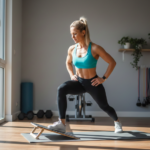
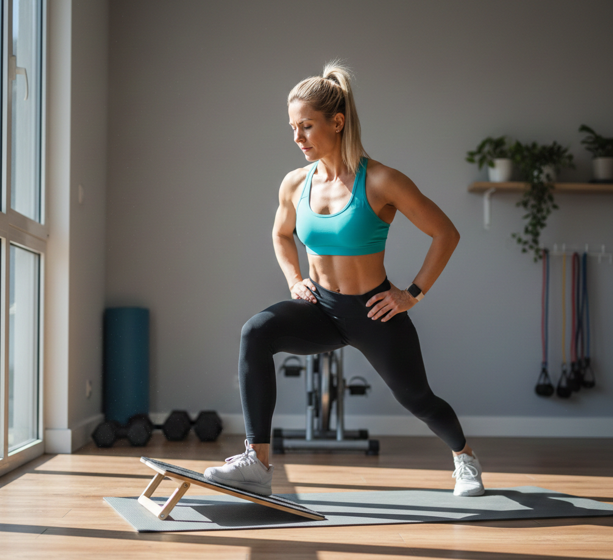
“Your Achilles tendon is the strongest in your body but also one of the most vulnerable. Give it the care it deserves with these essential Achilles tendon stretches for better mobility and pain-free movement.”
🔍 What Are Achilles Tendon Stretches?
Achilles tendon stretches target the large tendon connecting your calf muscles to your heel bone. This vital structure absorbs enormous force with every step you take, up to 3-4 times your body weight when running! Whether you’re dealing with Achilles tendonitis stretches or want to maintain healthy ankles, these exercises are essential for everyone, from runners to desk workers.
Think of your Achilles like a rubber band when it’s cold and tight, it’s prone to snapping. When it’s warm and flexible, it handles stress beautifully. These stretches keep that rubber band in peak condition.
✨ Key Benefits of Achilles Tendon Stretching Exercises
✅ Prevents Injury: Regular stretches for Achilles tendonitis keep your tendon resilient against the demands of walking, running, and jumping.
✅ Improves Ankle Flexibility: Unlock a greater range of motion in your ankles, enhancing everything from squat depth to balance.
✅ Relieves Heel Pain: Targeted achilles tendon stretching exercises can dramatically reduce discomfort from plantar fasciitis and tendonitis.
✅ Boosts Athletic Performance: A flexible Achilles stores and releases energy more efficiently, think of it as your built-in spring!
✅ Promotes Better Posture: Tight calves and Achilles pull on your entire posterior chain; releasing them helps you stand taller
🏃 How to Stretch Achilles Tendon: Complete Step-by-Step Guide with Pro Tips 🔥
🔹 Basic Standing Calf Stretch (Gastrocnemius Focus)
📝 Step-by-Step Instructions:
- Positioning: Stand facing a wall, approximately arm’s length away, with both palms flat on the wall at shoulder height and width. This classic calf stretches position forms the foundation for safely lengthening your gastrocnemius and Achilles tendon.
- Foot Placement: Step your right foot back about 2-3 feet, keeping it completely straight with the heel firmly planted on the floor
- Front Leg: Keep your left foot forward with a slight bend in the knee, ensuring it aligns with your ankle (not twisted inward or outward)
- The Movement: Slowly bend your left knee, shifting your weight forward while keeping your right leg straight and heel down
- The Stretch: You should feel a gentle pulling sensation in your right upper calf and along the Achilles tendon
- Duration: Hold for 20-30 seconds while breathing deeply, inhale to prepare, exhale to sink slightly deeper
- Repetition: Slowly release, switch legs, and complete 2-3 rounds per side
🧠 Why This Works:
This gastroc stretch specifically targets the gastrocnemius, the larger, more superficial calf muscle that crosses the knee joint. By keeping the back leg straight during this gastroc stretch, you maximize tension through this muscle and its attachment to the Achilles tendon, making it the most effective way to release tightness in the upper calf.
🎯 Target Sensation Guide:
- Upper calf, behind knee: Correct gastrocnemius is releasing
- Heel/Achilles region: Normal tendon is lengthening
- Arch of foot: May indicate plantar fascia involvement, normal, but note it
- Sharp pain in the tendon: STOP, reduce intensity or check form immediately
🔧 Troubleshooting Common Issues:
- Heel lifts off the floor: Move closer to the wall or bend your back knee slightly
- Can’t feel the stretch: Step further back or straighten your back leg more
- Knee pain: Check front knee alignment; it should point in the same direction as your foot
- Dizziness: Keep your gaze soft, don’t lock your knees, and breathe steadily throughout
🔹 Bent-Knee Achilles Stretch (Soleus Focus)
📝 Step-by-Step Instructions:
- Starting Position: Begin in the same position, facing a wall, about arm’s length away, with hands on the wall for support
- Foot Placement: Step your right foot back approximately 2 feet shorter than the straight-leg version
- Knee Position: Bend BOTH knees slightly, creating a subtle “sitting back” position
- Heel Contact: Keep your right heel pressed firmly into the floor, imagine pressing a stamp into the ground
- Weight Shift: Gently shift your weight forward by inches, not feet. The movement is subtle
- Stretch Sensation: You should feel the stretch LOWER in your calf, much closer to the Achilles tendon and heel area
- Duration: Hold for 20-30 seconds, then switch legs and complete 2-3 rounds per side
🧠 Why This Works:
This variation targets the soleus, the deeper calf muscle that doesn’t cross the knee joint. The standing soleus stretch involves bending the knee to isolate this muscle, allowing for a more complete release of both calf layers and their shared tendon. This standing soleus stretch is essential for targeting the deep calf tissue that straight-leg stretches miss.
🎯 When to Use This Variation:
- After mastering the straight-leg version
- When you feel the straight-leg stretch only in your upper calf
- For runners who need both gastrocnemius and soleus flexibility
- As a progression for deeper Achilles release
⚠️ Key Form Check:
The most common mistake here is letting the back heel lift. If your heel comes up, you’ve lost the stretch entirely. Focus on keeping that heel anchored it’s more important than how far you lean forward.
🔹 The Towel Stretch (How Do I Stretch My Achilles Tendon? The Seated Solution)
📝 Step-by-Step Instructions:
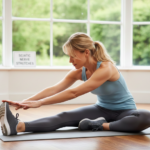
- Setup: Sit comfortably on the floor with both legs extended straight in front of you
- Towel Placement: Loop a towel, yoga strap, or resistance band around the ball of your right foot. Position it so it won’t slip off
- Grip: Hold both ends of the towel with your hands, keeping your arms relatively straight but not locked
- The Pull: Gently pull the towel toward you, which will draw your toes back toward your shin
- Knee Position: Keep your knee STRAIGHT throughout this is crucial for targeting the Achilles properly
- Stretch Sensation: You should feel a strong but comfortable pull along your calf and Achilles tendon
- Duration: Hold for 20-30 seconds, then release slowly
- Repetition: Repeat 3 times per foot, completing all repetitions on one side before switching
🌱 Beginner Modification:
If the stretch feels too intense, slightly bend your knee. This reduces tension on the gastrocnemius and makes the stretch gentler, perfect for those recovering from injury or just starting.
🔥 Advanced Variation:
For a deeper stretch, flex your foot more intensely as you pull the towel, or hold the stretch for 45-60 seconds. You can also perform this with your leg elevated on a step or stool.
⚠️ Safety Tips & Common Mistakes
🚫 Don’ts
✖ NEVER stretch a cold Achilles – Always warm up with 3-5 minutes of light walking first
✖ Avoid bouncing – Ballistic movements can micro-tear the tendon; use smooth, sustained holds
✖ Don’t ignore sharp pain – A pulling sensation is normal; sharp or stabbing pain means STOP
✖ Never stretch through a recent injury – If you suspect a tear, see a professional first
✅ Do’s
✔ Progress gradually – Increase intensity over weeks, not minutes
✔ Stretch both legs equally – Even if only one side bothers you
✔ Breathe deeply – Inhale, prepare, exhal,e deepen the stretch
✔ Be consistent – Daily gentle stretching beats occasional aggressive sessions
FAQ’S❓
Q: How often should I do these Achilles tendon stretches?
A: For maintenance, 3-4 times weekly is ideal. For existing tightness or stretches for Achilles tendonitis, daily gentle stretching works best.
Q: Can I stretch my Achilles too much?
A: Yes! Like any tissue, overstretching can cause micro-tears. Stick to 2-3 rounds of 20-30 second holds.
Q: Why is my Achilles so tight in the morning?
A: While you sleep, your foot rests in a pointed position, shortening the tendon overnight. Morning stiffness is normal gentle stretching helps.
Q: How do I know if I’m stretching correctly?
A: You should feel a gentle pulling sensation along the back of your ankle/lower calf. If you feel sharp pain or tingling, ease off.
Q: Will these stretches help with plantar fasciitis?
A: Absolutely! Your Achilles and plantar fascia are connected. Releasing one helps the other.
⚡ Quick Tip: The 3-Phase Breath Technique
For deeper, safer stretching exercises for the tight Achilles tendon, try this:
- Inhale – Prepare, engage core slightly
- Exhale (first 10 seconds) – Sink gently into the stretch
- Hold breath pause – Maintain position
- Exhale again (final 10 seconds) – Attempt to deepen the stretch by 5-10%
This breath pattern works with your nervous system to override the protective stretch reflex, allowing for safer, more effective flexibility gains. 🌬️