Introduction
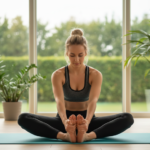
Think of your hips as the central command for your body’s movement. When they’re tight or weak, everything from your lower back to your knees can feel the strain. This guide dives into essential exercises to release tension, build strength, and unlock remarkable flexibility in this crucial area. 🎯
✨Hip Exercises: Key Benefits ✨
- Reduces Pain & Prevents Injury: Alleviates discomfort from sitting all day (hello, tight hip flexors!) and can help manage conditions like bursitis by improving joint health.
- Enhances Overall Mobility & Flexibility: Achieve greater ease in movements like squatting, walking, and climbing stairs. This newfound flexibility is a game-changer for both athletes and desk workers.
- Improves Posture and Stability: Strong hips support your spine, helping you stand taller and move with more confidence and balance.
- Boosts Performance in Sports & Daily Life: Whether you’re running, lifting, or playing with your kids, powerful, mobile hips are your secret weapon.
- Promotes Mental Relief: Releasing physical tension in such a core area can lead to a surprising sense of mental relaxation and ease.
📋 Best Hip Strengthening Exercises: Step By Step Guide
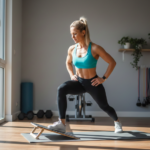
1. Hip Flexor Stretch (Kneeling Lunge)
Targets: Tight hip flexors from sitting.
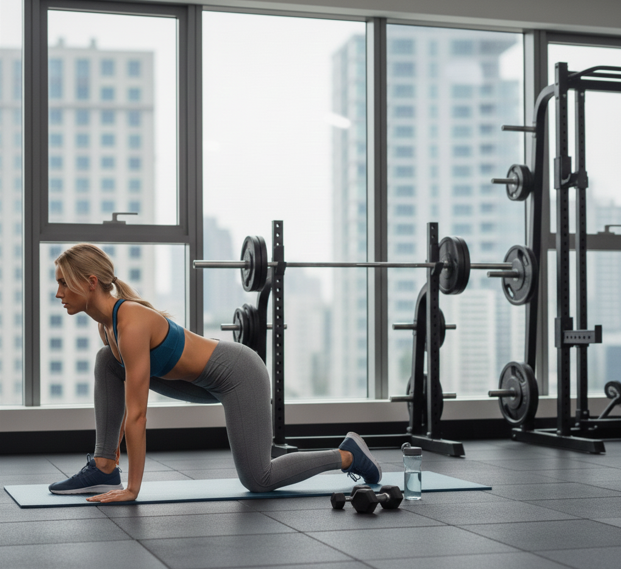
- Kneel on a soft surface (use a mat or folded towel).
- Step your right foot forward into a lunge, so your right knee is over your right ankle.
- Keep your torso tall, gently tuck your tailbone under, and lean slightly forward.
- You should feel a stretch along the front of your left hip and thigh.
- Hold for 20-30 seconds. Breathe deeply. Repeat on the other side.
- Modification: Place your back knee on a pillow. Hold onto a chair for balance.
- Pro Tip: Imagine shining your belt buckle forward to keep your hips square.
2. Glute Bridge (Hip Strengthening)
Targets: Glutes, hamstrings, and posterior chain.
- Lie on your back with knees bent, feet flat on the floor hip-width apart, arms by your sides.
- Engage your core by gently drawing your belly button toward your spine.
- Press through your heels and squeeze your glutes to lift your hips toward the ceiling.
- Form a straight line from your shoulders to your knees. Avoid over-arching your lower back.
- Hold for 2 seconds at the top, then lower with control. Aim for 10-15 reps.
- For Strength: Add a resistance band above your knees or place a weight on your hips.
- For Mobility: Focus on a slow, controlled movement, emphasizing the flexibility at the top of the motion.
3. Clamshell (for Glutes & Hip Stability)
Targets: Gluteus medius (side hip) is crucial for pelvic stability.
- Lie on your side with your legs stacked and your knees bent at 90 degrees (like the fetal position).
- Rest your head on your bottom arm. Place your top hand on your hip for feedback.
- Keeping your feet touching, slowly open your top knee like a clamshell. Do not let your pelvis rock backward.
- Pause at the top, then slowly lower. Perform 12-15 reps per side.
- Common Mistake: Letting the torso roll back. Keep your shoulders and hips stacked vertically.
4. Pigeon Pose (Deep Hip & External Rotator Stretch)
Targets: Deep glutes and external rotators; great for overall hip flexibility.
- Start on all fours (tabletop position).
- Slide your right knee forward toward your right wrist in Pigeon Pose. Place your right shin as parallel to the front of the mat as is comfortable.
- Extend your left leg straight back, with the top of your foot on the floor.
- Walk your hands forward and lower your torso toward the floor, resting on your forearms or a cushion.
- Hold for 30 seconds to 1 minute, breathing into any tight spots. Repeat on the other side.
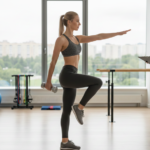
5. Standing Hip Circles (Mobility Drill)
Targets: Overall hip joint mobility and lubrication.
- Stand holding the back of a sturdy chair or a wall for balance.
- Lift your right knee toward your chest, then draw a large, slow circle with your knee.
- Make 5-10 circles forward, then 5-10 circles backward. Keep the movement smooth.
- Repeat with the left leg.
- Focus: This is about creating space and movement in the joint socket, not speed or force.
6. Isometric Hip Hold (Safe for Labrum/Bursitis)
Targets: Strengthening without joint compression.
- Stand with your back against a wall, feet about 6 inches away from the wall.
- Place a small, soft ball (or a folded towel) between your knees.
- Gently squeeze the ball with your knees, engaging your inner thighs and hip stabilizers. Do not hold your breath.
- Hold the squeeze for 10-15 seconds, then fully release. Repeat 5-8 times.
- Why it works: It builds crucial stability muscles without moving the joint through a potentially painful range.
⚠️ Safety Tricks & Common Mistakes ⚠️
Safety First! 🛡️
- Warm Up First: Never stretch cold muscles. Do 5 minutes of light cardio (like marching in place) to get blood flowing.
- Focus on Sensation, Not Pain: A stretch should feel like a “good hurt,” a gentle pulling sensation. Sharp or shooting pain means STOP.
- Breathe Consistently: Never hold your breath. Exhale as you deepen into the stretch to help muscles release.
- Consult a Pro for Injuries: If you have a diagnosed issue like a labrum tear or active hip bursitis, get these exercises approved by a physiotherapist first.
Common Mistakes to Avoid 🚫
- Rushing the Movement: Jerking or bouncing into a stretch (ballistic stretching) can cause strains. Move slowly and with control.
- Neglecting Alignment: In lunges or strengthening moves, don’t let your knee cave inward. Keep your knees aligned with your toes.
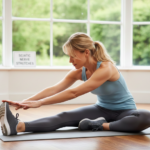
- Rounding the Back: In seated or standing forward folds, hinge from the hips rather than curling the spine to protect your lower back.
- Only Stretching, Not Strengthening: True hip health requires a balance. Pair stretches with hip strengthening exercises (like bridges or clamshells) for stable, resilient joints.
FAQ ❓
Q: What are the best hip exercises for men who sit all day?
A: Men (and anyone!) with desk jobs should prioritize hip flexor exercises (like the kneeling lunge) and glute exercises (like hip thrusts) to combat the “sitting syndrome” that weakens the posterior chain.
Q: Can I do these exercises with hip bursitis?
A: Hip bursitis exercises must be gentle and non-irritating. Focus on pain-free range-of-motion movements and isometric strengthening. Avoid deep, compressive stretches during flare-ups and always follow medical advice.
Q: Are these exercises safe for a hip labrum tear?
A: Labrum hip exercises require extreme caution. The focus should be on hip strengthening exercises that build stability without impingement (like modified bridges) and gentle hip mobility exercises. A physical therapist must guide your program.
Q: What’s the fastest way to improve hip mobility?
A: Consistency is key! A daily routine of dynamic hip mobility exercises (like leg swings) combined with targeted stretching and strengthening will yield the best, most sustainable results for unlocking your hips’ full potential. 💥
PRO TIP:
Breathe into the stretch. Never hold your breath. Exhale slowly as you ease deeper into the movement. This literally helps your nervous system “let go” and increases safe flexibility. Imagine your breath softening the tight area like warm oil loosening a hinge. 🔥