

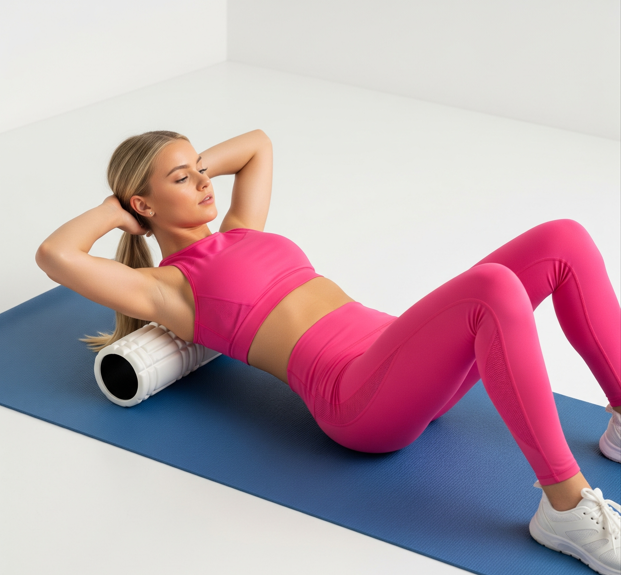
Ever feel like your upper back is as stiff as a wooden board? The Thoracic Extension on Foam Roller is your go-to stretch to loosen up that tight, hunched-over posture especially if you’ve been glued to a desk all day. 🖥️ This stretch targets your thoracic spine (mid-to-upper back), helping improve flexibility, posture, and mobility. Think of it as hitting the “reset” button for your spine, allowing you to stand taller and breathe deeper. Whether you’re an athlete or a work-from-home warrior, this move is a game-changer!
Thoracic extension on a foam roller is one of the most effective self-mobility techniques to counteract poor posture caused by prolonged sitting, desk work, and excessive screen time. The thoracic spine (mid-back) naturally supports rotation and extension, but modern lifestyles often reduce this mobility.
Limited thoracic extension can contribute to rounded shoulders, neck tension, shoulder impingement, and even lower back discomfort. Incorporating this thoracic mobility exercise into your routine can significantly improve posture, breathing capacity, and overhead movement mechanics.
Limited thoracic mobility often contributes to upper back stiffness and rounded shoulders. Incorporating additional upper back exercises can further enhance posture and spinal alignment.
✅Improves Posture – Counters slouching and promotes a straighter, more aligned spine.
✅Boosts Flexibility 🧘 – Increases range of motion in the upper back, making twists and bends easier.
✅Relieves Tension – Eases stiffness from sitting, driving, or heavy lifting.
✅Enhances Breathing – Opens up the chest, letting your lungs expand fully.
✅Mental Relaxation – A stretched spine = a calmer mind.
✅ Improves Shoulder Mobility – Enhances overhead movement and reduces strain during pressing or lifting exercises.
✅ Supports Neck Health – Reduces forward head posture and decreases tension in the cervical spine.
✅ Prevents Upper Back Pain – Strengthens spinal extension capacity, lowering the risk of stiffness and chronic discomfort.
✅ Improves Core Stability – Encourages proper spinal alignment, helping the core muscles engage more effectively.
✅ Enhances Athletic Performance – Better thoracic mobility improves rotation, posture control, and overall movement efficiency.
Regular thoracic spine mobility work improves overall movement efficiency. Better thoracic extension enhances overhead lifting, reduces shoulder strain, and supports proper scapular movement. It also improves breathing mechanics by allowing the rib cage to expand more effectively.
Athletes, office workers, and individuals with rounded posture can all benefit from this foam roller back stretch. Over time, improved mid-back mobility may also reduce compensatory stress on the neck and lower back.
Pair this movement with scapular retraction exercises to strengthen the muscles that support upright posture.
Thoracic extension on a foam roller primarily targets the upper and mid-back muscles, while also supporting better posture and spinal mobility. This exercise is commonly included in upper back mobility routines, posture correction exercises, and foam rolling workouts.
Thoracic Spine (Upper Back Muscles)
Improves mobility in the mid-spine and reduces stiffness caused by prolonged sitting. It pairs well with other thoracic spine mobility exercises.
Erector Spinae
Supports spinal extension and helps maintain proper posture during daily activities and strength training workouts.
Rhomboids
Assist in pulling the shoulder blades together, making this exercise beneficial for those doing posture improvement exercises.
Trapezius (Middle & Upper Fibers)
Helps stabilize the shoulders and supports movements in many upper body strengthening exercises.
Chest (Pectoralis Muscles)
Gently stretches tight chest muscles, especially useful if combined with chest stretches.
Shoulders (Anterior Deltoids)
Improve flexibility and reduce tightness, supporting better performance in shoulder mobility drills.
Core Muscles (Abdominals) –
Stabilize the spine and prevent lower back over-arching. Engaging them improves posture and supports core strengthening exercises.
Latissimus Dorsi (Lats) –
Assist upper body control and affect thoracic mobility. Foam rolling reduces tightness and complements back mobility exercises.
Serratus Anterior –
Supports shoulder blade stability and smooth movement. Works well with shoulder stability exercises for better posture.
Place it horizontally under your upper back (just below shoulder blades). Bend knees, feet flat on the floor.
Clasp hands behind your head (don’t pull on your neck!).
Lean back over the roller, letting your upper back arch gently.
Stay for 3-5 deep breaths, feeling the stretch along your spine.
Shift slightly up/down the roller to target different areas.
Desk Workers & Students – Ideal for individuals who sit for long hours and develop rounded shoulders or upper back stiffness due to prolonged screen time.
Athletes & Gym-Goers – Beneficial for those performing overhead lifts, pressing movements, or rotational sports that require strong thoracic spine mobility.
People with Poor Posture – Helps correct slouching posture and improve spinal alignment by restoring natural thoracic extension.
Individuals with Upper Back Tightness – Useful for relieving mid-back stiffness caused by driving, heavy lifting, or repetitive movements.
Anyone Looking to Improve Flexibility – Supports better spinal mobility, breathing mechanics, and overall upper body movement efficiency.
Rehabilitation Clients (With Approval) – Can assist posture and mobility recovery programs when cleared by a healthcare professional.
Perform this exercise during your warm-up before upper body or overhead workouts to improve thoracic spine mobility.
Include it after long periods of sitting, driving, or desk work to counteract slouching posture.
Add it to your posture correction routine if you experience rounded shoulders or upper back stiffness.
Use it before activities requiring rotation or overhead motion, such as strength training or sports.
It can also be performed during a cool-down session to release tension and restore spinal alignment.
Spend 30-60 seconds per thoracic segment, moving slowly and with control.
Perform 5-10 controlled repetitions at each mid-back position.
Total session time can range from 3-5 minutes, depending on stiffness level.
Beginners should start conservatively and gradually increase duration as mobility improves.
Avoid excessive pressure or prolonged holds if you feel discomfort in the lower back.
Consistency (2-4 times per week) is more effective than long, intense sessions.
Muscles Worked | Difficulty Level |
Thoracic Spine (Upper Back) | Beginner to Intermediate |
Chest & Shoulders | Adjustable Intensity |
✅ Engage Core – Prevents over-arching the lower back.
✅ Move Slowly – Avoid jerky motions to protect your spine.
✅ Head Support – Keep neck relaxed; don’t tug with your hands.
✅ Position Roller Correctly – Place the foam roller under the mid-back (thoracic spine), not the lower back, to avoid unnecessary strain.
✅ Keep Hips Grounded (If Beginner) – Maintaining hips on the floor reduces pressure and helps isolate thoracic extension safely.
✅ Avoid Sharp Pain – Mild discomfort from tight muscles is normal, but stop immediately if you feel sharp or radiating pain.
❌ Overarching Lower Back – Focus on the upper back, not the lumbar spine.
❌ Holding Breath – Deep breathing maximizes flexibility benefits.
❌ Rushing – Slow, controlled movements work best.
❌ Placing Roller Too Low – Positioning it under the lumbar spine reduces effectiveness and may cause discomfort.
❌ Extending Too Quickly – Fast movements limit muscle engagement and decrease mobility benefits.
❌ Not Engaging Core – A relaxed core shifts the extension into the lower back instead of targeting the thoracic spine.
❌ Using Excessive Pressure – Forcing deep extension too soon can irritate spinal joints and surrounding tissues.
Yes, thoracic extension helps correct rounded shoulders and upper back stiffness. It works well alongside child’s pose stretch, chair spinal twist, and thread the needle stretch for better spinal mobility. Adding it to your calisthenics flexibility workout routine can further enhance posture and upper body alignment.
Absolutely. Pairing it with biceps wall stretch, tricep static stretch, and latissimus dorsi stretch improves shoulder mobility. You can also include arm stretching and stretches for arms and shoulders for a complete upper body recovery session.
Yes, it prepares your spine for movements like wall push ups and resistance band pull aparts. It also supports performance in dumbbell tricep workouts and other upper body exercises by improving thoracic mobility.
Beginners can safely perform it with proper core engagement.
You can perform it 3-4 times per week, especially if you sit for long hours.
Whether you’re chasing flexibility or fighting desk-job stiffness, this stretch is a must-try! 🌟 Add it to your daily routine and feel the difference in just a week. Your spine will thank you!