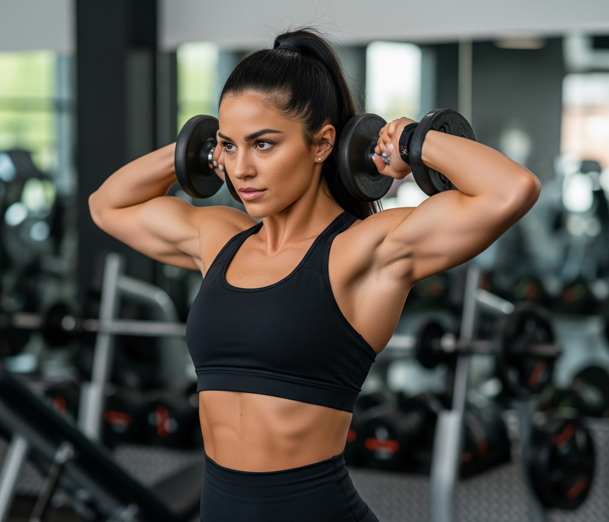
Say goodbye to flabby arms! These dumbbell tricep exercises target the often-neglected ‘back of the arm’ muscles, helping you build strength, improve flexibility, and achieve sleeve-busting definition.
🔍 What Dumbbell Tricep Exercises Target
Tricep exercises with dumbbells focus on the triceps brachii, the three-headed muscle responsible for arm extension, pushing movements, and overall upper body stability. Think of them as the secret weapon for toned, powerful arms!
✨ Key Benefits of Tricep Exercises with Dumbbells
✅ Builds arm strength and definition. Goodbye, jiggle!
✅ Improves pushing power for exercises like push-ups and bench presses
✅ Enhances functional flexibility for daily activities
✅ Boosts metabolic rate through muscle engagement
✅ Creates balanced arm development when paired with bicep work
🏋️ How To Do Tricep Exercises with Dumbbells: Complete Guide
“Your triceps make up two-thirds of your upper arm mass. If you want stronger, more defined arms, you need to train them, and dumbbells are one of the best tools for the job. This guide covers the most effective dumbbell tricep exercises, common mistakes to avoid, and the stretches you need to keep your arms healthy.”
🔍 Why Tricep Workouts Matter
The triceps are responsible for elbow extension. Anytime you push, press, or straighten your arm, they’re working. Strong triceps improve your bench press, push-ups, and overhead strength. They also balance the front and back of your arm, creating the definition that makes arms look strong even at rest.
Consistent tricep workouts build functional strength that carries over to sports, daily activities, and other gym movements.
🏋️ Tricep Exercises with Dumbbells: Step-by-Step
1️⃣ Overhead Tricep Extension
This movement targets the long head of the triceps, the part that gives your arms that horseshoe shape.
- Sit or stand holding one dumbbell with both hands overhead
- Lower the weight behind your head, elbows pointing upward (keep them tucked close to your ears)
- Extend arms fully to return to the starting position, squeezing your triceps at the top
- Repeat for 3 sets of 12-15 reps
Form cue: Keep your core engaged to prevent arching your lower back. If standing, place one foot slightly behind the other for stability.
2️⃣ Tricep Kickbacks
This isolation exercise targets the lateral and medial heads of the triceps, creating that defined line along the back of the arm.
- Lean forward with a dumbbell in one hand, opposite knee on a bench
- Keep your elbow tucked close to your body at 90 degrees
- Extend your arm fully backward, squeezing your triceps at the top
- Return to the start with control, don’t let momentum drop, the weight
- Repeat for 3 sets of 12-15 reps per arm
Form cue: Your upper arm should remain parallel to your body throughout. Only your forearm moves.
3️⃣ Close-Grip Dumbbell Press
This compound movement engages all three tricep heads while also activating the chest and shoulders.
- Lie on a bench with dumbbells held close together over your chest
- Press the weights upward until your arms are fully extended (but not locked)
- Lower with control, keeping your elbows close to your body
- Complete 3 sets of 10-12 reps
Form cue: Imagine you’re squeezing a pencil between your elbows. This keeps the tension on your triceps, not your chest.
4️⃣ Superset Option (For Advanced)
Combine overhead extensions and kickbacks with no rest between sets for a metabolic boost. This increases intensity without adding weight, perfect for home tricep workouts when heavier dumbbells aren’t available.
🔧 Modifications
Beginner: Use lighter weights or resistance bands. Focus on completing the full range of motion with control before increasing load.
Advanced: Add dropsets (reduce weight after reaching failure) or tempo variations like 3-second lowers to increase time under tension.
🧘 Post-Workout Stretches for Tricep Workouts
After training your triceps, your muscles are shortened and tight. These stretches restore length and prevent stiffness.
Tricep Stretch
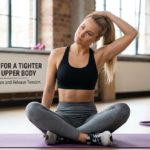
Raise one arm overhead, bend your elbow, and reach your hand toward the opposite shoulder blade. Gently pull your elbow with the opposite hand. Hold for 20-30 seconds per side. This tricep stretch is essential after any pressing or extension work.
Arm Stretches
Extend one arm across your chest, using the opposite hand to gently pull it closer. Hold for 20-30 seconds per side. General arm stretches keep your elbows and shoulders mobile.
Doorway Stretch
Stand in a doorway, place your forearms on the frame at shoulder height. Gently lean forward until you feel a stretch across your chest and front shoulders. Hold for 30 seconds. The doorway stretch opens the front of your shoulders, balancing the pressing work of tricep exercises.
Lat Stretch
Stand tall, reach one arm overhead, and gently lean to the opposite side. Hold for 20-30 seconds per side. Lat stretch opens the side body and prevents the tightness that can limit overhead mobility.
Forearm Flexor Stretch
Extend your arm forward with your palm up. Gently pull your fingers back toward you. Hold for 20-30 seconds per side. The forearm flexor stretch releases the muscles that connect to your elbow and complements tricep work.
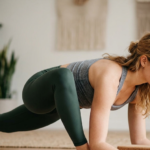
Thread the Needle Stretch
From hands and knees, slide one arm under the other, resting your shoulder on the floor. Hold for 20-30 seconds per side. The thread the needle stretch opens the upper back and rotator cuff areas that can tighten from heavy pressing.
🏋️ How Tricep Workouts Complement Other Exercises
| Exercise | How Triceps Help |
|---|---|
| Nordic curls | Strong triceps improve elbow stability during this hamstring exercise |
| Push-ups | Lockout strength comes from the triceps |
| Bench press | Lockout strength comes from triceps |
| Overhead press | Triceps control the final phase of the lift |
⚠️ Safety Tips & Common Mistakes
🚫 Don’ts
✖ Flare elbows during extensions – Keep them tucked close to your body to isolate the triceps and protect your shoulders
✖ Use momentum instead of muscle control – Swinging the weight recruits other muscles and reduces effectiveness
✖ Lock elbows abruptly at extension – Keep a soft bend to protect the joint
✖ Skip the warm-up – Cold triceps are more prone to strain
✅ Do’s
✔ Warm up with dynamic arm movements first – Arm circles, wrist rotations, and light resistance band work prepare the joints
✔ Focus on the mind-muscle connection – Feel the triceps working; don’t just move the weight
✔ Allow 48-hour recovery between sessions – Muscles grow during rest, not during the workout
✔ Include post-workout stretches – Tricep stretch, doorway stretch, and forearm flexor stretch maintain flexibility
✔ Progress gradually – Add weight only when you can complete all reps with perfect form
❓ FAQs
Q: How often should I do dumbbell tricep exercises?
A: 2-3 times weekly with at least one day of rest between sessions for optimal recovery and growth. Your tricep workouts should be spaced out to allow muscle repair.
Q: Can I combine bicep and tricep exercises in one workout?
A: Absolutely! Biceps and triceps together create a balanced arm routine. Try supersetting curls with extensions for efficiency.
Q: What weight should I use for tricep exercises with dumbbells?
A: Start with a weight that allows you to complete all reps with good form. Gradually increase as you get stronger.
Q: Why are tricep exercises with dumbbells effective?
A: Dumbbells allow for a greater range of motion and independent arm training, correcting imbalances and enhancing muscle activation.
Q: How long until I see results from dumbbell tricep exercises?
A: With consistent training and proper nutrition, you can expect noticeable improvement in strength within 4-6 weeks and visible definition in 8-12 weeks.
Q: What stretches should I do after tricep workouts?
A: Focus on tricep stretch, doorway stretch, lat stretch, forearm flexor stretch, and thread the needle stretch for complete upper body recovery.
🌟 Pro Tip
Pair your dumbbell tricep exercises with stretching and foam rolling to maintain flexibility and prevent tightness in the arms and shoulders. The triceps attach to the shoulder blade, keeping them long and flexible, which improves your overhead mobility and reduces strain on the rotator cuff. Include arm stretches and forearm flexor stretch in your cool-down, and use a foam roller on your triceps for deeper tissue release.