
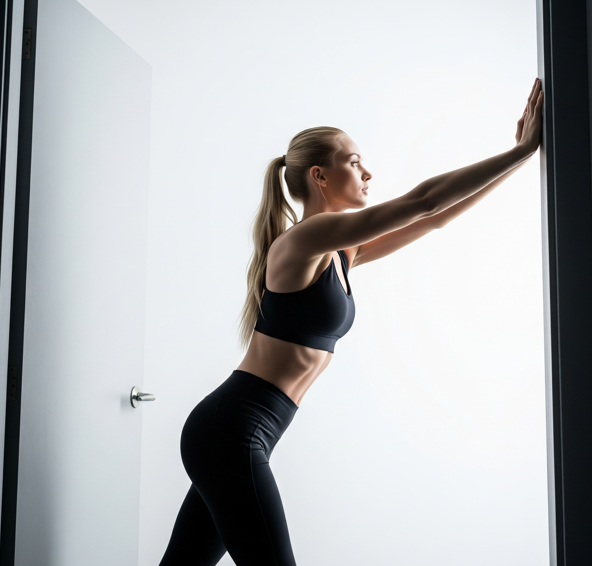
Doorway Stretch

Fix Poor Posture with Doorway Stretch Exercise

The doorway stretch is a simple yet powerful move that targets tight chest (pectoral) muscles, especially helpful for desk workers, gym-goers, and anyone battling “hunched” posture. Just using a door frame, this stretch helps counteract hours of slouching or phone use!

The doorway stretch is one of the most effective exercises for reversing the “rounded shoulder” posture that affects nearly 80% of desk workers and smartphone users. When you spend hours hunched forward, your pectoral muscles adapt by shortening and tightening, while your upper back muscles become overstretched and weak. This imbalance – known as upper crossed syndrome – can lead to chronic neck pain, tension headaches, and even reduced breathing capacity.

By consistently performing the doorway stretch, you’re not just opening your chest; you’re restoring balance to your entire upper body. This stretch targets the pectoralis major and minor, the primary muscles responsible for shoulder internal rotation and forward arm movement. When these muscles are tight, they limit your ability to reach overhead, pull your shoulders back, and maintain proper alignment during exercises like wall push-upspush exercises, and chest workouts at home.

Doorway arm stretches

Key Benefits of Doorway Stretches ✨

✅ Relieves Chest Tightness – Counters that “closed-up” feeling from sitting or bench pressing.

Improves Flexibility – Gently lengthens pectoral muscles for better shoulder mobility.

✅ Enhances Posture – Fights “tech neck” by opening the front of your shoulders.

Prevents Shoulder Pain – Reduces strain from imbalanced chest/back muscles.

Quick & Convenient – No equipment needed, just a doorway!

✅ Improves Breathing Capacity – A tight chest restricts rib cage expansion. Opening the chest allows for deeper, more efficient breaths – essential for exercises like burpees and jump squats.

✅ Enhances Shoulder Mobility – Regular stretching increases range of motion for overhead movements, making exercises like shoulder stretch with stick and front delt exercises more effective.

✅ Reduces Tension Headaches – Tight chest and shoulder muscles often refer tension to the neck and head; releasing them can reduce headache frequency.

✅ Complements Upper Back Strength – A flexible chest allows your rhomboid muscle stretch and scapular retractions to work more effectively, creating balanced posture.

✅ Supports Recovery After Upper Body Workouts – Post-exercise stretching reduces muscle soreness and maintains flexibility gained during trap workoutsback workouts with dumbbells, and kettlebell workouts.

🧠 Anatomy Deep Dive: Why Your Chest Needs the Doorway Stretch

The doorway stretch primarily targets two key muscles:


MuscleLocationFunctionWhy It Gets Tight
Pectoralis MajorLarge, fan-shaped muscle covering the upper chestAdducts and internally rotates the shoulder; draws arm across the bodyProlonged sitting, bench pressing without stretching, poor posture
Pectoralis MinorSmaller muscle beneath the major, attaches to ribsStabilizes the shoulder blade; assists in breathingChronic forward shoulder posture; stress and shallow breathing
Anterior DeltoidFront of the shoulderLifts the arm forwardOverdeveloped from pressing exercises without balanced pulling

Doorway Stretches

Lying Pectoral Stretch

Lying Pectoral Stretch

Deep chest opener for tight pecs! Lie face-up on a bench, extend arms sideways with palms up, and relax into the stretch for 30 secs. Perfect post-workout or for desk hunch relief.
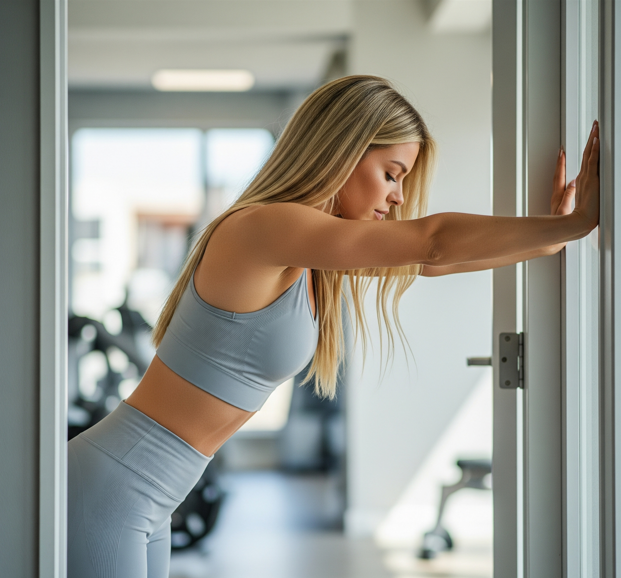
Chest doorway stretch

Chest Stretch Doorway

The ultimate antidote to slouching! This stretch opens your pecs like unzipping a tight jacket, perfect after long hours at a desk or post-workout
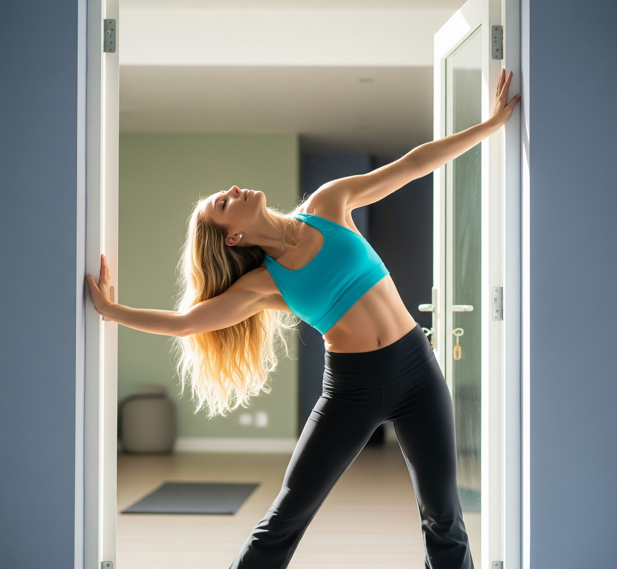
Doorway Stretch

Pectoral Doorway Stretch

Like giving your chest muscles a deep tissue massage! Targets both major and minor pecs for serious tightness relief
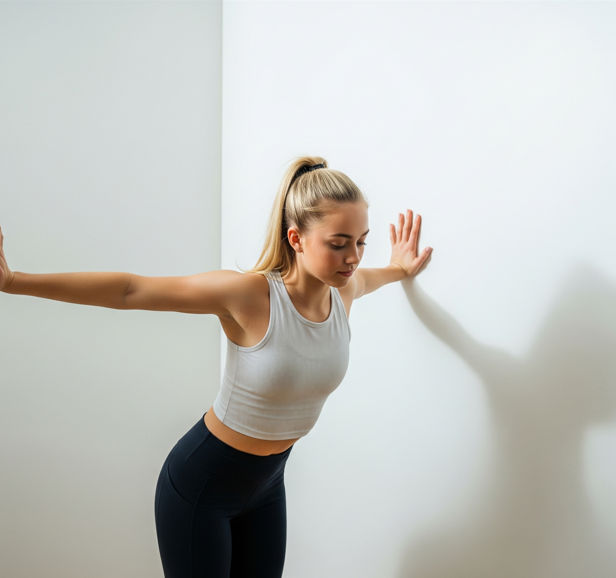
corner pectoral stretch

Corner Pectoral Stretch

Instant posture fix! Stand in a corner, place forearms on each wall, and lean forward gently. Great for quick chest tension release during work breaks

👥 Who Should Do the Doorway Stretch

🪑 Desk Workers

Counteracts 8+ hours of slouching by opening the chest and realigning shoulders.

🏋️ Weightlifters

Restores length to overworked pectorals, improving range of motion for presses and pulls.

📱 Smartphone Users

Fights “text neck” and rounded shoulders caused by hours of looking down at devices.

🧘 Yoga Practitioners

Prepares the chest for backbends like Cobra and Wheel, enhancing spinal mobility.

🏃 Runners & Cyclists

Opens the chest for deeper breathing and improves arm swing mechanics.

🎮 Gamers

Prevents the hunched posture developed during long gaming sessions.

👴 Older Adults

Maintains upright posture and reduces age-related forward rounding of the shoulders.

🤸 Athletes in Overhead Sports

Improves shoulder mobility for swimming, tennis, basketball, and volleyball.

🧑‍💻 Remote Workers

Quick, equipment-free stretch for home office breaks—no gym required.

🧘‍♀️ Anyone with Poor Posture

Essential daily maintenance for anyone who spends time sitting, driving, or looking down.

📅 Daily Doorway Stretch Routine

Time of DayDurationHow to Incorporate
Morning1 minutePerform the basic doorway stretch while waiting for coffee to brew—opens chest after sleeping in a curled position
Mid-Morning Break1-2 minutesCorner pectoral stretch at the office kitchen or break room; quick reset before returning to desk
Post-Lunch1 minuteStanding doorway stretch to counteract the slump that follows sitting after a meal
Pre-Workout30-60 secondsGentle dynamic version as part of your warm-ups to prepare chest and shoulders
Post-Workout1-2 minutesDeep holds after push exercises, chest workouts at home, or kettlebell workouts to maintain flexibility
Evening2 minutesLonger holds with deep breathing to release accumulated tension before bed

🚪 Best Doorways for This Stretch

For maximum safety and effectiveness, choose a doorway with a sturdy frame that doesn’t swing. Avoid using a door that can move – opt for a corner, wall edge, or a doorframe in a hallway. If you’re at the office, use a door that remains open against a wall for stability.

🔄 Combine with These Moves for Better Results

The doorway stretch opens your chest, but lasting posture change requires balance. Pair it with scapular retractions to strengthen the muscles between your shoulder blades, and chin tuck stretch to correct forward head posture. For a complete upper body reset, follow with upper trap stretch and wall angel stretch. This 3-minute combination addresses the full chain of “tech neck” – from chest to upper back to neck – giving you more lasting relief than any single stretch alone.

How To Do a Doorway Stretch 🔄

1️⃣ Lying Pectoral Stretch

  • Lie face-up on the floor/bench with knees bent
  • Extend arms sideways at 90° (T-position), palms up
  • Relax your shoulders into the surface for a deep chest stretch
  • Hold 30 seconds while breathing deeply

2️⃣ Chest Doorway Stretch (Basic Version)

  • Stand in doorway with elbows bent 90° at shoulder height
  • Place forearms on door frame (palms forward)
  • Step one foot forward until you feel chest expansion
  • Hold 20-30 seconds while breathing deeply

3️⃣ Pectoral Doorway Stretch (Advanced Variation)

  • Raise arms to a 120° angle (forming a “Y”) on the door frame
  • Keep elbows slightly bent to protect joints
  • Lean forward gently through the doorway
  • For a deeper stretch, slightly bend your knees
  • Hold 15-20 sec per side

4️⃣ Corner Pectoral Stretch

  • Stand facing a corner, 1 step away
  • Place forearms flat on each wall at shoulder height
  • Gently lean your chest forward until a stretch is felt
  • Hold 20-30 seconds, keeping core engaged

Quick Reference Table

Muscles Worked

Difficulty Level

Pectoralis Major/Minor

Beginner to Advanced

Anterior Shoulders

Adjustable Intensity

Biceps (lightly)

Depends on Arm Position

Safety Tricks 🛡️

✔ Engage Your Core – Prevents arching your lower back.

✔ Start Light – Ease into the stretch to avoid overloading tendons.

✔ Align Elbows – Keep them at shoulder height for proper pec targeting.

Avoid These Mistakes

✖ Bounce – Smooth, static stretches work best.

✖ Overstretch – Mild tension is good; sharp pain means STOP.

✖ Hold Breath – Deep breathing enhances flexibility gains.

FAQ

How often should I do the doorway stretch?

For posture correction, aim for 2-3 times daily, especially if you have a desk job. Hold each stretch for 20-30 seconds, repeating 2-3 times per session. Incorporate it into your 5-minute daily stretching routine for consistency

Absolutely. Rounded shoulders are often caused by tight chest muscles pulling the shoulders forward. The doorway stretch directly counteracts this by lengthening the pectorals. For complete correction, combine with scapular retractions, rhomboid muscle stretch, and upper trap stretch to strengthen the opposing muscles.

This is common, especially if you have very tight shoulders or incorrect form. Ensure your elbows are at or slightly below shoulder height, and focus on keeping your shoulders relaxed – not shrugged up toward your ears. For additional shoulder mobility, explore shoulder stretch with stick and wall angel stretch.

If you have a history of shoulder impingement, rotator cuff issues, or labral tears, approach this stretch cautiously. Start with a shallow lean and minimal arm elevation. Stop immediately if you feel sharp pain. For guided rehabilitation, consider physical therapy exercises for headaches and rotator cuff exercises designed for recovery.

Yes. Tight pectorals limit the range of motion and can contribute to shoulder strain during pressing movements. Regular stretching allows for a more natural bar path and reduces injury risk. Pair with back workouts with dumbbells and pull day exercises to maintain muscle balance.

Quick Tip:

Whether you call it a chest doorway stretch, pec doorway stretch, or pectoral doorway stretch, this move is a must for desk warriors and athletes alike. Do it daily to stand taller and breathe easier!