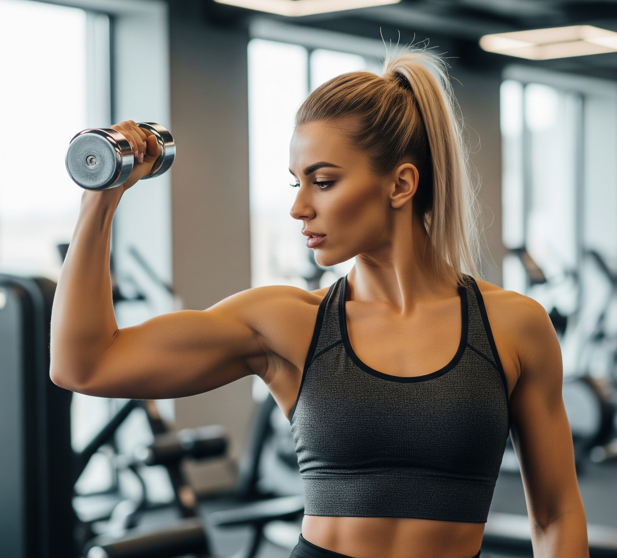
Pull your way to power! Pull-day exercises target your back, biceps, and rear shoulders, helping you build a V-taper, improve your posture, and boost overall strength. Think of it as your secret weapon for a balanced, powerful physique!
🔍 What Pull Day Exercises Target
Pull day exercises focus on muscles used in pulling motions like your lats, bicep workouts, rhomboids, and rear delts. This routine enhances upper body strength, improves flexibility, and supports better posture by counteracting all that time we spend hunched over screens.
✨ Key Benefits of Pull Day Exercises
✅ Builds a stronger back – Hello, V-taper and improved posture!
✅ Boosts grip strength – Essential for lifts and daily tasks
✅ Enhances flexibility – Promotes shoulder and spinal mobility
✅ Balances push muscles – Prevents injuries and muscle imbalances
✅ Develops arm definition – Biceps and forearms get love too!
🏋️ Pull Day Exercises: The Complete Guide to Building a Stronger Back
“A strong back isn’t just about looking good; it’s the foundation of good posture, injury prevention, and functional strength. Pull day trains the muscles that pull: your lats, rhomboids, rear delts, and biceps. Master these movements, and you’ll build a physique that’s both powerful and resilient.”
🔍 Why Pull Day Matters
Most people focus on pushing movements, chest presses, push-ups, and shoulder presses because they see them in the mirror. But neglect your pulling muscles, and you’ll develop rounded shoulders, poor posture, and eventually shoulder pain. A balanced pull day strengthens the upper back, improves your posture, and creates the structural balance your body needs.
🏋️ Pull Day Exercises: Step-by-Step
1️⃣ Dumbbell Rows
The dumbbell row is a foundational back builder. It targets the lats, rhomboids, and traps while challenging your core stability.
- Place one knee and hand on a bench, keeping your back flat,like a tabletop
- Hold a dumbbell in the free hand, arm extended straight down toward the floor
- Pull the weight to your hip, squeezing your back muscles at the top
- Lower with control, no dropping! The eccentric (lowering) phase builds just as much strength
- Sets: 3-4 x 10-12 reps per side
Form cue: Keep your torso still. If you’re rotating or using momentum, the weight is too heavy.
2️⃣ Pull-Ups (or Lat Pulldowns)
Pull-ups are the ultimate test of relative upper-body strength. They build width in your lats and develop the upper back like no other exercise.
- Grip a bar wider than shoulder-width (overhand grip)
- Pull yourself up until your chin clears the bar
- Lower slowly, fight gravity on the way down
- Modification: Use a resistance band for assistance, or use a lat pulldown machine if available
- Sets: 3 x 8-10 reps
Form cue: Lead with your chest, not your arms. Imagine pulling your chest to the bar, not just getting your chin over it.
3️⃣ Bicep Curls
No pull day is complete without bicep work. Your biceps assist in every pulling movement train them directly to build complete arm strength.
- Stand tall with dumbbells at your sides, palms facing forward
- Curl the weights up toward your shoulders, squeezing your biceps at the top
- Lower slowly no swinging!
- Variation: Hammer curls (palms facing each other) for brachialis development
- Sets: 3 x 12-15 reps
Form cue: Keep your elbows pinned to your sides. Only your forearms should move.
4️⃣ Face Pulls
Face pulls are the best exercise for shoulder health. They target the rear delts, rotator cuff, and upper back muscles that are often weak from too much pressing.
- Attach a rope to a cable machine at upper chest height
- Pull the rope toward your face, elbows high and wide
- Squeeze your rear delts and upper back at the end of the movement
- Bonus: This exercise is excellent for preventing shoulder impingement
- Sets: 3 x 15 reps
Form cue: Think “pull apart” at the end of the movement, externally rotate your shoulders for full rear delt activation.
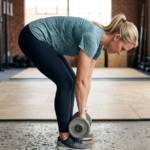
5️⃣ Deadlifts
Deadlifts are the king of full-body strength. They build your entire posterior chain hamstrings, glutes, lower back, and traps while teaching you to brace and hinge.
- Stand with feet hip-width apart, dumbbells in front of you (or a barbell if available)
- Hinge at the hips, keep your back flat, and grab the weights
- Drive through your heels to stand tall, keeping the weights close to your body
- Modification: Use lighter weights or kettlebells until you master the hip hinge
- Sets: 3 x 8-10 reps
Form cue: Your spine should stay neutral throughout. If your lower back rounds, you’re not hinging correctly.
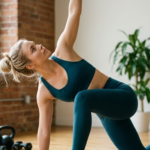
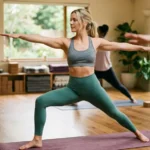
🧘 Post-Workout Stretches for Pull Day
After training your back and biceps, your muscles need to return to resting length. These stretches improve flexibility and prevent stiffness.
Back and Bicep Stretch
Stand with feet shoulder-width apart. Clasp your hands behind your back, palms together if possible. Straighten your arms and lift them away from your body, opening your chest and stretching your biceps. Hold for 20-30 seconds. This Back and Bicep Stretch targets the entire posterior chain.
Standing Back Bend Stretch
Stand tall, place your hands on your lower back. Gently lean backward, keeping your knees soft and core engaged. Hold for 15-20 seconds. The Standing Back Bend Stretch opens the front of your body and counteracts the forward posture of pulling exercises.
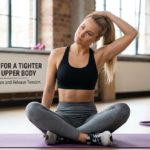
Upper Back Seated Twist
Sit on a chair or bench, feet flat. Cross your arms over your chest. Gently twist your torso to one side, using the back of the chair for leverage. Hold for 20 seconds per side. This upper back seated twist mobilizes the thoracic spine and releases tension between the shoulder blades.
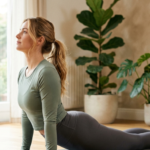
Cat Cow Stretch
On hands and knees, alternate between arching your back (Cow) and rounding your spine (Cat). Move slowly with your breath for 8-10 rounds. The cat cow stretch restores spinal mobility after the heavy loads of pull day.
Thread the Needle Stretch
From hands and knees, slide your right arm under your left arm, palm facing up. Rest your right shoulder and cheek on the floor. Hold for 20-30 seconds per side. The thread-the-needle stretch opens the upper back and releases the rotator cuff.
⚠️ Safety Tips & Common Mistakes
🚫 Don’ts
✖ Round your back during rows or deadlifts – This transfers load to your spinal discs instead of your muscles
✖ Use momentum to swing weights – Control is key; if you’re swinging, the weight is too heavy
✖ Skip warming up – Dynamic stretches are a must before pulling heavy weight
✖ Neglect your lower back – A weak lower back limits every pull exercise
✅ Do’s
✔ Engage your core throughout every movement – Your core protects your spine
✔ Focus on squeezing your back muscles – Don’t just move the weight; feel the contraction
✔ Allow 48-72 hours of recovery before hitting the pull muscles again
✔ Include post-workout stretches – Back and Bicep Stretch, cat cow stretch, and thread the needle stretch maintain flexibility
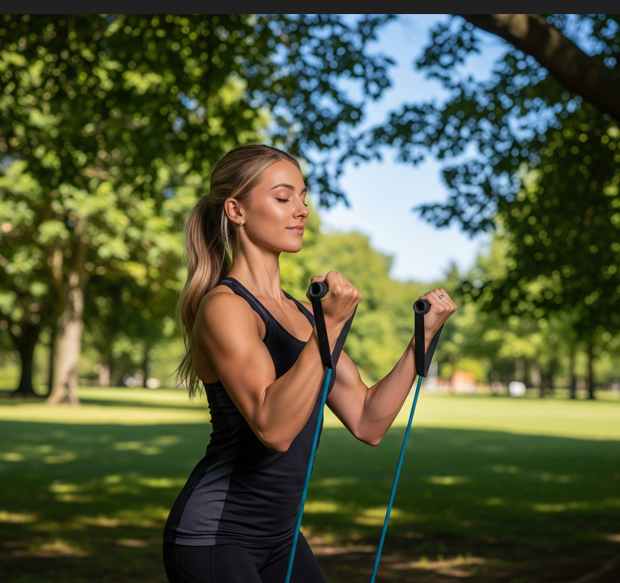
✔ Warm up your upper back first – Use band pull-aparts or light face pulls before heavy rows
🔗 How Pull Day Complements Your Routine
| Focus | Why It Matters |
|---|---|
| Upper back | Counteracts rounded shoulders from desk work and pushing exercises |
| Lower back | Stabilizes your spine during deadlifts and rows |
| Back and Bicep Stretch | Maintains flexibility after heavy pulling |
| Cat cow stretch | Restores spinal mobility after loaded flexion |
| Thread the needle stretch | Opens the upper back and releases shoulder tension |
❓ FAQs
Q: How often should I do pull day exercises?
A: 1-2 times per week, with at least 2 days of rest between pull sessions to allow muscles to recover and grow.
Q: Can I do pull day exercises at home?
A: Absolutely! Dumbbells, resistance bands, and even pull-up bars can be used for an effective pull day routine at home.
Q: What’s the difference between pull day and push day?
A: Pull day focuses on back exercises, biceps, and rear delts (pulling motions), while push day targets chest, shoulders, and triceps (pushing motions).
Q: Why is grip strength important on pull day?
A: A strong grip improves performance on rows, pull-ups, and deadlifts, and helps in daily activities like carrying groceries or opening jars.
Q: Can pull day exercises help with posture?
A: Yes! Strengthening your upper back and rear shoulders counteracts slouching and supports an upright, confident posture.
Q: What stretches should I do after pull day?
A: Focus on Back and Bicep Stretch, Standing Back Bend Stretch, upper back seated twist, cat cow stretch, and thread the needle stretch.
Pair your pull day exercises with dynamic stretching and foam rolling to maintain flexibility and reduce muscle soreness. And remember: quality over quantity. Five perfect rows are worth more than ten sloppy ones. Also, don’t neglect your upper back mobility. The cat cow stretch and thread the needle stretch keep your spine healthy between heavy pulling sessions!