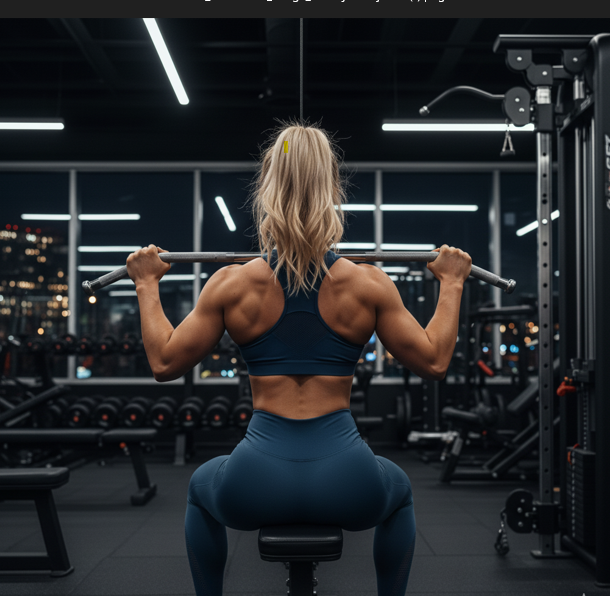
This back and bicep workout targets your upper and mid-back muscles along with your biceps, helping you build strength, tone your arms, and improve flexibility in your shoulders and spine. Whether you’re using free weights, dumbbells, or doing a back and bicep workout at home, this routine enhances posture and overall mobility. 🤸♂️
🌟 Key Benefits of Back and Bicep Workout
✅ Builds a stronger, more sculpted upper body
✅ Increases flexibility in your back and shoulders
✅ Improves posture and spinal alignment
✅ Boosts grip strength and functional movement
✅ Reduces lower back pain and muscle stiffness
✅ Enhances mental focus and muscle-mind connection 🧠
🧭 How To Do a Back and Bicep Workout: Complete Guide
“A strong back and powerful biceps aren’t just for looks; they improve your posture, protect your shoulders, and make everyday activities like carrying groceries or lifting your kids feel effortless. This workout targets your pulling muscles with dumbbells and bodyweight exercises.
🔍 Why Back and Bicep Workouts Matter
Your back is made up of two key regions. Your upper back (rhomboids, traps, and rear delts) controls your posture and shoulder position. Your lower back (erector spinae) stabilizes your spine during every bend and lift. Neglect either, and you risk rounded shoulders, poor posture, and eventually pain.
This workout uses back workouts with dumbbells to build strength across both regions while also targeting your biceps the primary pulling muscle of your arms.
🔹 1. Dumbbell Rows
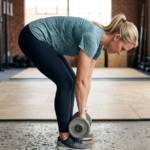
Dumbbell rows are one of the most effective exercises for targeting the back muscles with dumbbells. They target your lats, rhomboids, traps, and biceps while challenging your core stability.
- Hold a dumbbell in each hand, hinge at your hips, and keep your back flat
- Pull both dumbbells toward your ribs, squeezing your shoulder blades together
- Slowly lower them down that’s one rep
Form Cue: Your torso should remain stable. If you’re twisting or using momentum, the weight is too heavy.
🔸 Beginner Tip: Use lighter weights to maintain proper form. Focus on squeezing your upper back at the top of each rep.
🔸 Advanced: Add a pause at the top for 2-3 seconds to increase time under tension. You can also perform single-arm rows for a greater range of motion.
Why This Works: Dumbbell rows build thickness in your upper back, which improves posture and creates that “V-taper” look.
🔹 2. Pull-Ups or Assisted Pull-Ups
Pull-ups are the ultimate test of relative back strength. They build width in your lats and develop your biceps and grip.
- Grip the bar shoulder-width apart (overhand grip)
- Pull your chest toward the bar, engaging your lats and biceps
- Lower yourself with control, don’t drop
Form Cue: Lead with your chest, not your arms. Imagine pulling your chest to the bar, not just getting your chin over it.
💡 Modification: Use a resistance band for assistance if you’re a beginner. You can also use a pull-down machine or perform negatives (lowering yourself as slowly as possible after jumping up).
Why This Works: Pull-ups develop the width of your upper back, creating the appearance of broader shoulders and a narrower waist.
🔹 3. Hammer Curls
Hammer curls target the brachialis muscle, located underneath your biceps, to add thickness to your arms.
- Stand tall with dumbbells by your sides, palms facing in (neutral grip)
- Curl both weights up to shoulder height, keeping your elbows pinned to your sides
- Lower slowly and repeat
Form Cue: Keep your wrists neutral throughout, no twisting.
💪 Advanced: Try alternating arms or slow negatives (3-4 seconds down) for added challenge.
Why This Works: While your upper back and lats do the heavy lifting in rows and pull-ups, your biceps assist. Training them directly builds complete arm strength.
🔹 4. Supermans (Bodyweight Stretch)
This bodyweight move strengthens your lower back and improves spinal mobility.
- Lie face down on a mat with arms extended forward
- Lift your chest, arms, and legs off the ground simultaneously
- Hold for 2–3 seconds, then relax
Form Cue: Look at the floor, not forward, to keep your neck neutral. Squeeze your glutes to protect your lower back.
This move increases flexibility and strengthens your lower back essential for maintaining good posture during standing and sitting.
🔹 5. Bicep Stretch
After working your biceps, they’re shortened and tight. This stretch restores length.
- Extend one arm out to the side at shoulder height
- Gently rotate your palm outward until you feel a stretch in your bicep
- Hold for 20–30 seconds per side
Why This Works: Maintaining flexibility in your biceps prevents the “tight curl” posture and keeps your shoulders mobile.
🧘 Post-Workout Stretching for Back and Biceps
After any back workouts with dumbbells, your muscles need to return to resting length.
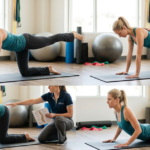
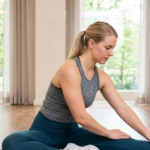
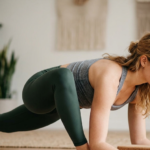
Upper Back Stretch (Child’s Pose Variation): From hands and knees, sit back on your heels and reach your arms forward. Walk your hands to one side, feeling the stretch through your lat and upper back. Hold for 20 seconds per side.
Lower Back Release: Lie on your back and pull both knees toward your chest. Gently rock side to side. This releases your lower back after rows and deadlifts.
Doorway Bicep Stretch: Stand in a doorway, extend your arm straight back with palm facing forward, and gently turn your body away. Hold for 20-30 seconds per side.
🔄 Sample Weekly Schedule
| Day | Workout | Focus |
|---|---|---|
| Monday | Back and biceps | Strength focus |
| Tuesday | Rest or light cardio | Active recovery |
| Wednesday | Push workout (chest, shoulders, triceps) | Balance |
| Thursday | Rest | Recovery |
| Friday | Back and biceps | Endurance focus |
| Saturday | Lower body | Leg strength |
| Sunday | Complete rest | Recovery |
🦺 Safety Tricks to Keep in Mind
✅ Warm up before every session to improve joint flexibility and prevent injury
✅ Maintain a straight spine and avoid rounding your back during rows
✅ Control your movements; don’t rush through reps
✅ Hydrate well and take rest days between sessions
✅ Keep your core engaged throughout every exercise. This protects your lower back
✅ Focus on your upper back during rows, imagine squeezing a pencil between your shoulder blades
⚠️ Common Mistakes to Avoid
🚫 Using too much weight too soon – Form always comes first, especially with back workouts with dumbbells
🚫 Swinging your arms during curls instead of isolating your biceps
🚫 Neglecting to stretch your back post-workout – Your lower back and upper back need to return to resting length
🚫 Skipping rest and recovery time for your muscles
🚫 Letting your lower back round during rows – This transfers load to your spinal discs instead of your muscles
🚫 Pulling with your arms instead of your back – Think about driving your elbows back, not pulling with your hands
🙋♂️ FAQs
1. Can I do this workout at home without equipment?
A: Yes! You can replace dumbbells with filled water bottles or resistance bands for a great back and bicep workout at home. Focus on control rather than weight.
2. How often should I train back and biceps?
A: 2 times a week is ideal, allowing your muscles enough recovery time for growth. Your lower back, in particular, needs recovery after rows.
3. Is this workout suitable for beginners?
A: Absolutely! Start with the basic version and gradually increase weight and intensity. Focus on mastering back workouts with dumbbells before adding load.
4. Can this workout help improve flexibility?
A: Yes! Supermans and post-workout stretches boost flexibility and mobility in your upper back and shoulders.
5. What’s the difference between a dumbbell and a free weight back and bicep workout?
A: Both focus on muscle strength, but dumbbells allow more control and are beginner-friendly, while free weights (like barbells) help lift heavier weights for advanced users. For back workouts with dumbbells, you also get a greater range of motion.
6. Why is upper back strength important for posture?
A: Your upper back muscles (rhomboids and traps) pull your shoulders back, counteracting the forward slump from desk work and phone use. Weak upper back muscles are a primary cause of rounded shoulders.
7. How can I protect my lower back during rows?
A: Keep your core engaged, maintain a flat back, and hinge at your hips, not your waist. A strong lower back supports every lift, but it shouldn’t be the primary mover.
💡 Pro Tip
To maximize results, stretch your back and biceps after every session to boost flexibility, reduce soreness, and enhance muscle recovery. You can also add a doorway bicep stretch to improve arm mobility and loosen tight muscles. Pair this workout with proper hydration, quality sleep, and a protein-rich diet for long-term gains.
Remember: Strong upper back muscles improve your posture and shoulder health. A resilient lower back protects you from injury during daily activities. And consistent back workouts with dumbbells build the pulling strength that carries over to everything else you do.