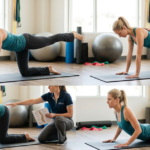

Tired of that nagging ache in your lower back? These gentle yet powerful exercises for lower back pain are designed to relieve tension, build strength, and restore flexibility, all from the comfort of your own home.
If you’ve ever finished a long day at work with a stiff, aching lower back, or woken up feeling like your spine needs to “unlock,” you’re not alone. Lower back pain affects nearly 80% of adults at some point in their lives – and for many, it’s a recurring issue that disrupts sleep, limits activity, and affects quality of life.
The good news is that most lower back pain is mechanical – meaning it stems from muscle imbalances, poor posture, or lack of movement – and can be improved with the right exercises. The key is addressing not just the lower back itself, but the connected structures: the hips, glutes, hamstrings, and core. When these supporting muscles are weak or tight, your lower back compensates, leading to strain and discomfort.
Modern life is tough on backs. Hours of sitting shorten the hip flexors, weaken the glutes, and create a posture where the pelvis tilts forward, placing constant tension on the lumbar spine. The exercises in this guide target these underlying issues, helping you build a foundation for a pain-free back.
 What These Exercises Target
This routine specifically targets tightness in your lower back muscles, hips, glutes, and hamstrings, which are common culprits behind discomfort and stiffness. Whether your pain comes from sitting all day or overexertion, these movements offer a natural solution
 Key Benefits of Exercises for Lower Back Pain
 Relieves stiffness and discomfort in the lumbar region
Improves flexibility to support spinal health and mobility
Strengthens core and hip muscles to prevent future pain
Enhances posture by counteracting slouching and imbalances
Reduces stress through mindful movement and breathing
Strengthens the Glutes – Strong glutes take pressure off the lower back during daily activities like walking, climbing stairs, and lifting
Improves Hip Mobility – Tight hip flexors pull the pelvis forward; releasing them relieves lumbar tension
Stretches Tight Hamstrings – Hamstring tightness is a major contributor to lower back pain; these exercises lengthen them safely
Builds Core Stability – A strong core acts as a natural back brace, protecting your spine during movement
Promotes Spinal Mobility – Gentle movement lubricates the joints and prevents stiffness from prolonged sitting
 Step-by-Step Exercises to Reduce Lower Back Pain
 Cat-Cow Stretch
- Inhale, arch your back, and lift your head (Cow Pose).
- Exhale, round your spine, and tuck your chin (Cat Pose).
- Transition gently into Child’s Pose by sitting back on your heels, folding forward, and extending your arms.
- Return to tabletop and repeat the Cat-Cow stretch 10 times, moving slowly with your breath.


 Child’s Pose
- Kneel on the floor and sit back on your heels.
- Fold forward, resting your forehead on the ground.
- Extend arms forward or alongside your body.
- Hold for 30 seconds, breathing deeply.
 Knee-to-Chest Stretch
- Lie on your back with knees bent.
- Hug one knee toward your chest, keeping the other foot flat.
- Hold for 20 seconds, then switch sides.
- Advanced: Hug both knees at once.
 Pelvic Tilts
- Lie on your back, knees bent, feet flat.
- Gently flatten your lower back against the floor by tilting your pelvis upward.
- Hold for 5 seconds, then release.
- Repeat 15 times to engage your core.
 Glute Bridge
- Lie on your back, knees bent, arms at your sides.
- Lift your hips toward the ceiling, squeezing your glutes.
- Hold for 3 seconds at the top, then lower slowly.
- Repeat 12–15 times.
Modifications:
-
- Beginner: Use a pillow under your hips for support.
-
- Advanced: Add a resistance band above your knees.

Who Should Do These Exercises
These exercises are ideal for:
Desk workers and remote professionals – counteracts the effects of prolonged sitting
Anyone with chronic lower back stiffness – gentle movement restores mobility
Weightlifters – balances heavy lifting with flexibility and core stability
Runners – releases tension in the hips and hamstrings
Older adults – maintains spinal mobility and prevents stiffness
Pregnant individuals – gentle stretches can relieve lower back tension (consult doctor first)
Anyone recovering from a back strain – controlled movements rebuild strength safely
Yoga practitioners – deepens understanding of spinal alignment
Anyone with poor posture – essential for correcting pelvic tilt
Anyone wanting to prevent future back pain – proactive care is the best medicine
It works especially well when combined with cat cow stretch, child’s pose, piriformis stretch, and knees to chest stretch for complete back care.
 Safety Tips & Common Mistakes
 Don’ts
 Force painful movements – discomfort is okay, sharp pain is not. Hold your breath – breathe steadily to relax muscles. Skip warm-ups – gentle movement preps your body.
Do’s
 Start slow – gradually increase intensity. Focus on form – quality over quantity. Listen to your body – rest if needed.
 Pro Tip
Pair these exercises for lower back with daily walks and proper hydration to amplify results!