Stuck with stiff hips after hours of sitting? Meet your new best friend the lying hip flexor stretch. This zero equipment move targets those cranky front-hip muscles (psoas and quads) that tighten up like overstretched rubber bands from sitting, driving, or marathon Netflix sessions. Unlike standing stretches, this floor version lets gravity do the work, giving you a deeper release. Perfect for post-workout recovery or when you wake up feeling like the Tin Man. Bonus? You’ll feel the difference in just 30 seconds.
If you spend hours at a desk, in a car, or on a couch, your hip flexors are constantly in a shortened position. Over time, this leads to chronic tightness that affects not just your hips, but your lower back, knees, and even your mood. The lying hip flexor stretch is one of the most effective ways to reverse this damage.
Unlike standing stretches that require balance and can engage other muscles, the lying position allows your hip flexors to fully relax into the stretch. Gravity does the work, not your muscles. This makes it ideal for beginners, people recovering from injury, or anyone who wants a deep, passive release.
Regular practice of the lying hip flexor stretch improves posture, reduces lower back pain, and enhances athletic performance. For a complete hip mobility routine, pair this stretch with pigeon pose, butterfly stretch, and seated spinal twist.
✔ Deeper Than the Ocean 🏖️: Hits tight spots standing stretches can’t reach
✔ Bye-Bye, Back Pain: Loosens hip flexors that pull on your spine
✔ Mobility Magic: Prevents that stiff “robot walk” after sitting
✔ Stress Melter: Releases tension (because tight hips = grumpy mood)
✔ Better Workouts: Unleashes full range for squats, kicks, and runs
✔ Nap-Friendly 😴: Feels so good, you might drift off
✔ Improves Posture – Tight hip flexors tilt the pelvis forward, causing lower back arch. Releasing them helps realign your spine
✔ Enhances Athletic Performance – Flexible hips improve depth in reverse lunges, power in jump squats, and stability in kettlebell workouts
✔ Reduces Knee Strain – Tight hip flexors alter gait mechanics, putting stress on knees. This stretch restores natural movement patterns
✔ Supports Lower Back Health – When paired with lower back pain exercises and cat cow stretch, it provides comprehensive relief
✔ Prepares for Advanced Movements – Essential before single leg RDL, good mornings, and leg workouts
The lying hip flexor stretch targets several important muscles in the front of the hip and thigh:
| Muscle | Location | Function | Why It Gets Tight |
|---|---|---|---|
| Psoas Major | Deep core, connects spine to femur | Hip flexion, spinal stability | Prolonged sitting, stress, lack of movement |
| Iliacus | Inside pelvic bowl | Hip flexion, pelvic stability | Sitting with hips flexed for hours |
| Rectus Femoris | Front thigh (part of quadriceps) | Hip flexion + knee extension | Running, cycling, squats |
| Sartorius | Diagonal across thigh | Hip flexion + rotation | Cross-body movements, sitting cross-legged |
| Tensor Fasciae Latae (TFL) | Side of hip | Hip flexion + abduction | Lateral movements, running |
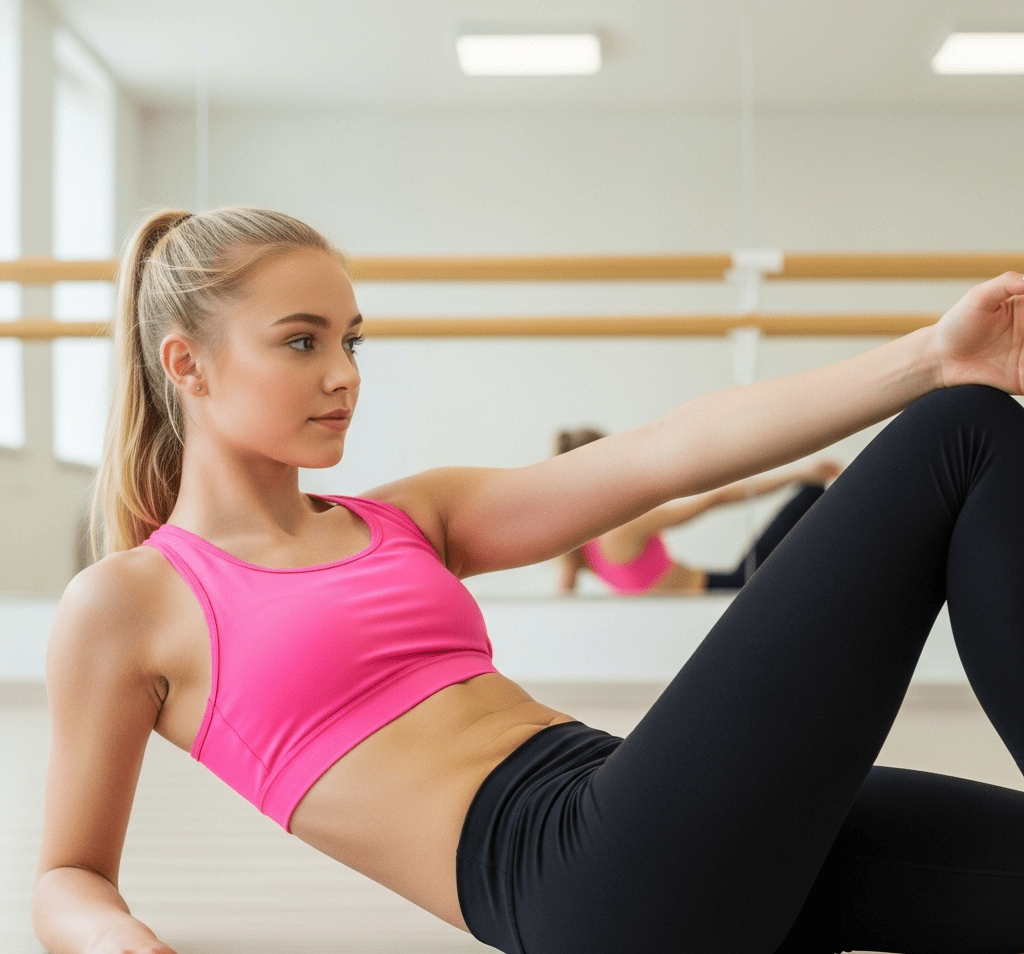
✔ Lie flat on your back (carpet or yoga mat recommended). Bend both knees, feet flat.
✔ Pull one knee toward your chest, keeping the other foot planted.
✔ Slowly straighten the non-hugged leg along the floor. Feel the front of that hip sigh in relief.
✔ Beginner: Keep the straight leg bent if it’s too intense.
✔ Advanced: Let the straight leg hover 2 inches above the floor for a fiery challenge.
✔ Stay for 30 sec per side. Imagine your hip melting into the floor.
This stretch is ideal for:
Desk workers and remote professionals – counteracts 8+ hours of sitting
Runners and cyclists – releases tightness from repetitive hip flexion
Weightlifters – improves squat depth and deadlift form
Older adults – maintains hip mobility for daily activities
Anyone with lower back pain – tight hip flexors are a major contributor
Pregnant individuals – gentle relief (modify with bent knees, consult doctor)
Anyone recovering from prolonged sitting – resets hips after long drives or flights
Yoga practitioners – deepens hip-opening poses
Athletes – enhances performance in jump squats, reverse lunges, and burpees
Anyone with “tight hips” – this stretch provides immediate relief
It works especially well when combined with kneeling hip flexor stretch, pigeon pose, and butterfly stretch for complete hip mobility.
| Stretch Variation | Muscles Worked | Difficulty Level | Key Benefit |
|---|---|---|---|
| Lying Hip Flexor Stretch (Standard) | Psoas, iliacus, rectus femoris | Beginner | Deep passive release |
| Lying Hip Flexor Stretch (Advanced) | Psoas, iliacus, rectus femoris, core | Intermediate | Adds core engagement |
| Kneeling Hip Flexor Stretch | Psoas, iliacus, rectus femoris | Beginner to Intermediate | Active stretch; weight-bearing |
| Standing Hip Flexor Stretch | Psoas, iliacus, rectus femoris | Beginner | Quick, upright version |
You’ve had recent hip surgery (ask your PT first!)
Sharp pain ≠ stretch (listen to your body’s “nope” signals)
Pregnant? Skip or modify with bent knees (consult doctor first)
If you have lower back issues, keep your spine pressed flat throughout
❌ Arching your back like a scared cat → Press your spine flat
❌ Holding your breath → Breathe like you’re fogging a mirror
❌ Rushing → Slow stretches = happier hips
❌ Lifting the straight leg too high → Keep it on the floor for best results
❌ Forgetting the other side → Always stretch both legs equally
✔ Use a yoga mat or carpet for comfort
✔ Breathe deeply throughout the hold
✔ Move slowly and with control
✔ Pair with calf stretches and glute stretches for complete lower body relief
For best results, aim for daily practice, especially if you sit for long hours. Hold each side for 30-60 seconds. Incorporate into your 5-minute daily stretching routine or ten morning stretches.
Yes. Tight hip flexors pull on the pelvis, creating excessive lower back arch. Releasing them reduces this strain. For comprehensive relief, combine with lower back pain exercises, cat cow stretch, and child’s pose.
This is common, especially if your rectus femoris (a quadriceps muscle) is very tight. Bend your straight leg slightly to shift the stretch deeper into the hip flexor. For additional quad relief, explore kneeling quadriceps stretch and standing quadriceps stretch.
Yes, when performed correctly. Keep the straight leg relaxed and don’t lock the knee. If you have existing knee issues, place a small cushion under your knee for support. For knee health, also explore leg extensions and terminal knee extension.
The lying version is passive – gravity does the work. The kneeling version is active – you control the intensity. Both are excellent; use lying for deep relaxation and kneeling for active warm-ups. For a complete routine, practice both alongside pigeon pose and butterfly stretch.
Pair this with a seated butterfly stretch for a full hip reset!