Ever felt like your hips are locked in a vice after a long day of sitting? The frog pose stretch is your reset button, a deep, powerful stretch that targets your inner thighs, groin, and hip flexors, helping you move with greater flexibility and freedom.”
🔍 What Is the Frog Pose Stretch?
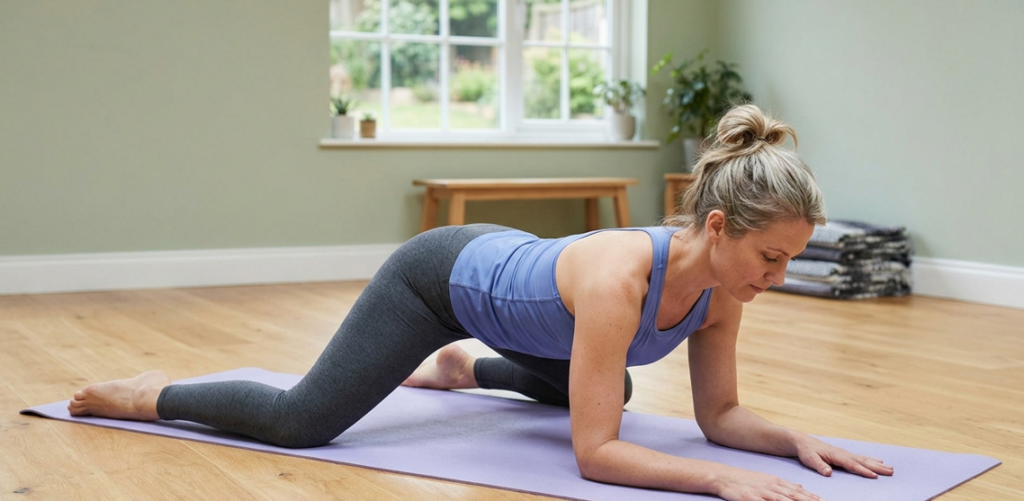
The frog pose stretch (Mandukasana in yoga) is a grounded, wide-knee kneeling position that deeply opens the adductors (inner thigh muscles) and groin. Think of it as a frog stretch for the hips that mimics a frog’s resting posture, knees wide, feet together, hips sinking toward the floor. It’s one of the most effective stretches for improving hip flexibility, relieving lower back tension, and preparing the body for deeper movements like squats and lunges.
What does the frog pose stretch? It primarily targets the adductors, groin, hip flexors, and lower back, while also gently opening the chest and shoulders.
✨ Key Benefits of Frog Pose Stretch
✅ Deeply Opens the Inner Thighs & Groin – The adductor frog stretch targets the often-neglected adductors, improving flexibility for splits, squats, and lateral movements.
✅ Relieves Lower Back & Hip Tension – Tight hips and groin pull on the pelvis, contributing to lower back pain. This frog hip stretch releases that tension.
✅ Improves Posture & Pelvic Alignment – By opening the hips, the frog stretch for hips helps realign the pelvis, reducing anterior pelvic tilt.
✅ Enhances Athletic Performance – Runners, dancers, and weightlifters benefit from greater hip mobility and flexibility in lateral movements.
✅ Prepares the Body for Advanced Poses – A foundational stretch for yoga poses like Lotus, Bound Angle, and wide-legged forward folds.
✅ Promotes Relaxation & Stress Relief – The grounded, surrendering position calms the nervous system and releases emotional tension stored in the hips.
📝 How to Do the Frog Stretch: Step-by-Step
🔹 How to Do Frog Pose (Classic Version)
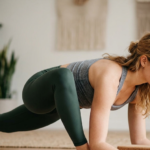
- Start on all fours in a tabletop position, hands under shoulders, knees under hips.
- Slowly widen your knees as far as comfortable, keeping your shins and knees in line with your hips.
- Bring your big toes together behind you, keeping your heels touching or close.
- Sink your hips back toward your heels, keeping a flat back.
- Rest on your forearms or lower your chest toward the floor.
- Hold for 30 seconds to 2 minutes, breathing deeply into your inner thighs and groin.
- To release, slowly bring your knees together and sit back on your heels into Child’s Pose.
🔹 Lying Frog Stretch (Supine Version)
- Lie on your back with knees bent and feet flat on the floor.
- Let your knees fall open toward the floor, bringing the soles of your feet together (like Butterfly Pose).
- Allow gravity to deepen the stretch in your inner thighs and groin.
- Hold for 1–3 minutes, breathing deeply.
- This lying frog stretch is gentler on the knees and perfect for beginners or those with sensitive joints.
🔹 Frog Squat Stretch (Standing Dynamic Version)
- Stand with feet wide (wider than shoulder-width), toes pointed slightly outward.
- Lower into a deep squat (frog squat), keeping your chest lifted and back straight.
- Press your knees outward with your elbows to deepen the groin stretch.
- Hold for 15–30 seconds or pulse gently.
- This frog squat stretch is excellent for warming up before leg day or as a functional mobility drill.
🔧 Modifications for All Levels
| Level | Adjustment |
|---|---|
| 🟢 Beginner | Place a cushion or folded blanket under your knees. Keep your chest higher on forearms or blocks. Reduce knee width. |
| 🟡 Intermediate | Sink hips closer to heels. Extend arms forward to lower chest toward the floor. Hold for 1 minute. |
| 🔴 Advanced | Walk hands forward to deepen the stretch. Keep hips wide and groin close to the floor for 2+ minutes. |
🧘 How Long Should You Hold Frog Pose?
| Goal | Hold Time | Frequency |
|---|---|---|
| General flexibility | 30–60 seconds | 3–5 times per week |
| Deep hip opening | 1–2 minutes | 4–6 times per week |
| Yin yoga style release | 3–5 minutes | 2–3 times per week |
Pro Tip: Use your breath to deepen the stretch. Inhale to lengthen, exhale to sink deeper.
🌟 What Are the Benefits of Frog Pose? (Summary)
| Benefit | Why It Matters |
|---|---|
| Frog stretch benefits include improved hip mobility | Essential for squats, lunges, and daily movement |
| Releases groin and inner thigh tension | Prevents strains and improves lateral movement |
| Alleviates lower back pain | Tight hips pull on the pelvis; release them to free your back |
| Prepares for meditation | Opens hips for comfortable seated postures |
| Enhances flexibility for splits and straddles | Key stretch for dancers, gymnasts, and martial artists |
🔗 How Frog Pose Complements Other Stretches
| Stretch | How It Pairs with Frog Pose |
|---|---|
| Glute stretch (Pigeon or Figure-Four) | Balances inner thigh work with outer hip release |
| Cat cow stretch | Prepares the spine before deep hip opening |
| Butterfly stretch | Similar adductor focus, but seated and gentler |
| Wide-legged forward fold | Extends the hamstrings while hips remain open |
For a complete lower body mobility routine, sequence: Cat cow stretch → Frog pose → Glute stretch → Seated forward fold.
⚠️ Safety Tricks & Common Mistakes
🚫 Don’ts
✖ Force your knees wider than comfortable – Listen to your body; progress takes time.
✖ Arch your lower back – Keep a neutral spine; sinking too low can strain the lumbar spine.
✖ Hold your breath – Breathe deeply to help muscles release.
✖ Bounce or pulse aggressively – Smooth, static holds are safer and more effective.
✖ Ignore knee pain – If your knees hurt, add more padding or try the lying frog stretch.
✅ Do’s
✔ Use padding – Place a folded blanket or yoga mat under your knees for comfort.
✔ Engage your core – Protects your lower back and stabilizes the pelvis.
✔ Keep weight in your hips – Distribute weight evenly, not dumping into your knees.
✔ Move slowly – Ease into the stretch over several breaths.
✔ Exit gently – Roll to one side or use your hands to push up; never jerk out of the pose.
✔ Combine with cat cow stretch before – Warms up the spine and connects breath to movement.
❓ FAQs
Q: How to Do Frog Pose safely if I have knee issues?
A: Use extra padding under your knees. Keep the stretch gentle and reduce knee width. For sensitive knees, practice the lying frog stretch on your back with gravity doing the work.
Q: What does the frog pose stretch?
A: The frog pose stretches the adductors (inner thighs), groin, hips, and lower back. It also gently opens the chest and shoulders.
Q: Is the frog pose a glute stretch?
A: While it primarily targets the inner thighs, the frog pose stretch also engages the glutes as stabilizers. For a deeper glute stretch, pair it with Pigeon Pose or Figure-Four.
Q: How often should I do the frog stretch for hips?
A: For general maintenance, 3–4 times per week. For deep hip opening or addressing tightness, daily practice is safe and effective.
Q: Can beginners do the frog stretch yoga pose?
A: Absolutely! Start with the lying frog stretch or use blankets under your knees and chest. The frog stretch yoga pose is highly modifiable.
Q: What’s the difference between frog pose and butterfly stretch?
A: Both stretch the inner thighs, but the frog pose is hands-and-knees based with knees wide and hips back. Butterfly is seated, soles of feet together. Use both for complete groin and hip flexibility.
🌟 Pro Tip: The “Frog Breath.”
As you settle into frog pose yoga, imagine your breath traveling into your inner thighs. On your inhale, gently lengthen your spine. On your exhale, allow your hips to sink and knees to widen just 1% more. This mindful connection turns a passive stretch into an active release, helping you safely deepen the frog position stretch without forcing.