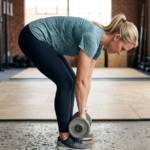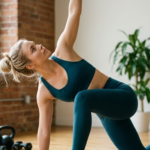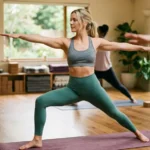
Unlock powerful shoulders and relieve tension! These trap workouts target your trapezius muscles to improve posture, build strength, and enhance upper body flexibility.
If you’ve ever experienced nagging neck pain after a long day at a desk, felt tension between your shoulder blades, or struggled to maintain upright posture during heavy lifts, your trapezius muscles may be the culprit. The traps are a large, diamond-shaped muscle group that spans your neck, shoulders, and upper back-and they’re often overworked, under-stretched, or simply weak.
Trap workouts are essential for shoulder health, posture correction, and upper body strength. Strong traps pull your shoulders back, counteract the forward hunch from desk work, and protect your neck from strain. They also play a critical role in heavy lifts like deadlifts, rows, and overhead presses.
The beauty of trap training is its versatility. From heavy shrugs to bodyweight scapular retractions, you can build impressive traps at home, in the gym, or anywhere in between.
For a complete upper body routine, pair trap workouts with shoulder stretch with stick, rhomboid muscle stretch, and scapular retractions.
🔍 What Trap Workouts Target
Trap workouts focus on your trapezius muscles, the diamond-shaped muscles spanning your neck, shoulders, and upper back. Think of them as building “natural shoulder armor” that supports better posture and upper body flexibility! Incorporate cross body shoulder stretches between sets to maintain mobility and prevent stiffness.
The trapezius is actually three distinct regions: the upper traps (neck and shoulders), middle traps (between shoulder blades), and lower traps (mid-back). Each region has a different function, and a complete trap workout targets all three.
✨ Key Benefits of Trap Workouts
Your traps are the bridge between your neck, shoulders, and upper back. Strong traps improve posture, reduce neck tension, and protect your shoulders during every lift.
✅ Improves posture by strengthening upper back muscles
✅ Reduces neck and shoulder tension from desk work
✅ Enhances shoulder flexibility and range of motion
✅ Builds impressive upper body definition
✅ Supports heavy lifting with better stability
✅ Protects the Neck – Strong traps absorb shock and stabilize the cervical spine, reducing injury risk during push exercises and kettlebell workouts
✅ Enhances Shoulder Health – Balanced traps keep the shoulder blades in proper position, preventing impingement and rotator cuff issues
✅ Improves Pulling Strength – Strong traps are essential for pull day exercises, back workouts with dumbbells, and deadlifts
✅ Creates a Powerful Physique – Well-developed traps create the “V-taper” look and add thickness to your upper back
✅ Supports Heavy Lifting – Traps stabilize the upper back during squats, deadlifts, and overhead presses
Consistency is key. Training your traps 1-2 times per week with progressive overload will transform your posture, shoulder health, and upper body strength over time.
🧠 Anatomy Deep Dive: The Three Regions of the Trapezius
The trapezius is divided into three functional regions, each with a different role:
| Region | Location | Primary Function | Best Exercises |
|---|---|---|---|
| Upper Traps | Neck and shoulders | Elevates the shoulder blades (shrugging) | Dumbbell shrugs, upright rows, farmer’s walks |
| Middle Traps | Between shoulder blades | Retracts the shoulder blades (squeezing together) | Face pulls, rows, scapular retractions |
| Lower Traps | Mid-back, below shoulder blades | Depresses the shoulder blades (pulling them down) | Prone Y-raises, overhead presses, scapular retractions |
When all three regions are strong and balanced, your shoulder blades sit in a neutral position, your posture improves, and your neck is protected from excessive strain.
For complementary upper back work, explore rhomboid muscle stretch, scapular retractions, and upper trap stretch.
👥 Who Should Do Trap Workouts
This routine is ideal for:
-
Weightlifters – essential for deadlifts, rows, and overhead presses
-
Desk workers – counteracts forward head and rounded shoulder posture
-
Athletes – improves shoulder stability for throwing, swimming, and combat sports
-
Anyone with neck or shoulder tension – strong traps support the cervical spine
-
Anyone wanting a powerful physique – well-developed traps create a thicker, stronger appearance
-
Runners – improves upper body posture and arm swing
-
Older adults – maintains upright posture and prevents “hunchback” appearance
-
Anyone recovering from shoulder impingement – balanced traps stabilize the shoulder blade
-
Anyone who sits all day – essential for reversing postural decline
-
Anyone wanting to improve pull-up or row strength – traps are key pulling muscles
It works especially well when combined with pull day exercises, back workouts with dumbbells, scapular retractions, and rhomboid muscle stretch.
🏋️ How To Do Trap Workouts
1️⃣ Dumbbell Trap Exercises 🎯
- Dumbbell Shrugs
- Stand with dumbbells at sides, palms facing body
- Elevate shoulders toward ears
- Squeeze traps at the top
- Lower with control
- 3 sets of 12-15 reps
- Trap Dumbbell Workouts Upright Rows
- Hold dumbbells with a close grip
- Pull weights toward your chin, elbows high
- Lower slowly
- 3 sets of 10-12 reps
2️⃣ Lower Trap Workout 🔻
- Prone Y-Raises
- Lie face down on the incline bench
- Raise arms in Y-formation, thumbs up
- Squeeze lower traps
- 3 sets of 12-15 reps
3️⃣ Kettlebell Trap Exercises 🫖
- Kettlebell Farmer’s Walks
- Hold heavy kettlebells at sides
- Walk, maintaining an upright posture
- 3 sets of 30-60 second walks
4️⃣ Trap Cable Workouts 🎣
- Face Pulls
- Set the cable at chest height with a rope attachment
- Pull toward face, externalizing shoulders
- Squeeze rear delts and traps
- 3 sets of 15 reps
5️⃣ Home Trap Exercises 🏠
- Bodyweight Scapular Retractions
- Stand against the wall, arms at your sides
- Squeeze shoulder blades together
- Hold 3 seconds, release
- 3 sets of 15 reps
Modifications:
- Beginner: Lighter weights, focus on form
- Advanced: Increase weight, add isometric holds
Quick Reference Table
| Exercise | Trap Region | Difficulty | Equipment | Key Benefit |
|---|---|---|---|---|
| Dumbbell Shrugs | Upper traps | Beginner | Dumbbells | Builds neck and shoulder mass |
| Upright Rows | Upper/middle traps | Intermediate | Dumbbells or barbell | Adds upper back thickness |
| Prone Y-Raises | Lower traps | Intermediate | Light dumbbells | Improves scapular depression |
| Farmer’s Walks | Upper traps, core | Beginner to Intermediate | Kettlebells or dumbbells | Builds grip and trap endurance |
| Face Pulls | Middle traps, rear delts | Intermediate | Cable machine or band | Improves posture and shoulder health |
| Scapular Retractions | Middle traps, rhomboids | Beginner | None | Corrects rounded shoulders |
⚠️ Safety Tips & Common Mistakes
🚫 Don’ts
✖ Roll shoulders during shrugs (straight up and down!)
✖ Use excessive weight, compromising form
✖ Hunch forward during exercises
✅ Do’s
✔ Keep neck relaxed during trap exercises
✔ Maintain core engagement throughout
✔ Focus on the mind-muscle connection
FAQs❓
Q: What are the best trap workouts for men?
A: Trap workouts for men should include heavy shrugs, upright rows, and farmer’s walks. Progressive overload is key for building impressive traps!
Q: Can I build traps with just dumbbells?
A: Absolutely! Dumbbell trap exercises like shrugs, upright rows, and overhead presses effectively build trap strength and size.
Q: What’s the difference between the upper and lower trap workouts?
A: Lower trap workout focuses on scapular retraction and depression, while upper traps handle elevation. Both are essential for maintaining shoulder flexibility and overall health.
Q: Are trap exercises gym-only, or can I do them at home?
A: You can do effective home trap exercises using dumbbells, resistance bands, or bodyweight. Trap workout machine options are great, but not essential!
Q: How often should I train traps?
A: 1-2 times weekly, as traps recover quickly. Trap cable workouts and kettlebell trap exercises can be rotated for variety.
Q: Can we do a shoulder stretch with a stick after the trap workout?
A: Yes! A shoulder stretch with stick post-trap workout improves flexibility and reduces tightness. It’s perfect for maintaining mobility after intense training.
🌟 Pro Tip
Incorporate a mix of trap exercises, gym sessions, and home workouts to achieve consistent progress. Remember, strong traps aren’t just for looks; they’re crucial for shoulder flexibility and injury prevention!