

Shoulder Stretch With Stick
Using a Stick To Get Flexible Shoulders
Turn any broomstick, PVC pipe, or resistance band into a powerful mobility tool! This simple shoulder stretch with a stick improves range of motion and relieves tightness from workouts or desk work.
The shoulder stretch with stick technique opens your rotator cuff, pecs, and upper back muscles while safely guiding your joints through their full range of motion.
If you’ve ever struggled to reach overhead, felt a pinching sensation when lifting, or noticed your shoulders rounding forward after a long day at a desk, your shoulder mobility needs attention. The shoulders are the most mobile joints in the body – but that mobility comes at a cost. They’re also the most unstable, relying on a delicate balance of muscles, tendons, and ligaments to function properly.
Modern life is tough on shoulders. Hours of typing, driving, and scrolling pull the shoulders forward and inward, shortening the pectoral muscles and weakening the upper back. Over time, this imbalance can lead to impingement, rotator cuff issues, and chronic pain. The shoulder stretch with stick is one of the most effective tools for reversing this pattern.
For a complete shoulder care routine, combine these stretches with rotator cuff exercises, scapular retractions, and doorway stretch.

Shoulder Stretch
💪 Key Benefits of Chin Tuck Stretches
✅ Improves shoulder flexibility for overhead movements
✅ Corrects rounded posture from sitting
✅ Reduces risk of impingement by teaching proper alignment
✅ No fancy equipment needed, use a stick, broom, or band
✅ Great for all fitness levels, easily adjustable difficulty
✅ Enhances Rotator Cuff Mobility – Gently guides the shoulder through internal and external rotation
✅ Opens the Chest – Counteracts the forward hunch from desk work and smartphone use
✅ Improves Thoracic Extension – Helps the upper back move freely, reducing strain on the neck
✅ Prepares for Overhead Lifting – Essential for exercises like push exercises, chest workouts at home, and kettlebell workouts
✅ Promotes Shoulder Symmetry – Both arms move together, revealing and correcting imbalances
🧠 Anatomy Deep Dive: The Shoulder Complex
The shoulder is not a single joint – it’s a complex system of four joints and over 30 muscles working together. The shoulder stretch with stick targets several key structures:
| Structure | Location | Function | Why It Gets Tight |
|---|---|---|---|
| Rotator Cuff (Supraspinatus, Infraspinatus, Teres Minor, Subscapularis) | Surrounds the shoulder joint | Stabilizes the humeral head in the socket | Overuse, poor posture, lack of mobility work |
| Pectoralis Major & Minor | Front of the chest | Draws the arm forward and across the body | Desk work, smartphone use, excessive pressing |
| Anterior Deltoid | Front of the shoulder | Lifts the arm forward | Overdeveloped from pressing without stretching |
| Latissimus Dorsi | Back, connecting to the arm | Extends and internally rotates the shoulder | Overuse in pulling exercises |
| Thoracic Spine | Upper back | Provides the foundation for shoulder movement | Stiff from sitting and lack of extension |
🧠 Muscles Worked in Shoulder Stretch With Stick
The shoulder stretch with stick targets several important muscles in the shoulders, chest, and upper back:
Rotator Cuff Muscles – the four muscles that stabilize the shoulder joint
Pectoralis Major & Minor – the chest muscles that shorten from forward posture
Anterior Deltoid – the front shoulder muscle, stretched during overhead and behind-the-back movements
Latissimus Dorsi – the large back muscle that attaches to the arm
Teres Major – assists the latissimus in shoulder extension
Thoracic Extensors – the muscles that help you stand tall and open the upper back
If your shoulders feel tight, you can also include doorway stretch, wall angel stretch, and upper trap stretch before or after to release tension and improve overall upper body mobility.
👥 Who Should Do Shoulder Stretch With Stick
This stretch is ideal for:
Desk workers and remote professionals – counteracts the “computer hunch” posture
Weightlifters and gym-goers – balances pressing with overhead mobility
Athletes – swimmers, tennis players, and overhead athletes need mobile shoulders
Yoga practitioners – prepares shoulders for poses like Downward Dog and Wheel
Older adults – maintains functional range of motion for daily activities
Anyone recovering from shoulder impingement or stiffness – gentle, guided mobility
Rock climbers and gymnasts – restores mobility after intense pulling
Runners and cyclists – releases upper body tension that affects arm swing
Anyone with rounded posture – essential for opening the chest and standing taller
Anyone preparing for overhead lifting – improves form for push exercises and chest workouts at home
It works especially well when combined with rotator cuff exercises, scapular retractions, and doorway stretch for complete shoulder health.
Shoulder Exercises with Stick

Overhead Shoulder Stretch
The ultimate shoulder opener! Lift a stick overhead to improve flexibility and relieve tightness from sitting or workouts. Perfect for restoring natural range of motion
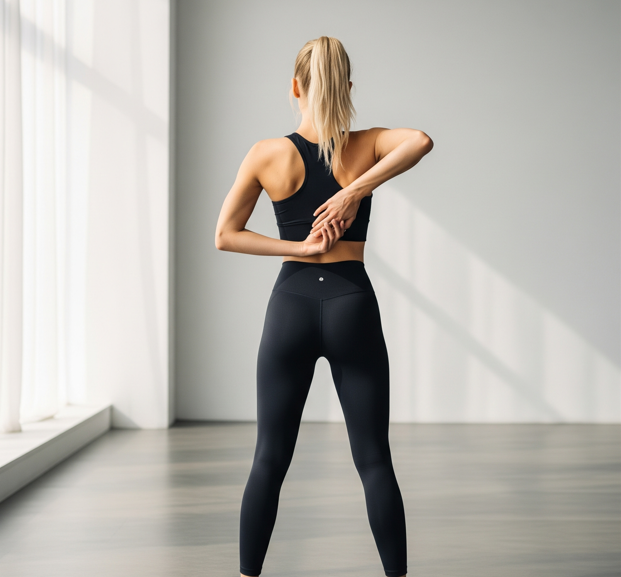
Behind-the-Back Stretch
Posture superhero! This stretch targets tight chest and front shoulders while teaching proper scapular positioning. Great for undoing computer hunch.

Shoulder Dislocates (Dynamic)
Mobility magic! This fluid movement lubricates shoulder joints and tests your flexibility. Start wide and gradually narrow your grip as you improve.
How to Do Shoulder Stretch With Stick📝
1️⃣ Overhead Shoulder Stretch
- Hold the stick wider than shoulder-width (palms down)
- Slowly lift arms overhead, keeping the stick parallel to the floor
- Stop when you feel a moderate stretch (don’t force)
- Hold 15-30 seconds
2️⃣ Behind-the-Back Stretch
- Hold stick behind your back (one hand high, one low)
- Gently walk your hands closer together along the stick
- Keep chest proud no hunching!
3️⃣ Shoulder Dislocates (Dynamic)
- Wide grip on stick (2x shoulder width)
- Slowly circle the stick overhead from front to back
- Control the movement, no jerking
Modifications:
- Tighter shoulders? Widen your grip
- Advanced? Narrow grip or add band resistance
Quick Reference Table
| Stretch | Muscles Worked | Difficulty Level | Key Benefit |
|---|---|---|---|
| Overhead Shoulder Stretch | Rotator cuff, anterior deltoid, latissimus dorsi, pectorals | Beginner to Intermediate | Opens the front of the shoulders; improves overhead mobility |
| Behind-the-Back Stretch | Pectorals, anterior deltoid, subscapularis | Beginner to Intermediate | Targets tight chest; corrects rounded posture |
| Shoulder Dislocates | Rotator cuff, pectorals, thoracic extensors, latissimus dorsi | Intermediate to Advanced | Dynamic mobility; lubricates shoulder joints |
Safety Tricks 🛡️
✔ Warm up with arm circles first – Light movement before stretching
✔ Keep core gently engaged – Protects the lower back during overhead movements
✔ Breathe through each rep – Exhale as you move into the stretch
✔ Start with a wide grip – Narrow your grip only as flexibility improves
✔ Move slowly and with control – No jerking or forcing
✔ Stop if you feel sharp pain – Mild tension is normal; sharp pain means STOP
❌ Avoid These Mistakes
✖ Force painful positions – Mild discomfort only; sharp pain is a stop signal
✖ Arch your lower back during overhead moves – Keep ribs down; engage core
✖ Rush the movements – Slow and controlled wins
✖ Hold your breath – Breathe steadily to oxygenate muscles
✖ Start with a narrow grip – Begin wide; narrow only as mobility improves
✖ Neglect the dynamic version – Shoulder dislocates are essential for joint health
FAQ
How often should I do shoulder stretches with a stick?
For maintenance, 3-4 times per week is ideal. For improving mobility, daily practice yields faster results. Incorporate into your 5-minute daily stretching routine or warm-ups before upper body workouts.
Can this stretch help with shoulder impingement?
Yes, when performed gently and within a pain-free range. The stick helps guide the shoulder through proper movement patterns, teaching the rotator cuff to stabilize correctly. Combine with rotator cuff exercises and scapular retractions for comprehensive care.
What if I can't lift the stick overhead?
Start with a wider grip – wider than shoulder-width. If that’s still challenging, use a resistance band instead of a stick; the band allows for more flexibility. Progress slowly; flexibility builds over weeks.
How do shoulder dislocates differ from static stretches?
Shoulder dislocates are dynamic – they move the joint through its full range of motion, lubricating the joint and improving mobility. Static stretches (overhead, behind-the-back) are held to lengthen tight muscles. Both are valuable; use dynamic as a warm-up, static as a cool-down.
Can this stretch improve my bench press or overhead press?
Absolutely. Tight shoulders limit range of motion and increase injury risk during pressing movements. Improved mobility allows for proper form, reducing strain on the rotator cuff. Pair with push exercises and chest workouts at home for balanced development.
Quick Tip:
Do these shoulder stretch with stick daily to maintain mobility your future self will thank you!