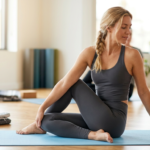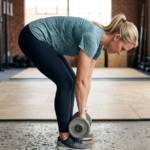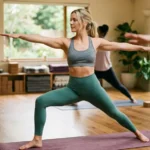
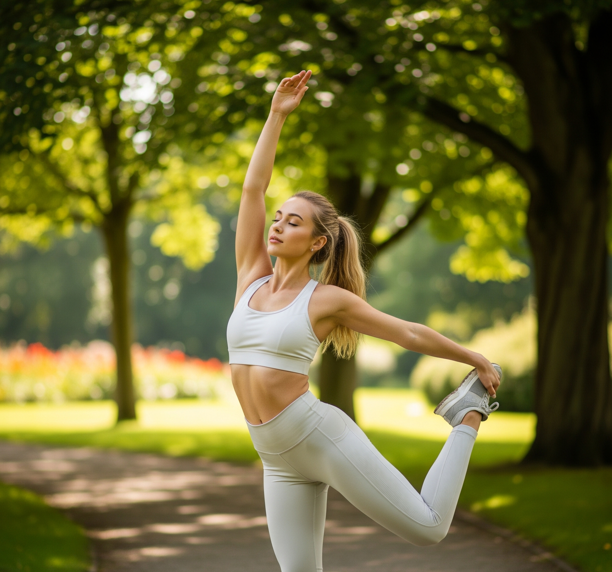
Don’t skip the opener! A proper warm-up before exercise prepares your body like a pianist warming up their fingers before a concert. It’s the key to peak performance and injury prevention.
🔍 What Warm Ups Target
Warm-ups gradually increase your heart rate, circulation, and muscle temperature while improving joint flexibility, essentially telling your body, “hey, we’re about to work hard now!
✨ Key Benefits of Warming Up
✅ Prevents injuries by preparing muscles and joints for action
✅ Improves performance through better oxygen flow and muscle flexibility
✅ Enhances mental focus by connecting mind and body before exercise
✅ Boosts flexibility, allowing for a greater range of motion during workouts
✅ Prepares the cardiovascular system for increased demands
🏋️ 5-Minute Warm-Up Routine
1️⃣ Dynamic Movement (2 minutes)
Jumping Jacks – 30 seconds
Start with this full-body movement to elevate your heart rate and wake up your entire system. Keep it light you’re warming up, not exhausting yourself.
Arm Circles – 30 seconds (forward/backward)
Extend your arms and make controlled circles. Forward for 15 seconds, then backward. This mobilizes your shoulders and prepares your upper body for pressing, pulling, or throwing movements.
Leg Swings – 30 seconds each leg
Hold a wall or sturdy surface. Swing one leg forward and backward in a controlled arc. This gently opens the hips and hamstrings without the strain of static stretching. It’s a foundational standing hip flexor stretch that prepares your lower body for lunges, squats, or running.
Torso Twists – 30 seconds
Stand with feet shoulder-width apart. Rotate your upper body left and right, letting your arms swing loosely. This mobilizes your thoracic spine, the area that often gets stiff from sitting.
2️⃣ Movement Prep (2 minutes)
Bodyweight Squats – 45 seconds
Perform slow, controlled squats. Focus on depth and alignment, not speed. This activates the quads, glutes, and core while reinforcing the movement pattern you’ll use in your workout. For deeper hip preparation, include a hip flexor lunge stretch between squats to open the front of the hips.
Push-Up Position – 45 seconds
From a high plank, hold for 15 seconds, then perform 5-10 controlled push-ups (knee or full). This activates the chest, shoulders, triceps, and core. It also prepares your wrists and shoulders for pressing movements.
Cat-Cow Flow – 30 seconds
Move to hands and knees. Inhale, arch your back and lift your chest (cow). Exhale, round your spine, and tuck your chin (cat). This gentle cat cow stretch mobilizes your entire spine, wakes up your core, and connects breath to movement. For added upper back release, follow with a thread the needle stretch. Slide one arm under the other, resting your shoulder on the floor for a deeper thoracic twist.
3️⃣ Sport-Specific (1 minute)
For runners: High knees (30 seconds) + Butt kicks (30 seconds)
These movements mimic running mechanics and further warm the hip flexors and hamstrings.
For lifters: Perform 5-8 reps of your main lift with just the bar (or light weight). This grooves the movement pattern before adding load.
For general fitness: Perform a light version of the first exercise in your workout. If you’re doing push-ups, do incline push-ups. If you’re squatting, do bodyweight squats.
For upper body emphasis: Incorporate a doorway chest stretch stand in a doorway, place forearms on the frame, and gently lean forward to open the chest and front deltoids. This complements front delt exercises by ensuring your shoulders are mobile before pressing work.
⚠️ Safety Tips & Common Mistakes
🚫 Don’ts
✖ Skip warm-up before exercising – Inviting injury is not the way to start your workout
✖ Confuse stretching with warming up – Static stretching before activity can actually weaken muscles. Save it for after your workout
✖ Make it too intense – The warm-up should raise your heart rate, not exhaust you. Save your energy for the main workout
✖ Ignore tight areas – If your hips are tight, add an extra standing hip flexor stretch. If your upper back is stiff, spend more time on the cat cow stretch or the thread the needle stretch
✅ Do’s
✔ Tailor your warm-up to your planned activity. A leg day needs more lower-body work; an upper-body day needs more shoulder and core activation
✔ Focus on dynamic movements over static stretching. Move through ranges you’ll use in your workout
✔ Listen to your body’s readiness signals – Some days you’ll need more warm-up; some days less
✔ Include full-body mobility – Add a lat stretch by reaching overhead and leaning to one side. Include cross body stretch to open the posterior shoulder. Use the glute stretch and the butterfly stretch to prepare the hips for lower body work
❓ FAQs
Q: How long should a warm-up be before a workout?
A: 5-10 minutes is ideal for most people. If you’re doing intense activity, training in cold conditions, or feel particularly stiff, extend it to 10-12 minutes. The goal is to feel warm, slightly sweaty, and ready to move.
Q: What’s the difference between warm up exercise and stretching?
A: Warming up uses dynamic movement to increase blood flow, raise muscle temperature, and activate the nervous system. Stretching (static holds) improves flexibility but is best done after your workout when muscles are warm. Think of the warm-up as “preparing to work” and post-workout stretching as “recovering from work.”
Q: Can I use the same warm-up routine before a workout every day?
A: Yes, but adjust intensity based on your workout. A heavy leg day needs more lower body activation, add extra leg swings and glute stretch. An upper body day benefits from more shoulder work include doorway chest stretch, cross body stretch, and lat stretch.
Q: Is a warm up full body flexibility, daily home workout, and stretching routine necessary?
A: Absolutely. Even at home, a proper warm-up prepares your body for exercise, reduces injury risk, and improves performance. It also builds body awareness and connects you to your workout before it begins.
🌟 Pro Tip: The 5-Minute Investment
Think of your warm-up as an investment in the quality of your workout. Five minutes spent preparing your body yields better performance, safer movement, and faster recovery. When you skip it, you’re borrowing from your future self. When you honor it, your body rewards you.