

Hip Flexor Lunge Stretch
Hip Flexor Lunge Stretch to Boost Flexibility
If sitting all day has turned your hip flexors into tight rubber bands, this stretch is your salvation! The Lunge Hip Flexor Stretch targets those cranky front-hip muscles (hello, psoas!) that get shortened from driving, desk work, or marathon Netflix sessions. Picture it as hitting the “reset button” on your hips relieving lower back tension, improving posture, and prepping your body for running, lifting, or just walking without feeling like a tin man. Plus, it’s the closest thing to a magic trick for tight hips!
Why This Stretch Matters More Than You Think
The modern lifestyle is a hip flexor’s worst enemy. Hours spent seated in chairs, cars, and on couches place these muscles in a constantly shortened position. Over time, they adapt by becoming tight and less elastic. This isn’t just a comfort issue; it’s a mechanical one. Tight hip flexors pull your pelvis into an anterior tilt, which can lead to lower back strain, poor glute activation, and even affect your walking pattern. Releasing them with a hip flexor lunge is a foundational step toward restoring whole-body alignment and function.
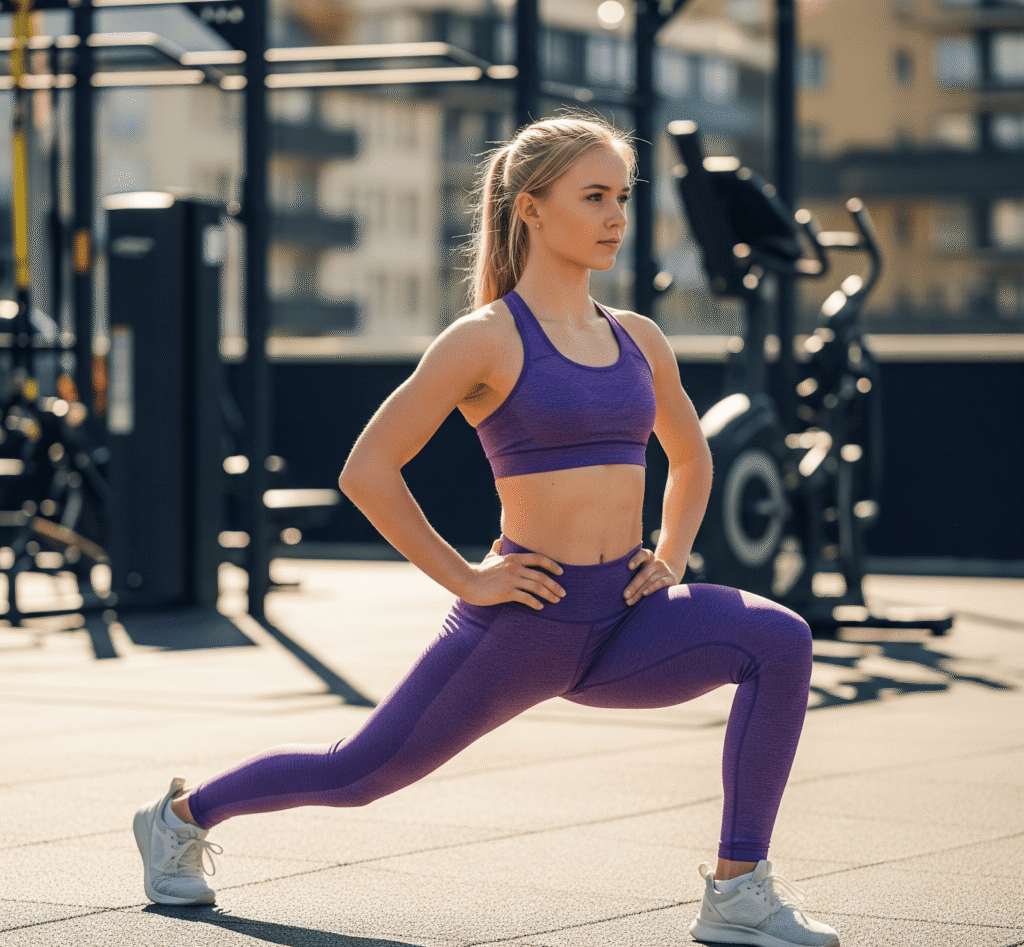
Hip Flexor Lunge Stretch
Key Benefits of Hip Flexor Lunge Stretch
✅ Bye-Bye, Hip Stiffness: Reverse the effects of sitting all day (no more “old man walk”).
✅ Posture Perfector: Stand taller by releasing tight flexors that pull your spine out of whack
✅ Runner’s Best Friend: Prevents that “stitch in your side” feeling during sprints
✅ Deep Breath Booster: Loosens tension so your lungs can fully expand
✅ Stress Reliever: Combats that “stuck in a chair” anxiety with mindful movement
✅ Enhanced Athletic Performance: From deeper squats to more powerful kicks, mobile hips are crucial for exercises like single-leg RDL and explosive movements.
✅ Injury Prevention: By balancing the muscles around your pelvis, you reduce unnecessary stress on your lower back and knees, complementing the work done in physical therapy exercises for headaches that often originate from postural issues.
✅ Foundation for Strength: Flexible hips allow you to perform compound lifts with better form, making it an excellent complement to your leg workouts.
How To Do Hip Flexor Lunge Stretch
Start in a Kneeling Lunge
✅ Right foot forward, knee at 90° (like you’re proposing to flexibility).
Tuck Your Tailbone
✅ Engage your glutes to avoid over-arching your back (think “cat tail tuck”).
Lean Forward Slightly
✅ Shift hips forward until you feel a stretch in the front of your left hip (should feel like a gentle pull, not a stab).
Raise Your Arm (Optional)
✅ Lift your left arm overhead for a bonus side stretch like reaching for the last cookie jar.
Hold for 20-30 Seconds
✅ Breathe deeply (imagine blowing up a balloon with each exhale ).
Switch Slides
✅ Because nobody likes a lopsided stretch.
Muscles Worked in the Hip Flexor Lunge
This stretch primarily targets the muscles of the anterior hip, but its effects are felt throughout the lower body and core.
Primary Muscles: Iliopsoas (the main hip flexor), Rectus Femoris (part of the quadriceps), and Tensor Fasciae Latae (TFL).
Secondary Engagement: The glutes of your kneeling leg are activated to stabilize the pelvis, and your core muscles work to maintain an upright posture. This engagement is similar to what you experience in a controlled reverse lunge, making it a perfect dynamic counterpart.
Stabilizers: The muscles of your standing leg and ankle, including those worked in calf stretches, help maintain balance.
When to Incorporate This Stretch
The hip flexor lunge is incredibly versatile. Here are the best times to use it:
Morning Mobility Routine: After hours of sleep in a flexed position, this stretch helps wake up your hips. Pair it with ten morning stretches for a full-body wake-up call.
Post-Workout Cool-Down: It’s essential after any lower body or running workout to prevent muscles from tightening up. Include it after exercises like jump squats to maintain flexibility.
Desk Break Savior: Take 60 seconds every couple of hours to perform a quick lunge stretch. It counteracts the posture of sitting and can even relieve tension that contributes to thoracic outlet syndrome exercises being necessary.
Before Bed: Gentle stretching can calm the nervous system and release the day’s tension.
📊 Quick Reference Table
Muscles Worked | Difficulty Level |
Hip flexors, quads, core | Beginner to Advanced |
Safety Tricks
🚫 Skip if: You have knee replacements or severe hip issues (ask your doc first!).
🚫 Avoid: Letting your front knee jut past your toes (hello, unnecessary pressure!).
🚫 Don’t: Rush the stretch your hips aren’t a microwave meal.
🚫 Stop immediately if: You feel sharp pain (discomfort = normal; pain = nope!).
Common Mistakes (How to Fix Them?)
🚫 Knee collapsing in? Stack it over your ankle 90° is key!
🍑 Hips jutting forward? Tuck your pelvis like you’re holding a tail!
🧎Back knee aching? Fold a towel under it for cushion! 🛏️
😤 Holding your breath? Breathe like you’re fogging a mirror!
🤸 Arching your back? Engage your core like bracing for a hug! 💪
🚫 Not engaging the glute? Squeezing the glute of your kneeling leg is crucial for the correct pelvic position; it’s a cue also vital in exercises like glute stretches to target the right muscles.
🚫 Letting your front foot turn out? Keep your front foot pointing straight ahead to protect your knee and hip alignment, much like you would during a lunges workout.
🚫 Stretching on a hard surface? Always use a mat or cushion under your kneeling knee to avoid discomfort and allow you to relax fully into the stretch.
FAQ
How often should I do the hip flexor lunge stretch?
For best results, aim to perform this stretch daily, especially if you sit for long periods. Consistency is key. Holding for 20-30 seconds per side, 2-3 times, is a great goal. It’s a simple addition to any 5-minute daily stretching routine.
I feel a pinching sensation in my front hip, not a stretch. What's wrong?
A pinching sensation often indicates that you’re not tucking your tailbone enough. Focus on the posterior pelvic tilt by gently squeezing your glute on the kneeling leg. If it persists, reduce the range of motion. This is a common issue that can sometimes be related to overall pelvic mechanics addressed in posterior pelvic tilt stretch exercises.
Can this stretch help with my lower back pain?
Yes, absolutely. Tight hip flexors are a primary contributor to anterior pelvic tilt, which puts chronic strain on the lumbar spine. By releasing the hip flexors, you allow the pelvis to return to a more neutral position, relieving that tension. It’s a key exercise in many programs for exercises for lower back pain.
My kneeling knee hurts. What can I do?
This is a common issue. Always place a thick mat, folded towel, or a pillow under your kneeling knee for cushioning. You can also try the stretch on a soft surface like a carpeted floor. Ensuring your weight is distributed correctly also helps.
Is this stretch safe to do during pregnancy?
It can be, but with significant modifications. As the pregnancy progresses, lying on the back or deep lunges may become uncomfortable or inadvisable. A standing version, like our standing hip flexor stretch, is often a safer alternative. Always consult with your healthcare provider.
Pro Tip
Pair this with your morning coffee routine your hips will wake up faster than your brain!.☕