
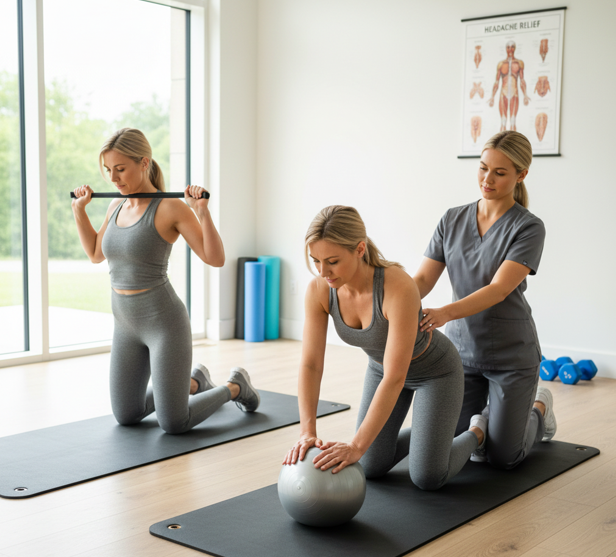
Struggling with tension headaches or neck-related head pain? Physical therapy exercises for headaches are a proven, drug-free way to reduce frequency and intensity. This guide introduces the most effective stretch used by physical therapists, including a key Neck Extension Stretch to target headache-triggering muscles. By integrating these specific physical therapy exercises for headaches into your routine, you can unknot tension and reclaim your day.
Before diving into these exercises, it helps to understand how your neck, shoulders, and spine work as one connected system. Tension headaches rarely come from a single muscle. They often result from a chain reaction starting with poor posture, weak upper back muscles, or tight chest muscles. For a broader foundation, explore our guide on stretching exercises to see how headache relief fits into your full mobility picture. You can also review how to improve flexibility for long-term postural health.
If you spend long hours at a desk, your upper back and chest are likely rounded forward. Adding a chair workout or upper back seated twist before your headache exercises can help wake up these connected areas. You might also benefit from a cat cow stretch to release spinal tension, as stiffness anywhere along your spine can contribute to neck pain and headaches.
✨ Key Benefits of Physical Therapy Exercises for Headaches
When done consistently, these exercises offer more than just temporary relief. They address the root cause of many headaches.
- Targets the Source: Directly releases the suboccipital and upper trapezius muscles common culprits in tension and cervicogenic headaches.
- Improves Posture & Mobility: Counters “tech neck” and promotes spinal alignment, increasing neck flexibility long-term.
- Reduces Reliance on Medication: Provides a natural management tool, empowering you with self-care techniques rooted in physical therapy for headaches.
- Enhances Mind-Body Awareness: Teaches you to recognize and release tension before it escalates into a full-blown headache.
-
Reduces Frequency of Headache Episodes: Regular practice can lower the number of headache days per month. Pair these exercises with neck workouts and upper trap stretch routines for comprehensive relief.
-
Improves Sleep Quality: Less neck and shoulder tension means better, more restful sleep. Add childs pose and lying knee twist to your evening wind-down routine.
✅ The Top 5 Physical Therapy Exercises for Headaches
1. Chin Tucks (The “Anti-Tech Neck” Exercise)
This is the #1 foundational exercise for headaches caused by forward head posture.
- How to do it: Sit or stand tall. Gently nod your head, drawing your chin straight back toward your throat to create a “double chin.” Hold for 3-5 seconds, then release. Focus on lengthening the back of your neck.
- Why it works: It directly strengthens the deep neck flexors and stretches the tight suboccipital muscles at the base of your skull, a major headache trigger point.
- Pro Tip: Do this against a wall. Stand with your back and head against it, then perform the chin tuck, keeping the back of your head in contact with the wall.
If you have difficulty feeling this exercise, try the chin tuck stretch variation while lying on your back with a small rolled towel under your neck. This gravity-assisted version helps you isolate the correct muscles. You can also combine chin tucks with scapular retractions to address both neck and upper back posture simultaneously.
2. Suboccipital Release with a Tennis Ball
A self-massage technique to melt away tension at the headache epicenter.
- How to do it: Lie on your back with knees bent. Place two tennis balls (or a massage peanut) at the base of your skull, on either side of your spine. Rest your head’s weight on the balls do not press. Slowly nod “yes” and shake your head “no” for 1-2 minutes.
- Why it works: Applies gentle, sustained pressure to release the tiny, often-overlooked muscles (suboccipitals) that refer pain to the forehead and temples.
- Pro Tip: Breathe deeply into any areas of tension you find. This releases the muscle’s grip.
For an even deeper release, try this after performing a thread the needle stretch to first open up your upper back. You can also warm up with pelvic tilts and bird dog exercise to establish a neutral spine position before lying down. If you don’t have tennis balls, a foam rolling quadriceps roller can work for larger areas, though tennis balls are better for pinpoint accuracy.
3. Scalene Stretch (for Side Neck & Temple Pain)
Perfect for headaches that radiate to the temples or sides of the head.
- How to do it: Sit tall. Gently tuck your chin, then tilt your head to the right, aiming your right ear toward your right shoulder. For a deeper stretch, gently place your right hand on your head and let its weight assist. Hold for 30 seconds. Repeat on the left.
- Why it works: Stretches the scalene muscles on the side of your neck, which can tighten from poor posture and contribute to tension headaches and nerve irritation.
- Pro Tip: To target the scalenes more specifically, after tilting, look slightly down toward your armpit.
Tight scalenes often accompany rounded shoulders. For complete relief, pair this stretch with a doorway stretch for your chest and wall angel stretch for your upper back. You can also add levator scapulae stretch exercises to target the adjacent muscles that connect your neck to your shoulder blades.
4. Upper Trapezius Stretch (The Shoulder Relaxer)
Targets the hunch in your shoulders that pulls on your neck.
- How to do it: Sit tall. Place your right hand under your right thigh to anchor your shoulder. This is the critical setup for an effective Upper Trap Stretch. Tilt your head to the left, and for a deeper stretch, gently rotate your nose down toward your left armpit. Hold for 30 seconds. Switch sides.
- Why it works: The upper traps are notorious for holding stress. Releasing them with this Upper Trap Stretch reduces the pull on your neck and skull, easing tension-type headaches.
- Pro Tip: The anchor hand is key! It stops you from shrugging your shoulder during the Upper Trap Stretch, which would steal the stretch and make it ineffective.
For a more comprehensive upper body release, follow this stretch with arm stretches and triceps stretches. If you spend hours typing, your forearms may also be tight, contributing to overall upper body tension. Add forearm stretching exercises and wrist flexor stretch to your routine. You can also explore resistance band pull aparts to strengthen the opposing rhomboid muscles.
5. Thoracic Extension over a Foam Roller (The Posture Reset)
A powerful exercise to combat the rounded upper back that forces your head forward.
- How to do it: Place a foam roller perpendicular to your spine, under your mid-back (bra strap line). Clasp hands behind head for support. Gently arch back over the roller, letting your head and shoulders relax toward the floor. Rock gently back and forth for 30-60 seconds.
- Why it works: Improves mobility in your upper back (thoracic spine). Better mobility here means your neck doesn’t have to overwork and strain, preventing headaches.
- Pro Tip: Keep your core engaged to protect your lower back. Never roll on your neck.
Before attempting this exercise, warm up with cat cow stretch and upper back childs pose to prepare your spine. You can also practice thoracic extension on foam roller as a standalone mobility drill. For those with very tight upper backs, start with a seated spinal twist or chair spinal twist before lying on the roller. If you don’t have a foam roller, a rolled towel or prone cobra exercise on the floor can provide similar benefits.
🛡️ 3 Safety Tricks for Physical Therapy Exercises:
- Start Neutral: Always begin with a good seated posture. A slouched position undermines the exercise.
- Lead with the Breath: Exhale as you move into the stretch. This relaxes muscles and protects joints.
- Prioritize Control: Move slowly to allow muscles to respond safely, which is key for building sustainable flexibility.
-
Warm Up First: Never stretch cold muscles. Perform warm-ups like leg swings or jumping jacks for 3-5 minutes before starting.
-
Use a Mirror: Check your form to ensure you’re not shrugging your shoulders or collapsing your chest.
❌ 3 Common Mistakes in Physical Therapy Exercises for Headaches:
- Shrugging the Shoulder: Lifting the shoulder toward the ear during the tilt shortens the muscle. Actively press the opposite shoulder down.
- Over-Assisting with the Hand: Using your hand to yank your head creates neck strain. The hand should merely rest.
- Skipping the Chin Tuck: Jumping straight to the side tilt misses the most therapeutic component of the physical therapy stretch. The tuck isolates the right muscles.
-
Holding Your Breath: Tension increases when you hold your breath. Focus on slow, deep exhales during each movement.
-
Rushing the Reps: Quick movements trigger the stretch reflex. Slow, mindful repetitions are far more effective.
🔄 Building a Routine for Long-Term Relief
One stretch is a great start, but consistency is your true ally. For best results:
- Frequency: Perform this sequence 2-3 times daily.
- Routine: Pair it with other physical therapy exercises for headaches, like shoulder rolls and scapular squeezes.
- Listen to Your Body: Some tension release is good; sharp pain is a signal to stop. The goal is progressive flexibility.
-
Morning Session: Start your day with ten morning stretches including chin tucks and upper trap stretches to prevent headaches before they start.
-
Workday Breaks: Use chair workout moves like seated spinal twists and shoulder rolls every hour.
-
Evening Wind-Down: Release the day’s tension with childs pose, lying hamstring stretch with strap, and gentle neck rolls.
FAQ❓
Q: How are physical therapy exercises for headaches different from regular stretching?
A: Physical therapy exercises are specific, targeted, and based on biomechanics to correct underlying issues, not just generally loosen muscles. They are prescribed with precision for your type of headache.
Q: Can I do these exercises during a headache?
A: Gently performing them at the first sign of tension can sometimes halt a headache. During a severe attack, focus on gentle breathing and rest instead.
Q: When should I see a physical therapist for my headaches?
A: If headaches persist despite regular exercise, or if you experience dizziness, numbness, or vision changes, consult a professional. A physical therapist can design a personalized program of physical therapy exercises for your headaches.
Q: Will these exercises help with migraines?
A: They can help manage neck tension that may trigger or accompany migraines, but migraines have complex causes. A physical therapist can assess if your migraines have a cervical component.
Pro Tip: The Breath is Your Best Tool
Don’t underestimate the power of your breath! 🧘♂️ Exhale slowly as you move into the stretch. Visualize your breath flowing into the tightest spot, melting the tension away like warm sunshine on ice. This mind-muscle connection significantly increases the stretch’s effectiveness.