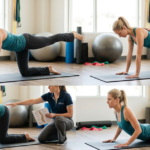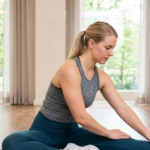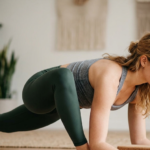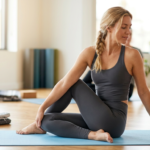
Stretching your groin isn’t just about touching your toes or doing the splits. It’s about unlocking a crucial part of your body that, when tight, can cause a domino effect of discomfort in your lower back, hips, and even knees. The groin muscles, or adductors, are a group of muscles on the inner thigh that are responsible for pulling your legs together and stabilizing your pelvis during movement. Whether you’re an athlete, a desk worker, or someone who spends hours in the car, these muscles can become painfully tight.
Imagine your inner thighs as the elastic bands in a pair of underwear; if they’re overstretched or too tight, everything feels uncomfortable. A regular groin stretch works like a reset button for your hips, improving your range of motion and freeing you from that “stiff” feeling. It’s the secret to making everyday movements like squatting to pick something up or getting in and out of a car feel effortless again.
Ready to say goodbye to tightness and hello to a new level of flexibility? Let’s dive into how to stretch your groin safely and effectively. We’ll focus on flexibility that lasts, not just a temporary fix. Get ready to enhance your flexibility and move better today!
🔑 Key Benefits of a Consistent Groin Stretch
Incorporating targeted groin muscle stretches into your routine offers a wealth of benefits that go far beyond the mat:
-
👉 Enhanced Athletic Performance: From soccer players doing side lunges to runners needing a full stride, flexible groin muscles allow for greater power and agility.
-
👉 Reduced Lower Back Pain: Tight groin muscles can pull on your pelvis, creating an anterior tilt that puts strain on your lower back. Stretching helps alleviate this pressure .
-
👉 Injury Prevention: A flexible groin is a resilient groin. Regular stretching helps prevent painful strains and pulls, especially during sudden movements.
-
👉 Improved Posture: By balancing the tension around your hips, groin stretches help keep your pelvis aligned, encouraging a more neutral and healthier posture.
-
👉 Better Hip Mobility: This is the gateway to deeper hip flexibility, making everyday activities like kneeling, squatting, and even sitting cross-legged much more comfortable.
📝 Step-by-Step Instructions for Key Groin Stretches
Important Safety Rule: Always warm up your muscles with 5-10 minutes of light cardio (like jumping jacks or a brisk walk) before stretching to prevent injury. Never bounce while stretching; hold the position and breathe deeply. Stretch to a point of mild tension, not sharp pain.
Here are some of the most effective groin stretching exercises to get you started:
1. Seated Adductor Stretch (Butterfly Stretch) 🦋
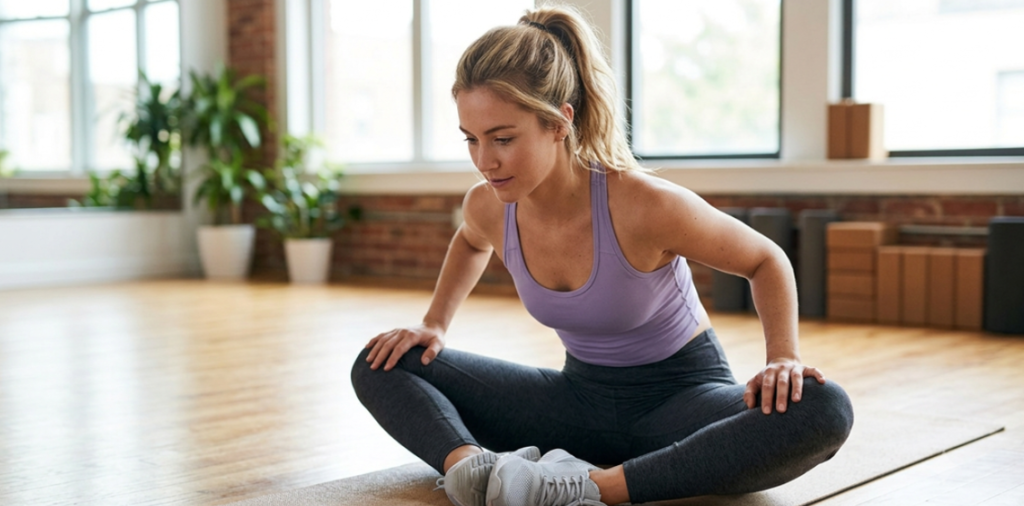
This classic butterfly stretch is perfect for beginners and highly effective for opening up the hips and inner thighs.
-
How to Do It: Sit on the floor with your knees bent and the soles of your feet pressed together. Let your knees fall outwards towards the floor. Hold your shins or feet with your hands.
-
Progression: For a deeper stretch, gently bend your upper body forward from your hips while using your elbows to press your knees down towards the floor. Hold for 30 seconds.
-
Modification: If this is too intense, move your feet further away from your body to reduce the stretch intensity.
2. Standing Groin Stretch (Wide-Leg Stance) 🧍♂️
A convenient stretch you can do almost anywhere.
-
How to Do It: Stand with your feet wider than shoulder-width apart. Shift your weight to one side, bending that knee deeply while keeping the other leg straight. For an added challenge, keep your toes on the straight leg pointed slightly outward.
-
Hold: You should feel a deep pull along the inner thigh of the straight leg. Hold for 30 seconds and switch sides.
3. Kneeling Adductor Hip Stretch 🙇♀️
Great for targeting the stretch from a different angle.
-
How to Do It: Kneel on one knee with your other leg out to the side, foot flat on the floor. Make sure your back is straight, and your hips are square.
-
Progression: Lean your torso forward and slightly towards your outstretched leg until you feel a deep stretch in the groin and inner hip. Hold for 30 seconds.
4. Supine Hip Adduction Stretch (Lying Down)
A gentle option, ideal for those with back sensitivity.
-
How to Do It: Lie on your back with your knees bent and feet flat on the floor. Gently let your knees fall open to the sides, allowing gravity to do the work.
-
Hold: Hold for 30 seconds. This is a fantastic way to relax the inner thighs.
💎 Quick Tip: 8 Groin Stretches to Reduce Pain
Why This Routine Works
Most groin pain isn’t just about tight inner thighs; it’s often caused by muscle imbalances in your hips. When some muscles are weak and others are overworked, your groin takes the hit. This 5-minute flow targets both stretching and strengthening to fix the root cause, not just the symptoms.
Think of it like this: Your hips are a pulley system. If one side is tighter or weaker, everything pulls out of alignment. This routine rebalances the entire system.
The 5-Minute Daily Flow 🕐
Start with the Seated Adductor Stretch 🦋 – Sit on the floor with the soles of your feet pressed together and let your knees fall outward. Hold this for 30 seconds. It’s the perfect gentle opener for your inner thighs.
Next, move to the Standing Groin Stretch 🧍♂️ – Stand with your feet wide apart, shift your weight to one side, and bend that knee while keeping the other leg straight. Hold for 30 seconds on each side. This mimics natural movement patterns and gets your groin working dynamically.
Then, transition to the Kneeling Adductor Hip Stretch 🙇♀️ – Kneel on one knee with your other leg stretched out to the side. Lean forward slightly until you feel a deep pull. Hold for 30 seconds on each side. This targets those deep groin fibers from a completely different angle.
Now it’s time to strengthen with Seated Hip Adduction – Sit on a chair or the floor and squeeze a pillow, towel, or small ball firmly between your knees. Do 15 repetitions, holding each squeeze for 2-3 seconds. This builds the strength needed to support your groin and prevent future issues.
Activate your glutes with the Glute Bridge 🧎♀️ – Lie on your back with knees bent and feet flat on the floor. Push through your heels to lift your hips up, squeezing your glutes at the top. Hold for 30 seconds and repeat 3 times. Strong glutes take pressure off your groin; they’re teammates, not rivals!
Release the front of your hips with the Hip Flexor Stretch – Kneel on one knee with your other foot forward. Gently press your hips forward until you feel a stretch in the front of your hip and thigh. Hold for 30 seconds on each side. Tight hip flexors often pull on your groin, so releasing them is essential.
Finish with the Figure 4 Stretch – Lie on your back, cross one ankle over the opposite knee, and gently pull that knee toward your chest. Hold for 30 seconds on each side. This opens up your outer hips and piriformis, completing the full hip release.
⚠️ Safety Tricks & Common Mistakes to Avoid
Safety Tricks (Do This!) ✅
-
Warm Up First: Always warm up your muscles with light activity before stretching to increase blood flow and make the tissue more elastic.
-
Breathe: Deep, controlled breathing helps your muscles relax, allowing for a deeper, more effective stretch. Never hold your breath.
-
Listen to Your Body: Stretch to the point of mild tension, not sharp or shooting pain. If it hurts, you’re pushing too hard.
-
Be Consistent: Flexibility isn’t built in a day. Stretch several times a week for maximum, lasting benefit.
Common Mistakes (Don’t Do This!) ❌
-
Bouncing: This triggers a “stretch reflex” that causes the muscle to contract, defeating the purpose and increasing injury risk. Always use static holds.
-
Stretching Cold Muscles: This is like trying to stretch a frozen rubber band; it’s much more likely to snap.
-
Overstretching: Trying to force a stretch too deeply can lead to micro-tears and strain. Patience is key.
-
Holding Your Breath: Tensing up prevents your muscles from relaxing, making the stretch less effective.
⚡ Quick Reference Table
| Feature | Detail |
|---|---|
| Muscle Groups Worked | Adductors Magnus, Longus, Brevis & Gracilis (Inner Thigh) |
| Difficulty Level | Beginner to Intermediate (Variations available for all levels) |
| Key Equipment | None (Just a mat or comfortable surface) |
| Duration | Hold each stretch for 30 seconds |
The Big Picture 🎯
Notice that this routine isn’t just about stretching; it’s about balance. The stretches (Seated Adductor, Standing, Kneeling, Hip Flexor, and Figure 4) release tight muscles, while the strengthening moves (Seated Hip Adduction and Glute Bridge) build support to prevent tightness from returning.
💡 Pro Tip: Do this flow daily morning or post-workout works best. Consistency beats intensity when it comes to flexibility. Even 5 minutes a day can transform how your hips feel.