

Arms Workout
Wrist Flexor Stretch
Fix Your Wrist Pain with this stretch
These wrist flexor stretches target the tight muscles controlling your grip and wrist movements essential for typists, gamers, and gym-goers alike. Pair them with wrist extensor stretches to achieve complete forearm flexibility and prevent pain.
Wrist Flexor Stretch Benefits 🌟
✅ Relieves Tech Hand – Counterstiffness from phones/keyboards
✅ Boosts Flexibility – Improves wrist mobility for daily tasks
✅ Prevents Injuries – Reduces carpal tunnel and tendonitis risk
✅ Enhances Recovery – Perfect post-workout for climbers/weightlifters
✅ Quick & Versatile – Do anywhere (even at your desk!)
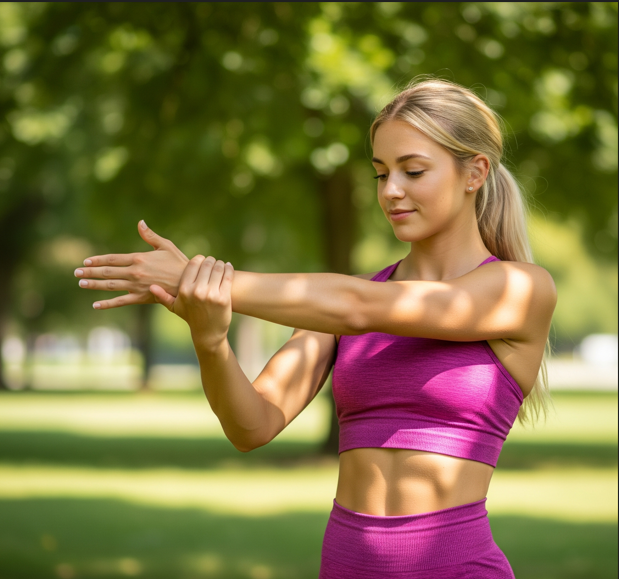
Wrist Exercises
Wrist Flexor Stretches

Basic Wrist Flexor Stretch
Like gently bending a fresh blade of grass backward, this stretch eases tight inner forearms from constant typing and scrolling. Perfect for quick desk breaks

Prayer Stretch Wrist
Imagine pressing two prayer hands slowly downward this dual-action stretch opens both flexors and extensors simultaneously, like unkinking a garden hose

Wrist Extensor Stretch
The perfect counterbalance in your wrist flexor and extensor stretches routine! Pushing your palm down like stopping an excited puppy from jumping relieves outer forearm tension from mouse use and heavy lifting.
How To Do a Wrist Flexor Stretch 🔄
1️⃣ Basic Wrist Flexor Stretch
- Extend arm straight forward at shoulder height, palm facing up
- Use opposite hand to gently pull fingers backward
- Keep elbow straight but not locked
- Hold 20-30 seconds – should feel a stretch along the inner forearm
- Modification: Reduce finger pressure if you feel nerve tingling
2️⃣ Prayer Stretch Wrist Variation
- Press palms together at chest in prayer position
- Slowly lower your hands toward your waist while maintaining palm contact
- Stop when you feel a moderate stretch in wrists/forearms
- Pro tip: Keep shoulders relaxed – don’t let them hunch up
3️⃣ Wrist Extensor Stretch
- Extend your arm straight with your palm facing down
- Use your opposite hand to gently press fingers toward the floor
- Rotate wrist slightly inward (pinky toward floor) for a deeper stretch
- Visual cue: Imagine your hand is a stop sign, you’re firming up
Quick Reference Table
Muscles Targeted | Difficulty |
Flexor carpi radialis | Beginner |
Palmaris longus | Adjustable |
Flexor digitorum | No equipment |
Safety Tricks 🛡️
✔ Warm up first (make gentle wrist circles)
✔ Keep elbows slightly bent
❌ Avoid These Mistakes
✖ Never bounce in the stretch
✖ Stop immediately if sharp pain occurs
👥 Who Should Do the Wrist Flexor Stretch?
🧑💻 Desk Workers and Computer Users
Why It’s Essential:
Hours of typing and mousing keep your wrists in a flexed position
Repetitive strain accumulates in the forearm flexors
Without stretching, these muscles adaptively shorten over time
Can lead to conditions like carpal tunnel syndrome and repetitive strain injury
How It Helps:
✅ Counteracts the “claw hand” position of typing
✅ Reduces risk of developing chronic wrist pain
✅ Improves circulation to overworked forearms
✅ Complements arm stretches for complete upper body relief
🏋️ Weightlifters and Gym-Goers
Why It’s Essential:
Heavy gripping in exercises like deadlifts, pull-ups, and rows constantly contracts the wrist flexors
Exercises like wrist curls specifically target these muscles
Tight flexors can limit wrist mobility for exercises like push-ups and planks
Grip strength depends on healthy, flexible forearm muscles
How It Helps:
✅ Maintains wrist mobility for proper exercise form
✅ Reduces risk of golfer’s elbow from gripping
✅ Improves recovery after grip-intensive workouts
✅ Essential component of any arms fitness workout routine
🧗 Climbers and Gymnasts
Why It’s Essential:
Climbing requires constant, intense gripping
The wrist flexors are under tremendous load during hangs and pulls
Tight flexors are a leading cause of climber’s elbow
Finger and grip strength depend on forearm health
How It Helps:
✅ Releases tension after climbing sessions
✅ Maintains wrist flexibility for dynamic movements
✅ Reduces risk of overuse injuries
✅Complements forearm flexor stretch variations for complete release
🎸 Musicians (Especially Guitarists and Pianists)
Why It’s Essential:
Repetitive finger movements create chronic forearm tension
Hours of practice without stretching leads to adaptive shortening
Many musicians develop tendinitis from tight flexors
Performance quality suffers when forearms are tight
How It Helps:
✅ Maintains finger dexterity and speed
✅ Reduces risk of performance-limiting injuries
✅ Allows longer practice sessions with less fatigue
✅ Should be part of every musician’s warm-up and cool-down
🏌️ Golfers and Tennis Players
Why It’s Essential:
Golf swings and tennis strokes heavily engage the forearm flexors
Golfer’s elbow (medial epicondylitis) is directly related to tight wrist flexors
Grip strength and control depend on forearm health
Repetitive swinging creates significant muscle tension
How It Helps:
✅ Prevents and alleviates golfer’s elbow symptoms
✅ Maintains grip control throughout the game
✅ Improves recovery between rounds or matches
✅ Complements other arm stretches for complete upper body care
🖌️ Artists and Makers (Potters, Painters, Sculptors)
Why It’s Essential:
Fine motor control requires precise forearm engagement
Hours of detailed work creates chronic tension
Many artists develop hand and wrist pain from repetitive movements
Creativity suffers when physical discomfort is present
How It Helps:
✅ Maintains hand dexterity for detailed work
✅ Reduces fatigue during long creative sessions
✅ Prevents career-limiting repetitive strain injuries
✅ Can be done during quick work breaks
🩺 Healthcare Workers and Massage Therapists
Why It’s Essential:
Constant use of hands for examinations and treatments
Massage therapists rely entirely on hand and forearm strength
Repetitive motions create significant muscle tension
Career longevity depends on maintaining healthy forearms
How It Helps:
✅ Extends career by preventing overuse injuries
✅ Maintains hand strength and sensitivity
✅ Reduces end-of-day forearm fatigue
✅ Essential self-care for those who use their hands professionally
📅 Daily Wrist Flexor Stretch Routine
🌅 Morning Wake-Up (2 minutes)
Upon Waking:
Basic Wrist Flexor Stretch: Extend your right arm forward with palm facing up. Use your left hand to gently pull your fingers back toward you. Hold for 20-30 seconds. Feel the stretch along your inner forearm. Repeat on the left side.
Prayer Position Stretch: Bring your palms together at chest height. Slowly lower your hands while keeping palms pressed together. Hold for 20-30 seconds, feeling the stretch in both forearms simultaneously.
Finger Extension: Extend your arm forward, palm up. Gently pull each finger back individually, holding for 5 seconds per finger. This targets the specific flexors of each digit.
Why Morning Matters: Your wrists can stiffen overnight, especially if you sleep with bent wrists. Morning stretching sets the tone for flexible, pain-free hands all day.
🪑 Desk Break Routine (60 seconds)
Mid-Morning (10-11am):
Desk Wrist Stretch: Place your palms flat on your desk with fingers pointing toward you. Gently lean back, feeling the stretch in your forearms. Hold for 20 seconds.
Reverse Wrist Stretch: Turn your hands so fingers point away from you, palms still on desk. Gently lean forward. Hold for 20 seconds.
Wrist Circles: Extend arms forward and make gentle circles with your wrists 10 each direction.
After Lunch (1-2pm):
Standing Wrist Flexor Stretch: Stand and perform the basic wrist flexor stretch for 30 seconds per side. This quick reset prevents afternoon stiffness.
Forearm Extensor Stretch: Don’t forget the top of your forearms! Extend arm forward, palm down, and gently press fingers toward the floor. Hold for 20 seconds per side.
Late Afternoon (3-4pm):
Prayer Stretch: Perform the prayer position stretch for 30 seconds. This is particularly effective after hours of typing.
Individual Finger Stretches: Take 30 seconds to gently stretch each finger back, releasing accumulated tension.
🏋️ Pre/Post-Workout Integration
Before Workout (Dynamic Warm-Up):
Wrist Circles: 30 seconds in each direction
Finger Flexion/Extension: Open and close hands vigorously for 20 seconds
Light Wrist Flexor Stretch: 15 seconds per side, gentle only
Forearm Activation: Make fists and release repeatedly
Why Before: Dynamic wrist preparation improves grip performance and reduces injury risk during your arms fitness workout.
After Workout (Static Stretch):
Deep Wrist Flexor Stretch: Hold for 45 seconds per side, focusing on the inner forearm
Prayer Stretch: Hold for 45 seconds, breathing deeply
Forearm Extensor Stretch: 30 seconds per side for balance
Individual Finger Stretches: 15 seconds per finger
Why After: Your forearms are warm and primed for lengthening post-workout. This is when you’ll make lasting flexibility gains.
🌙 Evening Wind-Down (3 minutes)
After Dinner:
Seated Wrist Stretch: Sit comfortably and perform gentle wrist flexor stretches for 30 seconds per side. Focus on releasing the day’s tension.
Prayer Stretch: Hold for 45 seconds, breathing deeply into your forearms.
Self-Massage: Use your thumb to gently massage the tight spots along your forearms for 60 seconds.
Before Bed:
Reclined Wrist Stretch: Lie on your back, extend arms overhead, and gently perform wrist flexor stretches. This allows complete relaxation.
Finger Release: Gently shake out your hands and fingers for 15 seconds
Deep Breathing: End with 5 deep breaths, imagining tension leaving your hands and wrists
🔗 How Wrist Flexor Stretch Complements Your Routine
| Stretch/Exercise | How Wrist Flexor Stretch Complements It |
|---|---|
| Forearm Flexor Stretch | The foundation of wrist healthuse daily |
| Arm Stretches | Completes upper body flexibility from shoulders to fingers |
| Arms Fitness Workout | Maintains wrist mobility for better exercise form |
| Grip Exercises | Balances strengthening with flexibility |
| Push-ups/Planks | Prepares wrists for weight-bearing positions |
| Deadlifts/Rows | Releases gripping tension after heavy pulls |
FAQ's
Q1: How often should I stretch my wrist flexors?
A: For general maintenance, 2-3 times daily is ideal. If you do a lot of typing, gripping, or forearm-intensive activities, aim for every 2-3 hours during the day. Even 60 seconds of stretching multiple times daily produces noticeable results.
Q2: Can tight wrist flexors cause elbow pain?
A: Absolutely! The wrist flexors attach at your inner elbow. When they’re tight, they pull on this attachment point, contributing to conditions like golfer’s elbow (medial epicondylitis). Stretching these muscles often provides significant elbow relief.
Q3: What's the difference between wrist flexor and extensor stretches?
A: Wrist flexor stretches target the muscles on the palm side of your forearm (used for gripping and bending wrist down). Extensor stretches target the top of your forearm (used for opening hand and bending wrist up). Both are essential for balanced forearm health.
Q4: Can these stretches help with carpal tunnel syndrome?
A: Yes! Tight wrist flexors can contribute to carpal tunnel compression. Regular stretching creates more space in the carpal tunnel by reducing tension on the flexor tendons. However, if you have diagnosed carpal tunnel, work with a healthcare professional for a comprehensive approach.
Q5: How long should I hold wrist flexor stretches?
A: For general flexibility, 20-30 seconds per side is sufficient. For deeper release, work up to 45-60 seconds. In cases of chronic tightness, longer holds (60-90 seconds) with gentle breathing are most effective.
Quick Tip:
Rotate between wrist flexor and extensor stretches 2-3x daily for best results. Your phone-holding hands will thank you!