
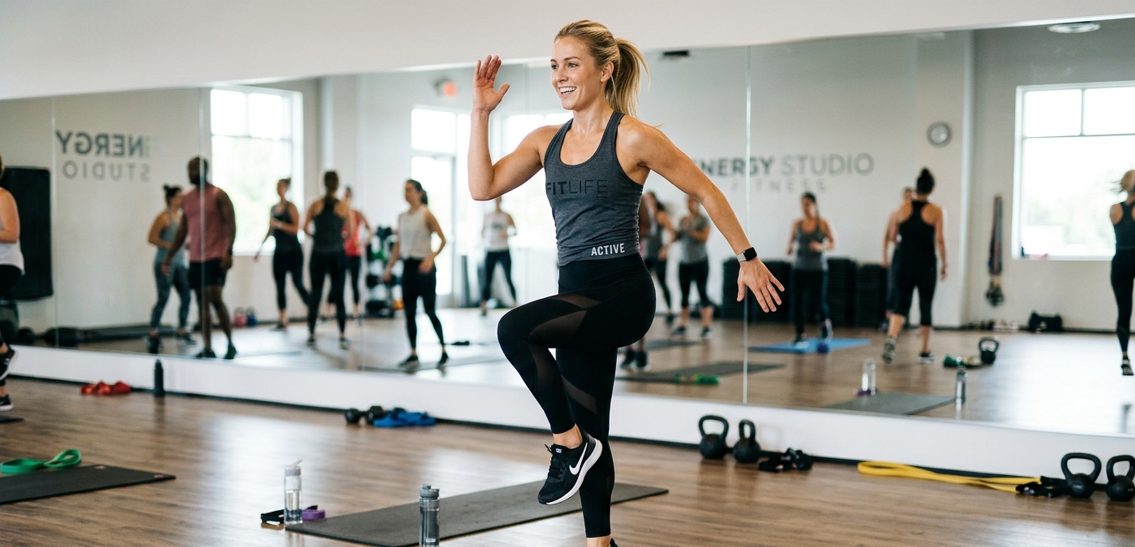
Step aerobics is a form of high-energy cardiovascular exercise performed using an adjustable raised platform (the step). Participants step up, down, and around the platform in rhythm with music. Developed in the 1980s by Gin Miller, it combines dance, athletic conditioning, and coordination training into a low-impact but high-intensity workout.
🪑 Fights Sedentary Lifestyles – Breaks 8–10 hours of sitting with just 20–30 minutes of stepping.
🦵 Protects Joints While Burning Calories – Low-impact, high-reward: less knee strain, same or better calorie burn than running.
❤️ Strengthens Heart & Lungs – Reduces risk of cardiovascular disease and metabolic syndrome.
⚖️ Improves Balance & Coordination – Lowers fall risk, especially important as you age.
📈 Scalable for Everyone – Beginners to advanced athletes can adjust step height and speed.
🎵 Boosts Mood & Motivation – Music-driven, rhythmic, and fun in group or solo settings
Improves cardiovascular endurance – Elevates heart rate and boosts lung capacity.
Strengthens lower body – Targets glutes, quadriceps, hamstrings, and calves.
Enhances coordination & balance – Repeated foot patterns over time improve agility.
Burns calories efficiently – Up to 400–600 calories per hour depending on intensity.
Low-impact option – Less joint stress than running when done with proper form.
Use proper form – Keep entire foot on the step; avoid letting the heel hang off. Step softly, not stomping.
Control step height – Beginners use 4–6 inches (10–15 cm); advanced up to 10 inches (25 cm). Higher step increases intensity.
Warm up & cool down – 5–10 minutes of basic steps before adding complex moves; finish with static stretches.
Incorporate arm movements – Add bicep curls, overhead presses, or lateral raises once footwork is mastered.
Progress gradually – Increase speed, step height, or choreography complexity only after mastering basics.
Stay hydrated & use supportive shoes – Cross-trainers with good lateral support are best.
📏 Choose the right step height – 4–6 inches for beginners, 6–8 for intermediate, 8–10 for advanced.
👟 Wear cross-trainers – Good lateral support beats running shoes; avoid slippery or overly cushioned soles.
🪑 Place on a non-slip surface – Keep 3–4 feet clearance; ensure step legs are fully locked.
🎵 Match music tempo to your level – 118–122 BPM for beginners, up to 135 BPM for advanced.
🔒 Check safety before each use – Inspect for cracks, wipe off sweat, and avoid soft carpets.
🧱 Optional add-ons – Light hand weights (1–3 lbs) or a heart rate monitor for tracking intensity.
👣 Place entire foot on the step – Heel should not hang off the edge; this ensures stability and reduces ankle strain.
🦵 Step softly, don’t stomp – Control your descent to protect knees and lower back; listen for quiet landings.
🔒 Avoid locking your knees – Keep a micro-bend in your knees at the top of the step to absorb impact.
🧍 Engage your core and stand tall – No slouching or leaning forward; shoulders back, chest open.
⬇️ Lead with your heel when stepping down – Roll from toe to heel for better shock absorption and joint safety.
Beginners in fitness – Low-impact entry point; easy to learn basic steps (step touch, knee lifts, V-step).
Older adults – Improves bone density and balance, but start with low step height.
People with joint concerns – Lower impact than running or jumping jacks; still excellent for weight management.
Group exercise enthusiasts – Thrives in class settings with music and community motivation.
Athletes needing agility work – Helps with foot speed and coordination for sports like tennis, soccer, basketball.