
The Chair/Rail Stretch is a game-changer for releasing tension in your upper back, shoulders, and chest perfect for desk workers, drivers, or anyone who battles stiffness!.This stretch targets your rhomboids, trapezius, and pectoral muscles, helping to counteract that hunched “computer posture.” Imagine your spine like a coiled spring. This stretch helps unwind and lengthen it, restoring flexibility and alignment. Whether you use a chair, railing, or even a countertop, this move is your quick fix for upper-body tightness!
You can combine this stretch with movements like the wall angel stretch, thread the needle stretch, and upper back seated twist to build a complete upper-back mobility routine.
Spending long hours sitting at a desk, driving, or looking at screens can cause tightness between the shoulder blades and stiffness in the upper spine. Over time, this tension may contribute to poor posture and discomfort. Adding a simple chair stretch into your daily routine can help improve flexibility and promote better alignment. Even a few minutes of consistent stretching can support spinal mobility and reduce the buildup of muscular tightness throughout the day.
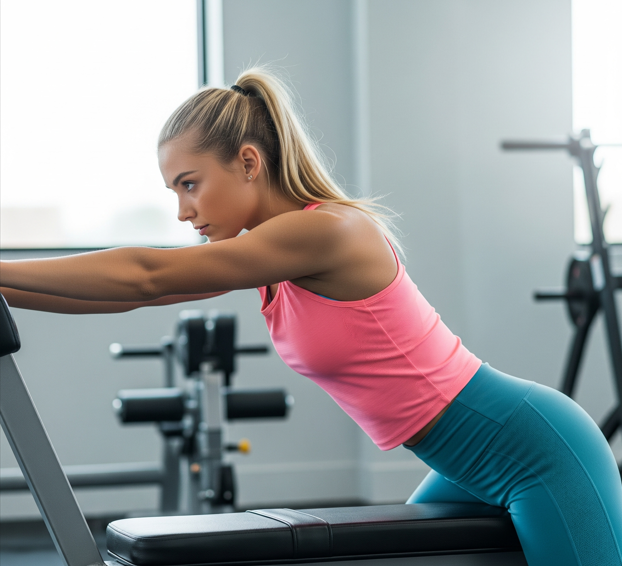
Practicing this stretch regularly may also enhance circulation to the upper back muscles, which can support recovery and reduce fatigue. Improved mobility in the thoracic spine helps your shoulders move more freely and may contribute to better posture during daily activities. When performed consistently, this stretch can complement strength training and posture exercises. Over time, maintaining flexibility in the upper back can help prevent stiffness that commonly develops from prolonged sitting or repetitive movements.
✅ Relieves Upper Back & Shoulder Tension 😌 – Loosens knots from sitting or repetitive movements.
✅ Improves Posture & Spinal Flexibility 🧘 – Counters slouching by opening the chest and shoulders.
✅ Enhances Breathing Capacity 🌬️ – Expands tight rib muscles for deeper, easier breaths.
✅ Boosts Mobility for Daily Activities 🛒 – Makes reaching, lifting, and twisting feel smoother.
✅ Quick & Equipment-Friendly ⏱️ – Uses everyday objects (chair, railing, or wall).
This stretch targets several important upper-body muscles:
Rhomboids
Located between the shoulder blades, the rhomboids help retract and stabilize the scapula. Stretching them reduces tightness caused by prolonged sitting and rounded posture.
Trapezius
The upper and middle trapezius muscles support neck and shoulder movement. Releasing tension here can ease stiffness and reduce upper back discomfort.
Latissimus dorsi
These large back muscles assist in arm movement and spinal support. Improving flexibility in the lats enhances overall upper-body mobility.
Posterior deltoids
Positioned at the back of the shoulders, these muscles contribute to shoulder stability and controlled arm movement.
Spinal stabilizers
Deep muscles along the spine help maintain posture and balance. Activating and stretching them supports long-term spinal health.
For deeper mobility, you can alternate this stretch with thoracic extension on a foam roller and the cat cow stretch to improve spinal flexibility and enhance overall upper back movement.
Stand facing a sturdy chair (or railing/counter) about hip-height.
Place both hands on the surface, shoulder-width apart, and step back until your arms are straight.
Exhale and gently rotate further, looking over your right shoulder.
Gently push your hips back to feel a stretch through your upper back and shoulders. Hold for 20–30 seconds.
Inhale deeply, then exhale as you slowly return to standing.
For best results:
Hold for 20-30 seconds
Perform 2-3 sets
Repeat 4-5 times per week
You can include it in a full body stretching routine to improve overall mobility.
Muscles Worked | Difficulty Level |
Rhomboids (upper back) | Beginner-Friendly |
Trapezius (shoulders/neck) | Easy to Modify |
Pectorals (chest) | Great for All Levels |
Latissimus Dorsi (lats) | Improves Flexibility |
✔ Keep a Micro-Bend in Knees – Protects your hamstrings and lower back.
✔ Engage Your Core Lightly – Prevents over-arching your spine.
✔ Move Slowly Into the Stretch – No bouncing! Smooth = better flexibility gains.
✔ Adjust Height as Needed – Use a higher surface if you have limited flexibility.
✖ Rounding Your Lower Back – Hinge at hips, not your spine.
✖ Locking Your Elbows – Keep a slight bend to avoid joint strain.
✖ Holding Your Breath – Breathe deeply to relax into the stretch.
✖ Rushing the Movement – Slow and steady wins the flexibility race!
The chair stretch mainly targets the rhomboids, trapezius, and latissimus dorsi. It also stretches the shoulders and upper spine, helping improve posture and mobility. You can combine it with the thread the needle stretch for deeper upper-back rotation and flexibility.
Yes, the chair stretch helps correct rounded shoulders and slouched posture by opening the chest and lengthening the upper-back muscles. For better results, you can pair it with the wall angel stretch to strengthen the muscles that support proper alignment.
Hold the chair stretch for 20–30 seconds and perform 2–3 sets. This duration helps the muscles relax and stretch safely without causing strain. You can include it as part of a full body stretching routine for balanced flexibility.
Yes, this stretch is beginner-friendly. Beginners can stand closer to the chair to reduce the intensity and gradually increase the stretch as flexibility improves. It works well alongside the cross body stretch for overall shoulder and upper-back mobility.
You can perform the chair stretch:
After workouts
During stretching routines
After long hours of sitting
As part of a posture-correction program
Pairing it with scapular retractions can help strengthen the upper-back muscles and improve posture.
The Chair/Rail Stretch is a flexibility superhero for your upper body simple, effective, and doable anywhere! Whether you’re prepping for a workout or undoing a long day at your desk, this stretch helps you stand taller and breathe easier. Try it daily and feel the difference!