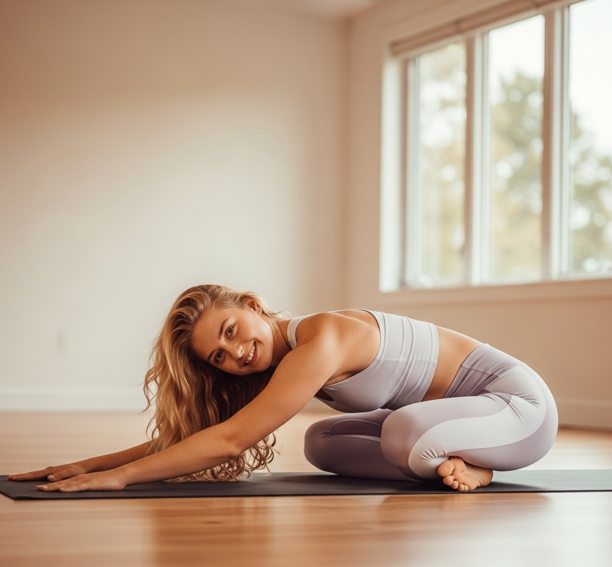
Child's Pose

Unwind Tight Muscles & Boost Flexibility

Child’s Pose is like a reset button for your body a calming stretch that targets your spine, hips, and shoulders while melting away tension. Ideal for post-workout recovery, stress relief, or a quick flexibility boost during a hectic day!

Child’s Pose is one of the most restorative and beginner-friendly stretches for improving spinal mobility and reducing tension in the lower back and hips. This gentle yoga posture allows your body to relax while naturally lengthening the spine, making it ideal for recovery, flexibility training, and stress relief. Whether you’re dealing with stiffness from long hours of sitting or looking for a calming movement between workouts, Child’s Pose provides both physical and mental benefits.

By combining deep breathing with controlled positioning, this stretch promotes circulation, eases muscular tightness, and supports better posture. It can be used as a warm-up, a cooldown, or even as a standalone relaxation technique. Because it is low-impact and highly adaptable, Child’s Pose fits seamlessly into daily stretching routines, yoga flows, and mobility programs designed to improve overall flexibility and spinal health.


Child's pose

Child’s Pose Yoga

💪 Key Benefits

Child’s Pose is more than just a resting posture — it delivers powerful physical and mental benefits. From spinal decompression to stress relief, this gentle stretch supports mobility, recovery, and overall body balance.

Key Benefits of Child’s Pose for Lower Back Pain:

Spinal Decompression – Gently stretches the lower back and vertebrae.

✅ Hip & Thigh Flexibility – Releases tightness from sitting or workouts.

Stress Relief – Deep breathing here triggers relaxation (think: mini meditation).

Shoulder Mobility – Arms extended forward? Hello, upper-back flexibility!

Digestive Aid – Light abdominal compression can soothe bloating.

Lower Back Pain Relief – Reduces stiffness and eases muscular tension in the lumbar region.

Posture Improvement – Counters slouching by lengthening the spine and relaxing tight back muscles.

Nervous System Reset – Activates the parasympathetic system for deeper relaxation.

Improved Circulation – Encourages blood flow to the spine, hips, and shoulders.

Recovery Support – Helps muscles relax after strength training or intense workouts.

When practiced consistently, Child’s Pose becomes a powerful tool for maintaining flexibility, calming the mind, and supporting spinal health. Its simplicity makes it easy to include in daily stretching routines, warm-ups, or recovery sessions.


💪 Muscles Worked in Child’s Pose

Child’s Pose may look like a simple resting posture, but it gently stretches and activates several important muscle groups throughout the back, hips, and shoulders. As you fold forward and lengthen your arms, the spine decompresses while surrounding muscles relax and elongate. This makes the pose especially effective for relieving lower back tension and improving overall mobility. It also works well when combined with movements like the Cat Cow Stretch to enhance spinal flexibility.

🦴 Lower Back & Spinal Muscles

  • Erector spinae

  • Quadratus lumborum

  • Deep spinal stabilizers

These muscles lengthen as the torso folds forward, helping reduce compression and stiffness. For deeper lower back release, pairing this stretch with the knees to chest stretch can further improve spinal mobility.

🍑 Hips & Glutes

  • Gluteus maximus

  • Piriformis

  • Hip rotators

Sitting back toward the heels creates a gentle hip flexion stretch, easing tightness caused by prolonged sitting. Adding a piriformis stretch for hip mobility can enhance flexibility in this area.

🧍 Shoulders & Upper Back

  • Latissimus dorsi

  • Rhomboids

  • Trapezius

Reaching the arms forward stretches the upper back and shoulders, improving posture and relieving tension from daily activities.

📋 How to Do Child’s Pose Stretch

1️⃣ Kneel on Mat

Sit back on your heels, knees hip-width apart (or wider for modifications).

2️⃣ Fold Forward

Hinge at hips, lowering torso between thighs, forehead resting on the mat.

3️⃣ Arm Position

Stretch arms forward (intense stretch) or rest them alongside your body (gentler version).

4️⃣Breathe & Hold

Inhale deeply into your back ribs, exhale to sink deeper (aim for 30+ seconds).

🔥 Modifications:

  • Beginners: Place a pillow under your torso or knees.
  • Advanced: Walk hands farther forward for a deeper shoulder/back stretch.

⏳ How Long Should You Hold Child’s Pose?

⏱️ Recommended Duration

  • Hold for 20-60 seconds per repetition

  • Repeat 2-4 times depending on comfort

  • Breathe deeply and evenly throughout the hold

  • Relax your shoulders and avoid tension in the neck

Consistency matters more than duration – short, daily holds are more beneficial than occasional long sessions.

⏰ When to Do Child’s Pose

Child’s Pose is a versatile stretch that can be performed at different times of the day depending on your goal. Whether you’re looking to improve flexibility, reduce back tension, or calm your mind, this posture fits easily into both active and recovery routines. Because it is gentle and restorative, it can serve as a warm-up movement, a cooldown stretch, or even a stress-relief break during a busy day.

🗓️ Best Times to Practice

  • In the Morning – Helps reduce stiffness that builds up overnight and gently mobilizes the spine before daily activities.

  • Before Workouts – Prepares the lower back, hips, and shoulders for movement when included in a light warm-up routine.

  • After Strength Training – Acts as a cooldown stretch to relax the spine and release tension from the hips and back.

  • During Recovery Days – Supports mobility without placing stress on muscles or joints.

  • After Long Sitting Sessions – Counteracts tightness from desk work, driving, or prolonged screen time.

  • Before Bed – Encourages relaxation and deep breathing, helping calm the nervous system for better sleep.

Because Child’s Pose promotes both flexibility and relaxation, it can be practiced daily. Even short sessions throughout the day can help maintain spinal mobility and reduce accumulated tension.

 📊 Quick Reference Table

Aspect

Details

Muscles Worked

Spine, Hips, Thighs, Shoulders

Difficulty

Beginner-friendly

Best For

Flexibility, Relaxation, Post-workout cooldown


⚠️Safety Check: 

🦵 Knee Protection – Fold your mat double or place a cushion under knees if they’re sensitive

🤰 Pregnancy Modification – Widen knees to make room for belly (after 1st trimester)

🧘♀️ Head Support – Rest forehead on a yoga block or stacked hands if neck strains

🚫 Common Mistakes

🤸♀️ Rushing In – Ease into the pose slowly to avoid muscle strain

👂Shoulder Shrugs – Keep shoulders melting down away from ears (pretend they’re heavy sandbags)

🍑 Buttocks Lift – Keep hips sinking toward heels (imagine a weight pulling them down)

FAQ

Can Child’s Pose help with lower back stiffness?

Yes, Child’s Pose gently decompresses the spine and stretches the lower back muscles, which can reduce stiffness caused by prolonged sitting or workouts. For added relief, pairing it with the forward bend lower back stretch can improve spinal flexibility and mobility.

Absolutely. Sitting back toward your heels lengthens the glutes and outer hips. If you experience deeper hip tightness, combining this posture with a piriformis stretch for hip mobility can enhance flexibility and reduce discomfort.

Child’s Pose pairs well with gentle spinal movements and core stability drills. Adding the bird dog exercise for lumbar stability can strengthen the core while maintaining spinal alignment.

Yes, it’s one of the most beginner-friendly stretches. You can adjust knee width or use support under the hips for comfort. For additional gentle mobility, you may include the pelvic tilts for lower back activation in your routine.

Yes, spinal rotation movements can improve overall mobility. The seated spinal twist for flexibility is a great complement to Child’s Pose for enhancing thoracic rotation and reducing upper back tightness.

Quick Tip:

💡 Listen to Your Body – This should feel restorative, not painful! If any sharp pain occurs, ease up immediately.