
Cossack Squat Stretch
Cossack Squat Mastery: Unlock Lower Body Strength and Mobility
The ultimate mobility move! The cossack squat stretch combines strength and flexibility to open tight hips, groin, and hamstrings; no fancy equipment needed.
This dynamic stretch primarily works your adductors, hamstrings, hip flexors, and ankles, improving mobility for squats, martial arts, or everyday movement.
Key Benefits 💪
✅ Boosts hip flexibility for deeper squat positions
✅ Improves groin mobility (essential for side movements)
✅ Strengthens while stretching, active flexibility training
✅ Enhances ankle dorsiflexion for better knee health
✅ Great for all fitness levels easily modifiable
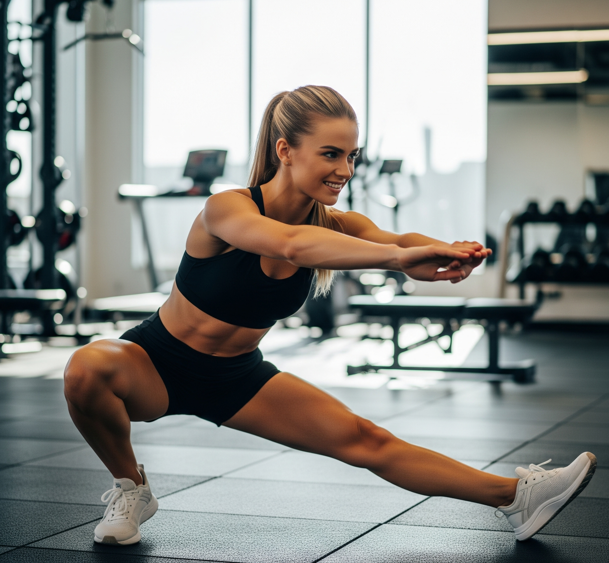
Cossack Squat Exercise
📝 How To Do The Cossack Squat Stretch
1️⃣ Start Wide
- Stand with feet 2-3x shoulder-width apart, toes slightly out
2️⃣ Shift Sideways
- Shift weight to one side, bending that knee to 90°
- Keep other leg straight with foot flat
3️⃣ Descend with Control
- Lower hips as far as comfortable
- Keep chest up and core engaged
4️⃣ Hold & Breathe
- Maintain for 15-30 seconds per side
- Gently pulse to increase range
Modifications:
Beginner: Hold onto a chair for balance
Advanced: Add weight or go deeper
📊 Quick Reference Table
Muscles Worked | Difficulty Level |
Adductors | Intermediate |
Hamstrings | Adjustable |
Hip flexors | Bodyweight only |
⚠️Safety Tricks
✔ Warm up hips first
✔ Progress depth gradually
✔ Keep heels down
❌ Common Mistakes:
✖ Let knees cave inward
✖ Round your lower back
✖ Force painful positions
👥 Who Should Do the Cossack Squat Stretch?
🧑💻 Desk Workers
Why It’s Essential:
Sitting for hours locks your hips into a flexed position
The groin and inner thighs become chronically tight
Hip mobility declines without regular movement
How It Helps:
✅ Opens the hips in the frontal plane the direction they rarely move
✅ Counteracts the “stuck” feeling from prolonged sitting
✅ Improves pelvic mobility for better posture
✅Complements standing hip stretches for complete hip health
🏋️ Weightlifters and Strength Athletes
Why It’s Essential:
Squat depth requires hip, groin, and ankle mobility
Tight adductors limit the ability to squat deep
Imbalances between legs create compensation patterns
How It Helps:
✅ Improves squat depth by opening the adductors
✅ Builds strength at the bottom of the squat position
✅ Balances left and right hip mobility
✅ Pairs with lying quad stretch for complete lower body mobility
🏃 Runners
Why It’s Essential:
Running tightens the adductors and hip flexors
Lateral movement is often neglected in running training
Hip mobility impacts stride length and efficiency
How It Helps:
✅ Maintains hip range of motion for efficient strides
✅ Reduces groin and adductor tightness
✅ Improves stability during directional changes
✅ Complements hip flexor lunge for 360-degree hip mobility
🧘 Yoga Practitioners
Why It’s Essential:
Many yoga poses require deep hip opening
The Cossack squat mirrors elements of Skandasana (side lunge)
Hip mobility is foundational for seated postures
How It Helps:
✅ Deepens expression of side lunge and wide-legged forward folds
✅ Builds strength in the end ranges of hip motion
✅ Improves pelvic awareness for seated meditation
✅Complements thread the needle stretch for full-body mobility
🏀 Athletes in Lateral Sports (Basketball, Soccer, Tennis)
Why It’s Essential:
Cutting, pivoting, and changing direction demand hip mobility
Tight adductors limit lateral agility
Groin strains are common in sports with quick direction changes
How It Helps:
✅ Prepares hips for explosive lateral movements
✅ Reduces risk of adductor strains
✅ Improves the ability to sink into defensive stances
✅Complements sleeper shoulder stretch for full-body athletic preparation
👴 Older Adults
Why It’s Essential:
Hip mobility naturally decreases with age
The ability to get low to the ground is essential for fall prevention
Lateral stability becomes increasingly important
How It Helps:
✅ Maintains the ability to squat and get up from the floor
✅ Improves balance through greater hip control
✅ Preserves groin flexibility for daily activities
✅ Can be modified with support for safety
🧗 Climbers
Why It’s Essential:
Climbing requires high hips and wide stances
Groin mobility is essential for reaching distant holds
The Cossack squat mirrors climbing positions
How It Helps:
✅ Builds the hip mobility needed for high foot placements
✅ Strengthens the adductors used in wide stances
✅ Improves stability on sloping terrain
✅ Pairs with lat stretches for full-body climbing mobility
🎭 Dancers and Gymnasts
Why It’s Essential:
Grand pliés and deep lunges require exceptional hip mobility
Adductor flexibility is essential for extensions and splits
Control in deep ranges separates advanced from beginner
How It Helps:
✅ Develops active flexibility in the adductors
✅ Strengthens the muscles that control deep hip positions
✅ Prepares the body for advanced movements
✅Complements butterfly stretch for comprehensive groin opening
📅 Daily Cossack Squat Stretch Routine
🌅 Morning Wake-Up (3 minutes)
Upon Waking:
Gentle Cossack Squats: 5-8 repetitions per side, partial range only
Butterfly Stretch: 30 seconds to open the groin before deeper work
Hip Flexor Lunge: 30 seconds per side to balance front and back of the hips
Why Morning Matters: Your hips tighten overnight. Morning Cossack squats restore lateral mobility before you start your day.
🪑 Desk Break Routine (90 seconds)
Mid-Morning (10-11am):
Supported Cossack Squat: 3-5 repetitions per side, using a desk or chair for balance
Standing Hip Stretches: 30 seconds per side to release sitting tension
After Lunch (1-2pm):
Deep Cossack Squats: 3-5 repetitions per side, focusing on the tighter side
Glute Stretch: 30 seconds per side to balance the hip work
Late Afternoon (3-4pm):
Cossack Squats with Arm Reach: 3-5 repetitions per side
Lat Stretches: 30 seconds per side to integrate upper body
🏋️ Pre/Post-Workout Integration
Before Workout (Dynamic Warm-Up):
Cat Cow Stretch: 5 rounds to mobilize the spine
Cossack Squats: 5-8 repetitions per side, moving rhythmically
Hip Flexor Lunge: 30 seconds per side to open the front of the hips
After Workout (Static Stretch):
Deep Cossack Squat: 30-45 seconds per side
Lying Quad Stretch: 30 seconds per side
Thread the Needle Stretch: 30 seconds per side for upper back release
Sleeper Shoulder Stretch: 30 seconds per side for complete upper body mobility
Why This Matters: After leg day or running, your hips need both strength work and mobility. Cossack squats restore lateral movement while complementary stretches balance the whole body.
🌙 Evening Wind-Down (3 minutes)
After Dinner:
Supported Cossack Squats: 5-8 repetitions per side, moving slowly
Butterfly Stretch: 60 seconds, letting the knees fall open
Glute Stretch: 30 seconds per side
Before Bed:
Deep Cossack Squat: 30 seconds per side, focusing on relaxation
Cross Body Stretch: 30 seconds per side to release the shoulders
Deep Breathing: 5 breaths, imagining tension leaving your hips
🔄 Complete 5-Minute Hip Mobility Routine
| Time | Exercise | Focus |
|---|---|---|
| 0:00-1:00 | Cat Cow Stretch | Spinal mobility, breath connection |
| 1:00-2:00 | Cossack Squats (alternating) | Hip opening, adductor stretch |
| 2:00-2:30 | Butterfly Stretch | Groin opening |
| 2:30-3:00 | Hip Flexor Lunge (each side) | Front of hip opening |
| 3:00-3:30 | Lying Quad Stretch (each side) | Quad release |
| 3:30-4:00 | Glute Stretch (each side) | Posterior hip opening |
| 4:00-5:00 | Deep Breathing | Integration |
FAQ's
Q1: How often should I do the Cossack squat stretch?
A: For hip mobility, 3-5 times weekly is ideal. If you sit a lot or have tight hips, daily practice produces the best results. Even 3-5 minutes of Cossack squats daily can transform your hip mobility within weeks.
Q2: Why is one side tighter than the other?
A: This is completely normal! Most people have a dominant side or favor one leg for stability. Always stretch your tighter side first, then match the time on your looser side. Over time, this gradually balances the hips.
Q3: Can this help with lower back pain?
A: Yes, indirectly. Tight hips and groin pull on the pelvis, which affects the lower back. By releasing the adductors and opening the hips, the Cossack squat can reduce pelvic tension and alleviate referred back pain.
Q4: How does this relate to butterfly stretch?
A: Both target the adductors and inner thighs, but from different angles. Butterfly stretch works the groin in a seated, externally rotated position. The Cossack squat does so in a weight-bearing, functional position. Use both for complete adductor health.
Q5: Should I feel this in my knees?
A: No, you should feel the primary stretch in your inner thigh and groin. If you feel knee pain, check your alignment. Your bent knee should track over your toes, not collapse inward. Adding a slight heel lift can help if ankle mobility limits you.
Quick Tip:
Add the cossack squat stretch to your warm-up routine for better squat performance!