
Bar Hang Exercise
Bar Hang Exercise: Transform Your Posture in 30 Seconds
Let gravity do the work! This simple pull-up bar hanging exercise is like a ‘reset button’ for your shoulders and back just grab a bar and hang on!
The bar hang exercise primarily stretches your lats, shoulders, and spinal muscles while gently decompressing your vertebrae, making it perfect for counteracting slouching or post-workout tightness through passive hang-on pull-up bar sessions.
💪 Key Benefits
✅ Decompresses spine (the ultimate antidote to desk posture)
✅ Improves shoulder flexibility through passive pull-up bar hang stretches
✅ Strengthens grip, just hang on the pull-up bar daily to see progress
✅ Enhances posture by stretching tight chest muscles
✅ Relieves tension through gravity-assisted traction
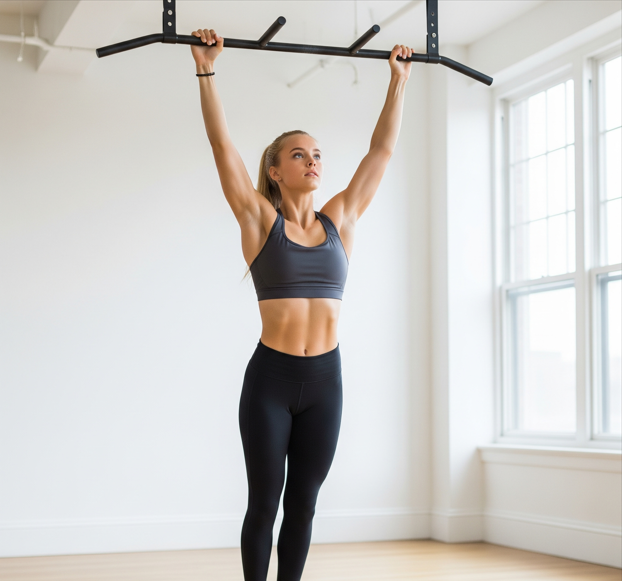
Pull-Up Bar Hang
📝 How to Do the Perfect Bar Hang Exercise
1️⃣ Grip the Bar
- Jump up to your pull-up bar hang position
- Hands shoulder-width apart (palms forward)
2️⃣ Relax Into the Hang
- Completely hang on pull-up bar with feet off the ground
- Let your shoulders stretch upward naturally
3️⃣ Engage Properly
- Light core activation prevents swinging
- Breathe deeply during your pull-up bar hanging
4️⃣ Progress Gradually
- Start with 10-20 sec bar hang exercise sessions
- Build to 1 minute+ as your grip strengthens
Modifications:
- Beginner: Use resistance band assistance for the pull-up bar hang
- Advanced: Try weighted hang on pull-up bar variations
📊 Quick Reference Table
| Muscles Worked | Difficulty Level |
|---|---|
| Lats | Beginner-friendly |
| Shoulders | Adjustable intensity |
| Grip/forearms | No equipment needed |
| Spinal decompression | Scalable duration |
⚠️Safety Check:
✔ Use a full grip (thumbs around the bar)
✔ Warm up wrists/shoulders first
✔ Listen to your body (stop if in pain)
🚫 Don’ts
✖ Kip or swing uncontrollably
✖ Hold breath (breathe steadily!)
✖ Overdo it (start with short hangs)
👥 Who Should Do the Bar Hang Exercise?
🧑💻 Desk Workers
Why It’s Essential:
Sitting for hours compresses your spine
Your shoulders round forward, and your chest tightens
The bar hang reverses this compression by letting gravity pull your spine into length
How It Helps:
✅ Decompresses the spinal discs that compress during sitting
✅ Stretches the rounded shoulders back into position
✅ Counteracts the “hunched” posture of desk work
✅ Complements doorway chest stretch for complete upper body opening
🏋️ Weightlifters and Gym-Goers
Why It’s Essential:
Heavy squats, deadlifts, and overhead presses compress the spine
Grip strength is essential for most pulling exercises
Shoulder mobility is crucial for overhead work
How It Helps:
✅ Decompresses the spine after heavy loading
✅ Builds grip endurance for deadlifts and rows
✅ Improves shoulder mobility for overhead movements
✅ Balances the chest work with front delt exercises and lat stretches
🏃 Runners
Why It’s Essential:
Running creates repetitive impact that compresses the spine
Tight shoulders restrict arm swing and breathing
Upper body tension wastes energy during runs
How It Helps:
✅ Decompresses the spine after impact
✅ Releases shoulder tension for more efficient arm swing
✅ Improves breathing capacity through opened chest
✅ Complements toe touch stretch for full-body release
🧗 Climbers
Why It’s Essential:
Climbing demands incredible grip strength and shoulder stability
The hang position is foundational to climbing
Recovery between climbs is essential
How It Helps:
✅ Builds grip endurance for longer climbs
✅ Strengthens the finger flexors and forearm muscles
✅ Improves shoulder stability for dynamic moves
✅ Pairs well with thread the needle stretch for upper back release
🧘 Yoga Practitioners
Why It’s Essential:
Many yoga poses require shoulder mobility and spinal length
Inversions and arm balances need upper body strength
The bar hang offers a different angle than traditional yoga stretches
How It Helps:
✅ Creates length in the spine for deeper forward folds
✅ Improves shoulder mobility for poses like Downward Dog
✅ Builds the grip strength needed for arm balances
✅ Complements lat stretches for complete upper body opening
🏀 Overhead Athletes (Basketball, Volleyball, Swimming)
Why It’s Essential:
Overhead sports stress the shoulders and compress the spine
Shoulder mobility is essential for performance
Recovery between games and practices is critical
How It Helps:
✅ Decompresses the spine after jumping and landing
✅ Opens the shoulders for better overhead mechanics
✅ Strengthens the rotator cuff stabilizers
✅ Complements wall push ups for shoulder stability
📅 Daily Bar Hang Exercise Routine
🌅 Morning Wake-Up (2 minutes)
Upon Waking:
Passive Hang: 3 sets of 10-15 seconds, resting 30 seconds between sets
Deep Breathing: While hanging, take 5 slow breaths, feeling your spine lengthen
Why Morning Matters: Your spine compresses overnight. Morning hanging resets your length before the day’s activities.
🪑 Desk Break Routine (90 seconds)
Mid-Morning (10-11am):
Feet-Assisted Hang: 3 sets of 15-20 seconds at a nearby bar or doorway bar
Shoulder Rolls: 30 seconds to release tension
After Lunch (1-2pm):
Passive Hang: 3 sets of 10-15 seconds
Lat Stretches: 30 seconds per side to open the side body
Late Afternoon (3-4pm):
Active Hang: 3 sets of 5-10 seconds focusing on scapular engagement
Doorway Chest Stretch: 30 seconds per side to balance front and back
🏋️ Pre/Post-Workout Integration
Before Workout (Dynamic Warm-Up):
Active Hang: 3 sets of 5-10 seconds to activate shoulders
Scapular Pulls: 5-8 repetitions
Toe Touch Stretch: 30 seconds to warm up the posterior chain
After Workout (Static Stretch):
Passive Hang: 2 sets of 20-30 seconds for decompression
Thread the Needle Stretch: 30 seconds per side for upper back release
Lat Stretches: 30 seconds per side for complete side body opening
Front Deltoid Exercises: Gentle stretching of the front shoulder
Why This Matters: Hanging after heavy lifting (squats, deadlifts, overhead presses) decompresses the spine that was compressed during those exercises.
🌙 Evening Wind-Down (3 minutes)
After Dinner:
Passive Hang: 2 sets of 20-30 seconds
Deep Breathing: 5 breaths, imagining your spine lengthening with each exhale
Wall Push Ups: 10 repetitions to gently open the chest before bed
Before Bed:
Active Hang: 3 sets of 5-10 seconds
Doorway Chest Stretch: 30 seconds per side
Gentle Neck Rolls: 30 seconds
🔄 Complete 5-Minute Bar Hang Routine
| Time | Exercise | Focus |
|---|---|---|
| 0:00-1:00 | Passive Hang (3 sets) | Spinal decompression, shoulder stretch |
| 1:00-2:00 | Active Hang (3 sets) | Scapular strength, pull-up prep |
| 2:00-3:00 | Lat Stretches (each side) | Side body opening |
| 3:00-4:00 | Doorway Chest Stretch | Balance front body |
| 4:00-5:00 | Deep Breathing | Integration and relaxation |
FAQ's
Q1: How long should I hang for?
A: For beginners, start with 5-10 second holds, working up to 30-60 seconds. For spinal decompression, 30-60 seconds is ideal. For grip strength, multiple shorter hangs are more effective. Listen to your body—fatigue in your hands is normal; pain in your shoulders is not.
Q2: Can the bar hang help with back pain?
A: Yes! The bar hang provides natural traction that can relieve pressure on spinal discs. Many people with lower back pain find hanging therapeutic. However, if you have a specific spinal condition, consult your healthcare provider first.
Q3: Is it safe for shoulders?
A: For most people, yes. The passive hang stretches the shoulders and opens the chest. However, if you have a rotator cuff injury, start gently. The active hang (with engaged shoulders) is often safer for those with shoulder issues.
Q4: How does this compare to doorway chest stretch?
A: The doorway chest stretch opens the front of your shoulders and chest. The bar hang opens your lats and decompresses your spine. Together, they create complete upper body opening—front, back, and vertical.
Q5: Can I do this if I can't do a pull-up?
A: Absolutely! The bar hang is the foundation for pull-ups. Many people start with hangs long before they can do a single pull-up. Use a box to assist or do partial hangs with feet still on the ground.
Quick Tip:
For best results, incorporate pull-up bar hanging into your daily routine, even just 30 seconds helps!