
Circuit Training
The Ultimate Circuit Training Stretch: Boost Flexibility & Flow
This full-body stretch sequence is specifically designed to reverse the stiffness created by repeated impact, jumping, and strength holds in any circuit training session. It targets the hips, hamstrings, lower back, shoulders, and thoracic spine the five areas that tighten most after explosive moves like burpees, kettlebell swings, or box jumps.
🔑 5 Key Features of This Stretch
No equipment needed – works perfectly as one of your circuit training exercises at home
Takes only 6–8 minutes – fits right after any circuit training workout
Breath-synced movement – turns stretching into active recovery, not passive pulling
Scalable for all levels – beginner modifications + advanced intensives included
Prepares you for tomorrow’s workout – boosts flexibility without fatiguing muscles
Circuit Training Exercises
✅ Key Benefits
Reduces post-workout muscle stiffness – After repeated contractions in circuit training exercises, your muscle fibers naturally shorten and tighten. This stretch gently lengthens them back to their resting state, so you don’t walk around feeling like a robot the next day.
Improves joint range of motion – Consistent stretching after circuit training routine work increases the distance your hips, shoulders, and spine can safely move. Think wider lunges, deeper squats, and higher kicks without joint pinching.
Lowers heart rate gradually – Instead of crashing from high intensity to zero movement, this sequence acts as a built-in cool-down. It prevents blood from pooling in your legs and reduces dizziness after aerobic circuit training workouts.
Decreases next-day soreness (DOMS) – Gentle elongation helps flush metabolic waste like lactate and hydrogen ions from muscle tissue. The result? You’re not grunting every time you sit down on the toilet the morning after a hard session.
Enhances body awareness (proprioception) – Slow, deliberate movement teaches your brain exactly where your limbs are in space. This is critical for injury prevention when you return to full body circuit training exercises like burpees or box jumps.
Supports mental reset and lowers cortisol – The rhythmic, breath-synced nature of this stretch calms your nervous system. It’s like a 5-minute meditation after a stressful aerobics workout your mind feels as loose as your muscles.
Prepares connective tissue for future load – Tendons, ligaments, and fascia adapt positively to flexibility work over time. This makes them more resilient and less likely to tear during explosive moves in kickboxing or a dance workout.
Improves breathing efficiency – Stretching your ribcage, diaphragm, and intercostal muscles increases your lung’s tidal volume (how much air you can move per breath). This directly benefits any aerobic circuit training workouts you do later.
👥 Who Should Do This?
Circuit trainers who do intervals of strength + cardio – If you regularly practice what is a circuit workout (think 40 seconds on, 20 seconds off with moves like squat jumps, push-ups, and mountain climbers), your hip flexors and shoulders get chronically tight. This stretch reverses that specific pattern of stiffness.
Home workout enthusiasts with limited space – Perfect for circuit training exercises at home where you might not have a gym mat or foam roller. All you need is a few square feet of floor and a towel if you want extra hamstring support.
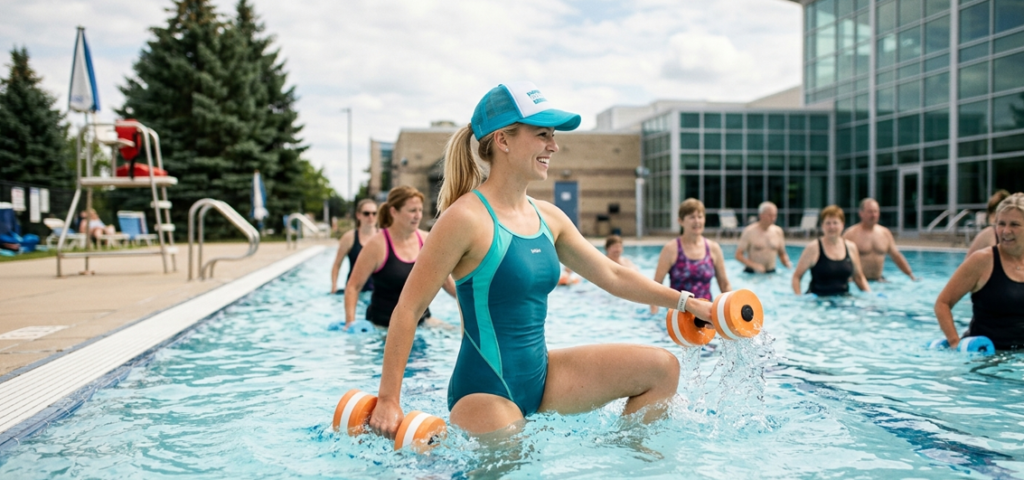
Group fitness lovers who do water or dance classes – Ideal after a water aerobics workout (cold water naturally tightens muscles) or a high-energy dance workout (repetitive footwork shortens calves and arches). This restores length without adding fatigue.
Kickboxing practitioners who twist and punch – The rotational force in kickboxing – hooks, uppercuts, spinning backfists locks the thoracic spine (your mid-back). This stretch opens it back up, so you don’t lose rotation speed over time.
Desk workers who sit 6+ hours a day – Even if you don’t work out daily, this sequence undoes “chair posture”: rounded shoulders, tight hip flexors, and weak glutes. Use it as a standalone evening reset, not just post-workout.
Recovery-focused athletes who want flexibility without strength loss – Stretching after (not before) heavy circuit exercise training preserves your power output while still building flexibility. This is the goldilocks zone for hybrid athletes.
Beginners to intermediates who find stretching intimidating – Every move includes a beginner modification (e.g., bending knees deeply, using a chair for balance). No previous stretching experience or “being flexible” required you start exactly where you are.
People over 40 who want joint health and fall prevention – Flexibility is a key predictor of longevity and independent movement in older adults. This stretch maintains hip and spinal mobility without high-impact stress or complex balancing acts.
📋 Step-by-Step Instructions
1. Standing Forward Fold to Half Lift
Inhale, raise arms overhead. Exhale, hinge at hips and fold forward (knees soft).
Let your head hang heavy like a ragdoll.
Beginner: Bend knees deeply, rest hands on shins. Keep back flat.
Advanced: Palms flat on floor, walk them toward feet. Straighten legs slightly without locking knees.
Hold: 5 breaths in fold → inhale to flat-back half lift → exhale down. Repeat 3 times.
Sensory cue: Spine lengthening like a string of pearls.
2. Low Lunge with Twisted Reach
Step left foot back into a low lunge, right knee bent 90° over ankle.
Inhale, sweep left arm up and twist torso to the right.
Beginner: Keep bottom hand on floor or a block. Twist only as far as comfortable.
Advanced: Lift back knee 1 inch off mat. Reach bottom hand to outside of front foot.
Feel it: Like wringing out a wet towel – diagonal stretch from hip to opposite shoulder.
Hold: 4–6 breaths per side. On each exhale, twist an extra millimeter.
Avoid: Collapsing into front shoulder. Keep chest open.
3. Thread the Needle Stretch (Spinal Rock)
From all fours (tabletop), wrists under shoulders, knees under hips.
Slide right arm under left armpit. Lower right shoulder and ear to mat.
Beginner: Rest forehead on a folded blanket. Don’t force shoulder to floor.
Advanced: Extend left arm straight forward or walk left hand to the left for more rotation.
Hold: 3 slow breaths per side. Press back to center.
Safety: Keep hips stacked over knees. Don’t sway sideways.
Sensory cue: Stretch travels from mid-back to armpit like melting butter.
4. Supine Hamstring Stretch with Strap (or Towel)
Lie on back. Loop a strap, belt, or towel around the ball of your right foot.
Slowly extend right leg toward ceiling. Keep lower back pressed into mat.
Beginner: Keep left knee bent, left foot flat on floor (protects lower back).
Advanced: Slowly lower straight right leg out to the side – 45°, then 90°. Keep foot flexed.
Hold: 6–8 deep breaths. On each exhale, gently pull strap – no bouncing.
Active option: Pulse heel toward ceiling (1 inch pulses) for 10 seconds, then relax deeper.
Don’t: Lock your knee. Keep a soft microbend.
5. Reclined Spinal Twist (Finale)
Hug right knee into chest. Gently drop it across body toward left side.
Keep right shoulder blade on floor. Arms open like a T.
Beginner: Place a pillow under dropped knee for support.
Advanced: Extend top leg straight (figure-4) OR look over opposite shoulder for a neck twist.
Hold: 6–8 breaths per side. On each exhale, let gravity pull knee lower.
Exit: Bring knee to center, hug both knees to chest, rock side to side for 3 breaths. Switch sides or sit up.
📅 Weekly Routine How to Integrate This Stretch
| Day | Workout Done Before This Stretch | Why This Stretch Helps |
|---|---|---|
| Monday | Full body circuit training exercises (squats, push-ups, lunges) | Opens hips & chest after pushing/pulling |
| Tuesday | Rest or light walking | Use alone as active recovery to maintain flexibility |
| Wednesday | Aerobic circuit training workouts (jump rope + mountain climbers) | Calms nervous system, lowers heart rate |
| Thursday | Kickboxing or dance workout (high rotation & impact) | Unwinds spine and shoulder girdle |
| Friday | Circuit training routine with heavy lower body focus | Releases hamstrings & glutes before weekend |
| Saturday | Water aerobics workout (pool-based resistance) | Warms up muscles post-cold water; restores length |
| Sunday | Any circuit training exercises at home (no gym day) | Prevents “weekend warrior” stiffness |
⚠️ Safety Tricks & Common Mistakes
✅ Safety Tricks
Use a wall or chair for balance in lunges – especially after a tiring circuit training workout when your stabilizer muscles are fatigued.
Breathe like a slow tide – exhale longer than you inhale (e.g., inhale 3 seconds, exhale 5 seconds) to let muscles neurologically release.
Keep a micro-bend in knees during forward folds to protect hamstring attachments from overstretching, especially if you’re naturally hypermobile.
Ask “what is a circuit workout?” – No, really. If you’re new, start with fewer reps in the main workout so you have energy left to stretch safely. A tired muscle is a tight muscle.
❌ Common Mistakes
Bouncing in stretches – That’s your muscle’s stretch reflex screaming “no!”. Stay still or sway microscopically. Bouncing causes micro-tears, not length.
Holding your breath – Turns a relaxing stretch into a stressor. Whisper “sssshhh” on exhale if needed. If you can’t breathe deeply, you’ve gone too far.
Over-twisting your neck in Thread the Needle Stretch Keep your gaze soft or at the floor. Craning your neck up recruits upper traps, which defeats the shoulder release.
Rushing the sequence – Treating this like an aerobics workout or sprint session? Slow down by 50%. Speed kills flexibility muscles need time to creep and relax.
FAQ's
1. Can I do this stretch before a workout instead of after?
Yes, but with a difference. Before a workout, do only 30 seconds per move and avoid deep holds. Think of it as “waking up” your muscles, not “lengthening” them. Save the deep 6–8 breath holds for after your session.
2. How soon after my workout should I stretch?
Ideally within 5–10 minutes of finishing. Your muscles are warm, pliable, and most receptive to length gains. Waiting more than 30 minutes? Do a quick warm-up (arm swings, leg swings) before stretching.
3. What if I feel tingling or numbness in my foot or hand?
Stop immediately. That’s a nerve compression signal, not a stretch. Back off the move by 50% or skip it entirely. Never stretch through sharp, electric, or pins-and-needles sensations.
6. Can I do this on a rest day without any prior workout?
Yes, but warm up first. Do 3–5 minutes of light walking, arm circles, or gentle marching in place. Stretching cold muscles is like trying to bend a frozen rubber band not effective and slightly risky.
5. How many times per week should I do this stretch?
3–5 times per week for visible improvement in 4–6 weeks. Once a week maintains current levels. Daily is fine as long as you’re not sore. Listen to your body stretching should never feel like a punishment.
Quick Tip:
Never force a stretch. Your muscles have a natural “stop signal” called the stretch reflex. When you feel a sharp pull or burning sensation, you’ve gone too far. Instead, aim for a mild, pleasant tension like a gentle hug, not a wrestling match. Breathe slowly, hold for at least 30 seconds, and watch your flexibility improve without pain. Remember: consistency beats intensity every single time.