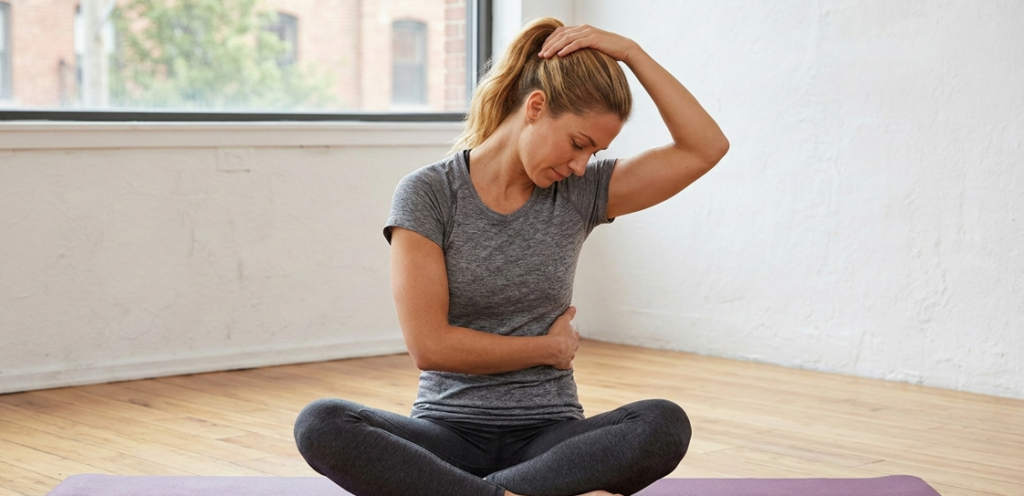
“That persistent knot at the base of your neck? The levator scapulae muscle stretch is your ticket to relief. Say goodbye to tech neck, stiff shoulders, and that nagging tension that follows you everywhere.”
🔍 What Is the Levator Scapulae Stretch?
The levator scapulae stretch targets the muscle that connects your neck to your shoulder blade, a muscle that becomes chronically tight from poor posture, stress, and hours of screen time. When this muscle shortens, it pulls your shoulder blade up toward your ear, creating tension in your upper back and that all-too-familiar “hunched” feeling.
Think of it as permitting your shoulders to drop back down where they belong. Understanding upper trap vs levator scapulae stretch helps you target the right area. The levator runs from your neck to shoulder blade, while the upper trap sits on top of your shoulder. For complete upper body relief, consider pairing this with a thread the needle stretch to open your thoracic spine and shoulders.
✨ Key Benefits of Levator Scapulae Stretches
✅ Relieves Chronic Neck Tension – Directly targets the muscle responsible for that “knot” at the base of your neck through specific levator scapulae stretching techniques
✅ Improves Upper Body Flexibility – Restores normal range of motion to your neck and shoulders, making flexibility a daily reality
✅ Corrects “Tech Neck” Posture – Counters the forward head position from phone and computer use with targeted stretches for levator scapulae
✅ Reduces Headache Frequency – Tension headaches often originate in tight neck and shoulder muscles
✅ Enhances Shoulder Mobility – Allows your shoulder blades to move freely, improving overall upper trap stretch effectiveness
📝 How to Stretch Levator Scapulae: Step-by-Step Instructions
🔹 Seated Levator Scapulae Stretch (Basic Version)
- Sit tall in a chair with your spine long and shoulders relaxed. This classic seated levator scapulae stretch is perfect for office breaks
- Grasp the side of your chair with your right hand to anchor your shoulder blade in place
- Slowly turn your head 45 degrees to the left (imagine looking toward your left armpit)
- Gently tuck your chin down toward your chest
- Place your left hand on the back of your head for gentle assistance (no pulling, just weight)
- Hold for 20-30 seconds, breathing. This static levator scapulae stretch deeply allows for deep tissue release
- Return to the center slowly, then repeat on the opposite side
🔹 Upper Trap and Levator Scapulae Stretch (Combined Version)
- Sit or stand tall with good posture. This upper trap and levator scapulae stretch targets both muscles simultaneously
- Anchor your right hand under your thigh or grasp the chair seat
- Tilt your head to the left, bringing your left ear toward your left shoulder
- Slowly turn your chin slightly downward toward your chest
- Feel the stretch travel from the side of your neck toward your shoulder blade. This upper trapezius and levator scapulae stretch releases both key tension areas
- Hold 20-30 seconds, then switch sides
🔹 Static Levator Scapulae Stretch (Advanced Hold)
- Find a comfortable seated position. This static levator scapulae stretch is ideal for deeper release
- Anchor both shoulders down by placing hands under thighs or on chair seat
- Slowly bring your chin toward your chest
- Turn your head 45 degrees to one side
- Hold for 30-45 seconds, feeling the stretch deepen with each exhale
- Repeat on the opposite side
🔹 How to Stretch Levator Scapulae: Lying Down Version
- Lie on your back with knees bent, feet flat on the floor. A gentle way to stretch the levator scapulae without gravity resistance
- Allow your head to rest in a neutral position
- Slowly turn your head to one side, letting gravity do the work
- Stay for 30-60 seconds, breathing deeply
- Return to the center, then repeat on the other side
🔹 Stretch Levator Scapulae Muscle with Prop Support
- Sit tall and place a rolled towel or small pillow under the arm on your stretching side
- This supports the shoulder and allows you to stretch the levator scapulae muscle more effectively
- Follow the same head position as the basic seated stretch
- Hold for 20-30 seconds, feeling the release in your upper back
- For balanced development, remember that just as single leg RDL muscles worked include the hamstrings and glutes, your upper body deserves equal attention through targeted neck and shoulder stretches
🎯 Modifications for All Levels
| Level | Adjustment |
|---|---|
| Beginner | Keep the stretch gentle no hand pressure, just the weight of your head |
| Intermediate | Add light hand pressure on the back of your head for a deeper stretch |
| Advanced | Hold for 45-60 seconds, combine with upper trapezius and levator scapulae stretch variations |
📋 Quick Reference Table
| Muscles Worked | Difficulty Level |
|---|---|
| Levator Scapulae | Beginner-Friendly |
| Upper Trapezius | Easily Adjustable |
| Scalene Muscles | Progresses with You |
| Upper Back Muscles | No Equipment Needed |
⚠️ Safety Tips & Common Mistakes
🚫 Don’ts
✖ NEVER yank or pull aggressively on your head. Gentle guidance only when you stretch the levator scapulae muscle
✖ Avoid lifting your shoulder during the stretch (keep it anchored down), essential for proper levator scapulae stretching
✖ Don’t hold your breath; breathe deeply throughout
✖ Never stretch into sharp pain. A gentle pull is normal; stabbing pain is not
✅ Do’s
✔ Anchor the shoulder on your stretching side to isolate the muscle properly, key for effective upper trap stretch and levator scapulae stretch
✔ Move slowly into and out of the stretch
✔ Breathe deeply, imagining tension leaving with each exhale
✔ Perform both sides equally to maintain balance
✔ Practice stretches for levator scapulae regularly, especially during work breaks
❓ FAQ’S
Q1: How often should I do levator scapulae stretches?
A: For chronic tightness, aim for 2-3 times daily, especially during work breaks. These stretches for the levator scapulae are safe for frequent practice.
Q2: Why is my levator scapulae so tight?
A: Common causes include prolonged sitting, poor posture, stress, and sleeping in awkward positions. Regularly stretching the levator scapulae helps counteract these factors.
Q3: Can these stretches help with headaches?
A: Yes! Tension headaches often originate in tight neck and shoulder muscles. Learning how to stretch the levator scapulae correctly can significantly reduce headache frequency.
Q4: How is the seated version different?
A: The seated levator scapulae stretch is perfect for office workers and provides excellent stability. It’s the most accessible way to stretch the levator scapulae muscle during the workday.
Q5: What’s the difference between upper trap and levator stretches?
A: The upper trap and levator scapulae stretch targets both muscles, while isolated versions focus on one. Understanding upper trap vs levator scapulae stretch helps you customize your routine.
⚡ Quick Tip: The 2-Breath Rule
When you first enter the static levator scapulae stretch, take two full breaths before attempting to deepen. On your first exhale, settle into the position. On your second exhale, allow your head to relax another 5-10%. This mindful approach prevents the natural reflex to tighten against the stretch, making your upper trapezius and levator scapulae stretch more effective. For complete upper body wellness, pair this with a thread the needle stretch to open your thoracic spine and shoulders. 🌬️