Your lower back (lumbar spine) is the foundation of nearly every movement whether you’re lifting heavy, sprinting, or just bending to pick something up. Ignoring it can lead to pain, poor posture, and even long-term injuries. But when trained and cared for properly, it enhances performance, resilience, and overall movement quality.
The lower back consists of muscles (erector spinae, multifidus), ligaments, and spinal structures that:
✔ Support Your Spine – Critical for maintaining posture and preventing disc issues.
✔ Transfer Force – Bridges upper and lower body power in lifts like deadlifts and squats.
✔ Stabilize Movements – Prevents excessive twisting or bending under load.
✔ Protect Against Injury – Weak lower backs lead to strains, herniated discs, and chronic pain.
✅ Enhanced Lifting Performance – A stable core allows heavier squats, deadlifts, and Olympic lifts.
✅ Reduced Injury Risk – Strong lumbar muscles protect against strains and spinal compression.
✅ Better Posture & Daily Function – Combats slouching and lower back pain from sitting.
✅ Improved Athleticism – Essential for rotational power (golf, baseball) and explosive movements (sprinting, jumping).
✔ Lifters & Powerlifters – Deadlifts, squats, and cleans demand a bulletproof lower back.
✔ Athletes – Runners, fighters, and team sports players need spinal endurance and power transfer.
✔ Desk Workers – Sitting weakens the lower back; targeted training prevents pain.
✔ Anyone Recovering from Injury – Proper rehab strengthens the lumbar region safely.
Lower back stretches can be helpful at different times during the day depending on your routine and activity level. Stretching regularly helps maintain mobility and reduce stiffness caused by prolonged sitting or physical strain.
Many people benefit from performing gentle lower back stretches in the morning, which helps wake up the spine and improve mobility after sleeping. Stretching after workouts is also beneficial because the muscles are warm and more responsive to flexibility work.
If you spend long hours sitting at a desk, adding short stretching breaks throughout the day can help relieve pressure on the lower back. Even a few minutes of mobility exercises can reduce tension and improve posture.
Consistency is key. Performing lower back stretches several times per week helps maintain healthy movement patterns and supports overall spinal health.
If you experience stiffness or tightness in your lower back, performing a short stretching routine can help release tension and improve mobility. The following sequence combines gentle stretches that target the lower back, hips, and surrounding muscles. Many of these movements are also commonly recommended in Exercises for Lower Back Pain because they help improve spinal mobility and reduce pressure on the lower back muscles.
Start with slow, controlled movements and focus on relaxed breathing throughout each stretch.
1. Cat-Cow Stretch – Warm Up the Spine
Begin with the Cat Cow Stretch to gently mobilize the spine. This movement alternates between arching and rounding the back, helping improve spinal flexibility and prepare the muscles for deeper stretches.
2. Child’s Pose – Lengthen the Lower Back
Move into Child’s Pose, which helps stretch the lower back muscles while allowing the hips and spine to relax. This position gently decompresses the lower spine and promotes relaxation.
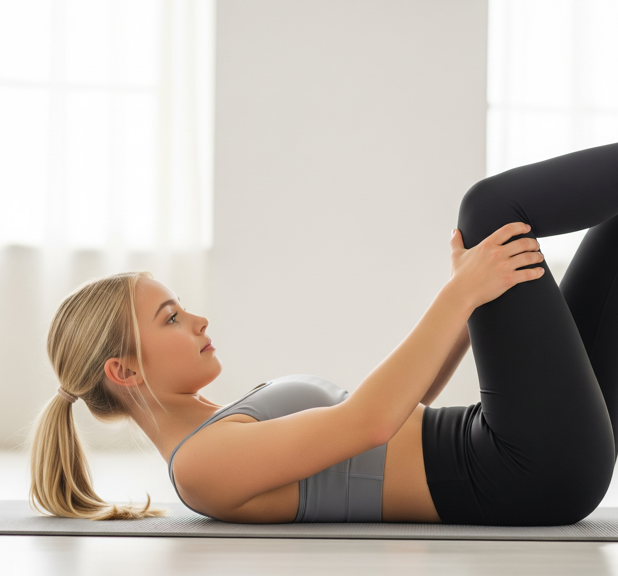
3. Knees to Chest Stretch – Release Lower Back Tension
The Knees to Chest Stretch helps decompress the lumbar spine and relieve tightness in the lower back. This stretch is especially helpful after long periods of sitting.
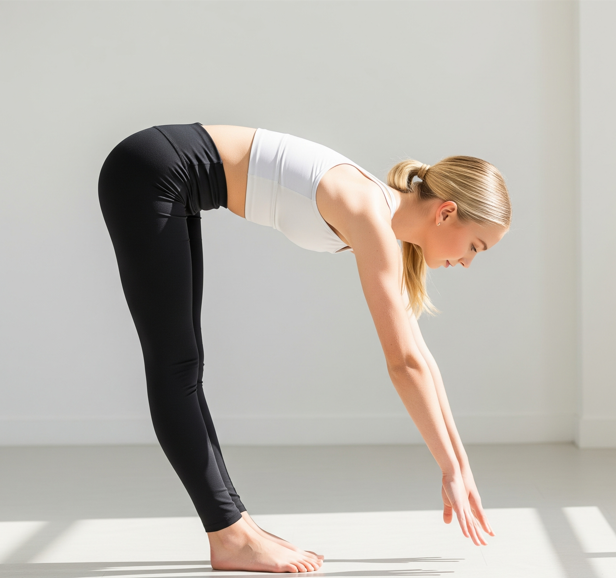
4. Forward Bend Lower Back Stretch – Deep Posterior Stretch
Finish with the Forward Bend Lower Back Stretch to stretch the lower back and hamstrings while improving overall posterior chain flexibility.
Perform this routine once or twice daily for improved flexibility and relief from stiffness. You can also combine these movements with other Full Body Stretching routines to support overall mobility and posture.