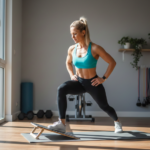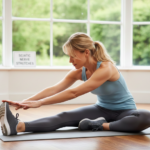
Forget feeling tight and restricted! Today, we’re mastering the classic Butterfly Stretch, your secret weapon for releasing tension in those hard-to-reach groin muscles. This simple yet powerful move is a cornerstone of flexibility for everyone, from desk workers to elite athletes.
🎯 Introduction: What Does the Butterfly Stretch Target?
This iconic stretch primarily targets your inner thighs (the adductor muscles) and the groin muscles, which are crucial for stability and movement. Think of it as gently opening a tight, stubborn hinge on a door with consistent practice; the movement becomes smooth and effortless, unlocking a new range of motion and flexibility.
✨ Key Benefits of Stretching Your Groin Muscles
Why should you make this a part of your routine? Here’s what you gain:
- Enhanced Hip Mobility & Flexibility: Say goodbye to stiffness! This stretch improves your hip’s range of motion, making everyday movements like squatting or walking upstairs feel fluid. This is a key strategy for preventing a pulled groin muscle.
- Improved Athletic Performance: For runners, cyclists, and gym-goers, flexible adductors mean more powerful strides and safer, more efficient workouts.
- Reduced Risk of Injury: Tight groin muscles are prone to strains. Regularly lengthening them builds resilience, helping you avoid the dreaded symptoms of a pulled muscle in the groin.
- Better Posture and Relief: Counteracts the effects of prolonged sitting, easing lower back and pelvic tension by gently encouraging proper pelvic tilts. This leads to a more comfortable, aligned body, taking pressure off your spine and hips.
📋 Step-by-Step Instructions: Your Path to Greater Flexibility
Find a comfortable, flat surface and let’s begin.
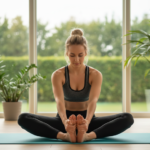
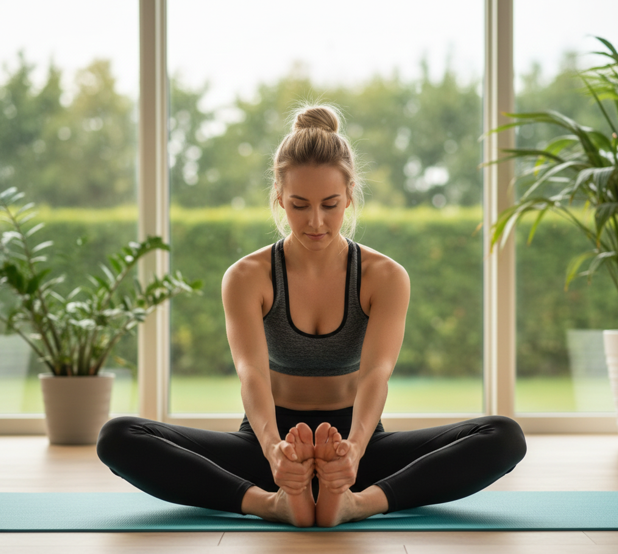
- Find Your Seat: Sit on the floor with your back straight. Bring the soles of your feet together, letting your knees fall out to the sides. Your legs should form a diamond shape.
- The Gentle Hold: Hold onto your ankles or feet. Gently use your elbows to press your knees down toward the floor, but don’t force it!
- Fold Forward (Optional): For a deeper stretch, hinge at your hips to lean your torso forward. Keep your back straight, leading with your chest, not your head.
- Breathe and Hold: Hold the stretch for 30-45 seconds, taking deep, slow breaths. Feel the tension release with each exhale.
🌟 Modifications:
- For Beginners: Sit against a wall for back support. Place cushions under your knees for a gentler stretch.
- For Advanced Users: Lean further forward, aiming to get your chest close to your feet, all while maintaining a flat back.
⚠️ Safety Tricks & Common Mistakes to Avoid
Safety First Tricks:
- Warm-Up Wisely: Never stretch cold muscles. Do 5 minutes of light cardio (like jogging in place) first.
- Listen to Your Body: Stretch to the point of mild tension, never sharp pain. Pain is a stop sign.
- Breathe Deeply: Use your breath to deepen the stretch. Inhale to prepare, exhale as you gently move deeper.
- Be Consistent: Daily, gentle stretching builds lasting flexibility better than one intense weekly session.
Common Mistakes:
- Bouncing: Avoid “ballistic” bouncing. This can trigger a groin muscle strain. Use static, steady holds instead.
- Rounding Your Back: Hunching over strains your spine. Focus on keeping your back long and hinging from the hips.
- Forcing the Knees Down: Never use your hands to violently push knees down. Let gravity and your muscle relaxation do the work.
- Ignoring Pain Signals: Distinguishing between discomfort and pain is critical. Sharp pain, especially if it mimics a pulled groin muscle, or female symptoms like acute inner thigh pain, means you should stop immediately.
❓ FAQ’s
Q1: I feel a sharp pain when I do this. What should I do?
A: Stop immediately! Sharp pain is a warning sign. You may be dealing with a pulled groin muscle. Rest, apply ice, and consult a healthcare professional if pain persists or if you notice bruising or swelling. Common symptoms of groin muscle strain.
Q2: How often should I do this stretch to see improvement?
A: For the best gains in flexibility, aim for 5-7 days a week, holding for 30-45 seconds, 2-3 times per session. Consistency is key!
Q3: Can this stretch help recover from a mild groin strain?
A: In the late-stage recovery phase, gentle stretching can be beneficial. However, always follow a doctor’s or physiotherapist’s advice. Never stretch an acutely pulled groin muscle in the first few days after injury.
Q4: Why do I feel it more on one side?
A: Asymmetry is totally normal! Most of us have one side tighter than the other. Be patient, focus on your breathing, and avoid over-compensating by leaning to one side
Pro Tip
For a game-changing boost in flexibility, pair your Butterfly Stretch with your breath. As you sit upright, take a deep inhale to lengthen your spine. On a long, slow exhale, imagine you’re gently using your breath to tilt your pelvis forward, think of it as trying to bring your belly button closer to your feet without hunching your back. This subtle pelvic tilt deepens the stretch at the muscle’s origin, targeting tension more effectively. Perform this breath-linked movement for 3-5 exhales to safely unlock a new level of release in your groin muscles.