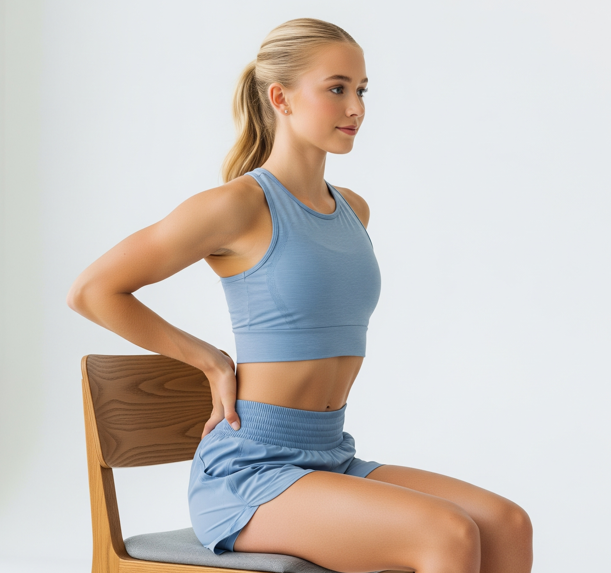
Chair Spinal Twist

Relieve Lower Back Pain & Boost Flexibility

he Chair Spinal Twist is like wringing out a sponge for your lower back this simple seated stretch targets tight spinal muscles, improves flexibility, and can be done anywhere (even at your desk!). Perfect for office workers, athletes, or anyone needing quick back relief.

In our modern world of prolonged sitting and screen hunching, the spine endures tremendous compressive forces. Over time, this leads to stiffness, reduced mobility, and the all-too-familiar ache in the lower back. The Chair Spinal Twist acts as a counterbalance to these modern ailments. It’s not merely a stretch; it’s a functional movement that restores the spine’s natural rotational capacity, which is essential for everything from looking over your shoulder while driving to swinging a golf club or simply playing with kids.

What makes this stretch so universally accessible is its adaptability. Whether you’re a CEO in a boardroom, a student in a lecture hall, or a grandparent relaxing at home, you can perform it safely and effectively. It requires no special equipment, no change of clothes, and only a minute or two of your time. By integrating this simple practice into your day, you’re not just treating tight muscles-you’re investing in the long-term health and resilience of your entire back.

Chair Spinal Twist

Chair Spinal Twist Stretch

💪 Key Benefits

The Chair Spinal Twist targets far more than just your back. This simple seated movement engages your core, soothes your nervous system, and mobilizes your entire torso in one efficient stretch.

Lower Back Relief – Eases tension from sitting or standing too long

Spinal Flexibility – Lubricates vertebrae for smoother rotation

Improved Posture – Counters hunching and shoulder stiffness

Digestive Aid – Gentle twist may help stimulate digestion

Stress Relief – Combats mental fatigue with mindful breathing

✅ Enhanced Core Strength – While it feels like a stretch, the twisting motion requires your abdominal muscles (especially the obliques) to engage actively, building functional core stability with every rep.

✅ Reduced Sciatic Nerve Tension – By gently opening the outer hips and piriformis muscle, this stretch can help alleviate mild compression on the sciatic nerve, reducing shooting or tingling sensations down the leg.

✅ Shoulder & Neck Release – The positioning of the arms and the turn of the head work together to release chronic tightness in the upper trapezius and levator scapulae muscles, common culprits behind “tech neck” and stiff shoulders.

✅ Increased Body Awareness – Performing the twist mindfully trains your brain to recognize the difference between a tight muscle and a strained one, fostering better body awareness that helps prevent future injuries.

✅ Boosts Circulation to Spinal Discs – Spinal discs act as shock absorbers and have no direct blood supply; they rely on movement to “pump” nutrients in and waste out. The gentle compression and release of this twist actively nourishes your discs, keeping them healthy and hydrated.

Together, these ten benefits transform a simple seated twist into a complete upper-body reset. Experience less pain, greater mobility, and improved body awareness-all from the comfort of your chair.


🕐 When to Do This Stretch

🌅 Morning Wake-Up – After hours of sleep, your spine is often stiff and your discs are slightly fluid-filled. A gentle spinal twist lubricates joints and energizes your body for the day ahead.

💻 Midday Desk Break – Combat the 3 PM slump by stepping away from your screen. This stretch recharges your focus, relieves built-up tension, and prevents afternoon back pain.

🏋️ Post-Workout Cool Down – Use the twist after exercise to lengthen tight muscles, especially the obliques, hips, and lower back. It aids recovery and maintains flexibility gains.

⌚ Every 2-3 Hours – For desk workers, set a timer to perform this stretch every few hours. Consistency prevents stiffness from accumulating throughout the day.


👥 Who Should Do Chair Spinal Twist Stretch

🧑‍💼 Office Workers & Remote Employees – If you sit for extended periods, this stretch is non-negotiable. It counteracts spinal compression and shoulder hunching caused by desk work.

🏃‍♂️ Athletes & Fitness Enthusiasts – Runners, cyclists, and weightlifters all need rotational mobility. This twist balances the forward-dominant nature of most sports and prevents injury.

👵 Older Adults – Maintaining spinal mobility becomes crucial with age. This gentle seated version provides flexibility benefits without stressing joints or requiring floor work.

🤰 New Mothers – After pregnancy, the back and core need gentle rehabilitation. This twist helps restore strength and mobility safely (once your doctor approves).

🧘 Yoga Practitioners – Even seasoned yogis benefit from this focused seated twist. It isolates spinal rotation and deepens body awareness in a way standing poses cannot.

💊 Chronic Back Pain Sufferers – Those with persistent lower back tightness can use this stretch daily to manage discomfort, improve mobility, and reduce reliance on pain medication.

📋How To Do Seated Spinal Twist

1️⃣ Sit Tall in a Chair

Feet flat on the floor, spine straight (imagine a string pulling your head up).

2️⃣ Twist to the Right

Place left hand on right knee, right hand behind you on the chair. Inhale to lengthen.

3️⃣ Deepen the Twist

Exhale and gently rotate further, looking over your right shoulder.

4️⃣Hold for 20-30 Seconds

Breathe deeply into your ribs (like filling a balloon).

5️⃣ Repeat on the Left

Switch sides to balance flexibility gains.

🔥 Modifications:

  • Beginners: Keep both hips firmly planted on the chair.
  • Advanced: Lift your chest taller to intensify the twist.


How Long to Hold: Timing Your Twist for Maximum Benefit

🔹 For Quick Tension Relief (15-20 seconds)
When you only have a minute and need to shake off stiffness, shorter holds work perfectly. This duration releases surface-level muscle tension and improves blood flow without requiring deep relaxation. Ideal for midday desk breaks or between meetings.

🔹 For Flexibility Gains (20-30 seconds)
This is the sweet spot for most people. Holding for 20-30 seconds allows the collagen fibers in your muscles and fascia to gradually elongate. It targets the deeper layers of tightness and creates lasting flexibility improvements over time.

🔹 For Deep Release & Stress Relief (30-45 seconds)
Longer holds trigger the parasympathetic nervous system—your body’s “rest and digest” mode. As you breathe deeply, the stretch reaches connective tissue and signals your brain to release chronic tension. Perfect for evening wind-downs or post-workout cool downs.

🔹 For Advanced Mobility Work (45-60 seconds)
Experienced practitioners can extend holds with mindful breathing. This duration targets fascia and encourages neuromuscular adaptation. Only attempt this if you feel completely comfortable and pain-free throughout the stretch.

 📊 Quick Reference Table

Muscle Groups WorkedDifficulty Level
Spine (rotators, erectors)
Obliques & Core
Shoulders (deltoids)
Hips (glutes, piriformis)
Beginner-Friendly
(Modifiable for all levels)


⚠️Safety Check: 

🪑 Chair Check – Use a stable, armless chair (no wheels!) for better control

🌬️ 90/10 Rule – Use only 90% of your maximum twist range (save 10% as buffer)

🔄 Warm Up First – Do 2-3 gentle torso rolls before twisting

🧘 Empty Bladder First – Perform this stretch on an empty bladder to avoid abdominal discomfort or pressure during the deeper twist.

👟 Feet Flat Foundation – Keep both feet firmly planted on the floor. Lifting heels or crossing ankles compromises stability and spinal alignment.

⏱️ Honor Pain Signals – Never force the twist. Sharp or shooting pain means stop immediately—stretching should feel like tension, not pain.

🤰 Pregnancy Caution – If pregnant, keep twists very gentle and focus on chest opening rather than deep abdominal rotation. Consult your doctor first.


🚫 Common Mistakes 

🤸Over-Twisting – Your nose shouldn’t go past your shoulder line

📱 Phone Hunch – Shoulders creeping up toward ears (pretend they’re melting down)

🦵 Knee Misalignment – Keep knees facing forward, don’t let them follow the twist

💨 Breath Holding – Forgetting to breathe creates tension. Inhale to lengthen your spine, exhale to gently deepen the twist.

🪑 Perching on Edge – Sitting too far forward reduces stability. Keep your hips fully supported by the chair seat throughout the stretch.

🏃 Rushing Release – Unwinding too quickly can jar the spine. Slowly and mindfully return to center with control and awareness.

👀 Craning the Neck – Forcing your gaze too far back strains neck muscles. Keep your head aligned with your spine; let your chest lead.

FAQ

Can I do the Chair Spinal Twist if I have lower back pain?

Yes, in most cases this stretch is excellent for mild to moderate lower back pain because it gently mobilizes the spine and relieves tension in the supporting muscles. However, if you have an acute injury or sharp pain, consult a healthcare professional first. For persistent discomfort, pair this stretch with our exercises for lower back pain and consider adding pelvic tilts to your routine for comprehensive relief.

The Chair Spinal Twist specifically emphasizes length before rotation -lengthening the spine on each inhale before twisting on the exhale. This distinguishes it from casual twisting and maximizes safety. For a deeper progression, try our seated spinal twist on the floor, or explore the thread the needle stretch for a different upper-back release.

This stretch primarily targets the spinal rotators, erector spinae, obliques, and glutes. It also engages the shoulders and hips as stabilizers. For complementary work on specific areas, check out our external obliques stretch and glute stretches to address surrounding muscle groups that support the twist.

Absolutely! The Chair Spinal Twist is safe for daily practice and actually works best when performed consistently. Daily twisting maintains spinal mobility and prevents stiffness from building up. For a complete daily routine, combine it with our cat-cow stretch and child’s pose for a well-balanced spinal health practice.

Yes, regular practice significantly improves posture by counteracting the forward hunch from sitting and strengthening the muscles that support an upright spine. The twist reminds your body what neutral alignment feels like. For even better results, incorporate our wall angel stretch and scapular retractions to retrain your upper back and shoulder positioning throughout the day.

Quick Tip:

 🎯 Focus on Length! Imagine your spine growing taller with each inhale, then twisting around that length.