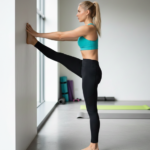

Ever feel like a wobbly table on one leg? The Single Leg Romanian Deadlift (RDL) is your perfect fix. This powerhouse move builds strength, stability, and real-world agility like few other exercises can. When you add a dumbbell, you transform it into a complete strength-building tool for a resilient, powerful body.
Introduction
The Single Leg RDL is a dynamic strength exercise and effective dynamic stretch that trains your entire posterior chain from your lower back through your glutes and hamstrings down to your calves. It’s a foundational movement for anyone looking to improve balance, build unilateral strength, and enhance functional mobility.
✨ Single Leg RDL Benefits
Performing Single Leg RDLs isn’t just about building muscle; it’s about creating a better-moving body. Here’s what you gain:
- Major Glute and Hamstring Engagement: This is the star of the show for single-leg rdls for glutes. It isolates and strengthens your glutes and hamstrings like no other exercise, building power and shape.
- Supercharges Your Balance & Stability: By standing on one leg, you fire up all the tiny stabilizer muscles in your ankles, knees, and hips, making you steadier in sports and daily life.
- Improves Hip Flexibility and Mobility: The hinging motion increases the flexibility of your hamstrings and hips, which is crucial for everything from touching your toes to preventing back pain. It’s one of the most effective glute stretches and hamstring stretches combined.
- Builds a Rock-Solid Core: Your abdominal muscles work overtime to prevent you from twisting or falling, providing a challenging core workout.
- Unlocks Functional Flexibility: The movement pattern directly translates to real-world activities, like picking up a grocery bag without straining your back.
🚶♀️ Mastering the Single Leg RDL Form: Step-by-Step
Follow these steps to master the Single Leg RDL. Imagine you’re a seesaw, pivoting smoothly from your hip!
- Find Your Stance: Stand tall with your feet hip-width apart. Soften your knees so they aren’t locked. This is your starting position.
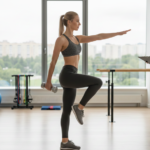
- Shift Your Weight: Gently shift your weight onto your right foot. Find a focal point on the floor in front of you to help with balance.
- The Hinge: Take a deep breath in. As you exhale, hinge at your hips, pushing your butt straight back. Your torso will lower toward the floor as your left leg lifts straight behind you. Keep your back perfectly flat, like a tabletop.
- Reach and Lift: As you hinge, extend your left leg and your arms (which can be at your sides or reaching toward the floor) until your body and left leg are roughly parallel to the ground. Avoid rounding your shoulders.
- Return with Power: Squeeze your right glute hard to powerfully return to the starting position. Imagine you’re pressing the floor away from you with your standing foot.
Modifications:
- For Beginners 👶: Perform the movement standing next to a wall or chair for light support. You can also just tap your back foot to the ground behind you instead of holding it in the air.
- For Advanced Users 🏆: Hold a dumbbell or kettlebell in one or both hands. You can also perform the movement more slowly to increase time under tension.
Leveling Up: The Dumbbell Single Leg RDL
Once your bodyweight form is solid, adding a dumbbell increases the strength and hypertrophy stimulus for the single leg rdl muscles worked. Here’s how to execute the single leg dumbbell rdl and single leg rdl with dumbbell variations.
How to Perform the Single Leg Dumbbell RDL Variation?
- Setup: Hold a single dumbbell in the hand opposite your standing leg (e.g., dumbbell in left hand when standing on right foot). For a greater challenge, you can hold two dumbbells (single leg rdl with dumbbells in each hand).
- Execution: Follow the same precise hinging form as the bodyweight version. The dumbbell will travel vertically, close to your standing leg. The offset load adds an extra core stability challenge.
- Pro Tip: Keep your shoulders square and avoid twisting toward the weight. Imagine you are a seesaw, pivoting smoothly only at the hip of your standing leg.
⚠️ Safety Tricks & Common Mistakes
Getting the form right is key to reaping the single-leg RDLS benefits and staying injury-free.
Safety First! 🛡️
- Master Bodyweight First: Do not use a dumbbell until you can perform 10 controlled, non-wobbling reps per side.
- Brace Your Core: Before each rep, tighten your abdominal muscles as if bracing for a light punch to protect your spine.
- Control the Tempo: Move with intention. A 2-3 second lowering phase builds superior control.
- Monitor Your Knee: Ensure the knee of your standing leg tracks over your toes and does not cave inward.
Don’t Do This! ❌
- Rounding Your Back: This is the top error. Maintain a neutral spine from head to tailbone. If your back rounds, you’ve hinged too deep.
- Rotating Your Hips: Keep your hips level and square to the ground. Don’t let them open up toward the side of your lifted leg.
- Locking the Standing Knee: Maintain a soft, slight bend in the knee throughout the movement to engage the hamstrings and protect the joint.
- Using Momentum: Avoid swinging or jerking. The power should come from a strong glute squeeze, not momentum.
🤔 FAQs
Q. What muscles do single-leg rdls work? / What do single-leg rdls work?
A. Great question! The Single Leg RDL is a full posterior chain activator. The primary muscles worked are your glutes (your butt muscles), hamstrings (back of your thighs), and erector spinae (lower back muscles). It also seriously engages your core for stability and your calves and ankle stabilizers to keep you balanced.
Q. What are the main single-leg RDLS benefits?
A. The benefits are huge! You’ll build stronger glutes and hamstrings, dramatically improve your balance and core stability, and gain fantastic hip flexibility. It’s a cornerstone exercise for injury prevention and athletic performance.
Q. Will Single Leg RDLs improve my posture?
A. Yes. By strengthening your glutes, hamstrings, and core, you correct pelvic alignment, the foundation for an upright torso. This counteracts the forward hunch from prolonged sitting.
Q. Why do I feel it in my lower back, not my glutes?
A. You’re likely rounding your spine instead of hinging from the hips. Fix: Reduce your range of motion. Only hinge as far as you can while keeping your back perfectly flat. Initiate the movement by pushing your hip back, not by reaching toward the floor.
Q. How to do Jump Squats?
A. While different from the Single Leg RDL, Jump Squat are another great power exercise! Start in a squat position, then explosively jump straight up, reaching your arms for the sky. Land softly back into the squat position, absorbing the impact with your muscles. They are fantastic for building power.
Q. What are other good glute stretches?
A. Absolutely! While the Single Leg RDL is dynamic, here are two fantastic static glute stretches:
The Kneeling Quad Stretch directly targets the quads; it also opens up the hip flexors, which helps relieve tension in the glutes.
The Piriformis Stretch (Figure-Four Stretch), sitting or lying on your back, cross one ankle over the opposite knee, and gently press down on the bent knee. This is a classic for targeting the deep gluteal piriformis muscle.
💡Pro Tip: Dumbbell Single Leg RDL Pro Tip
Hold the dumbbell in the opposite hand of your standing leg. This offset load forces your core to work harder to resist rotation, building exceptional anti-rotational stability and preventing your hips from twisting. Keep the weight close to your thigh as you hinge.