Pilates isn’t just stretching; it’s a powerful full-body workout that blends strength, flexibility, and mindfulness into one seamless routine!
🔍 What is Pilates?
Pilates is a low-impact exercise method that focuses on core strength, posture, and flexibility through controlled movements and mindful breathing. Developed by Joseph Pilates in the early 20th century, this practice was originally called “Contrology” because of its emphasis on precise, deliberate movement. Whether you’re following a pilates workout plan at home or in the studio, it’s designed to create long, lean muscles, improve overall body awareness, and build a strong foundation for all other physical activities.
✨ Key Benefits of a Pilates Workout
✅ Builds core strength without bulking up
✅ Improves flexibility and joint mobility
✅ Enhances posture by aligning the spine and strengthening the back
✅ Boosts mental focus through coordinated breath and movement
✅ Adaptable for all fitness levels, perfect for pilates home workout sessions
✅ Increases energy levels and reduces stress through mindful breathing
✅ Aids injury prevention and rehabilitation by promoting balanced muscle development
🧘 Pilates Starter Exercises: A workout and complete guide
1️⃣ The Hundred (Classic Pilates Move)
Lie on your back, lift your knees to a tabletop position, and extend your legs to a 45-degree angle. Lift your head and shoulders off the mat, reaching your arms long by your sides. Pump your arms up and down while inhaling for 5 counts and exhaling for 5 counts. Repeat for 10 full breath cycles (100 pumps total). This exercise warms up the body and activates deep core muscles.
2️⃣ Roll-Up (Spinal Flexibility)
Lie flat with legs extended and arms reaching overhead. Inhale, then exhale as you slowly roll up, reaching toward your toes. Inhale at the top, then exhale to roll back down with control. Repeat 6-8 times. This movement improves spinal articulation and stretches the hamstrings.
3️⃣ Single Leg Circles (Hip Mobility)
Lie on your back with one leg extended toward the ceiling. Circle the raised leg clockwise 5 times, then counterclockwise 5 times. Keep your core engaged and hips stable. Switch legs and repeat. This exercise enhances hip mobility and stabilizes the pelvis.
4️⃣ Cat Cow Stretch
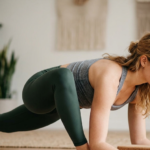
Begin on your hands and knees with a neutral spine. Inhale as you drop your belly and lift your gaze (cow pose), then exhale as you round your spine and tuck your chin (cat pose). Repeat 8-10 times. This foundational cat cow stretch warms up the spine, coordinates breath with motion, and prepares the body for deeper Pilates work.
5️⃣ Thread the Needle Stretch
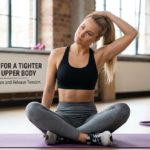
From a tabletop position, slide one arm underneath the opposite arm, lowering your shoulder and cheek toward the mat. Hold for 30 seconds, feeling a stretch through the upper back and shoulders. Switch sides. This thread the needle stretch, is an excellent mobility drill for thoracic spine rotation and shoulder release.
6️⃣ Glute Stretch (Figure Four)
Lie on your back with knees bent. Cross one ankle over the opposite knee, then gently pull the supporting leg toward your chest. Hold for 30-45 seconds per side. This glute stretch targets deep gluteal muscles and alleviates lower back tension often associated with core work.
7️⃣ Saw (Oblique & Hamstring Stretch)
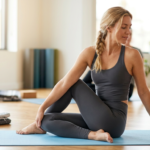
Sit tall with legs extended wider than your hips and arms out to the sides. Inhale, then exhale as you twist and reach your left hand toward your right foot, engaging your external obliques to deepen the rotation. Inhale back to center. Repeat 5 times per side. This exercise combines spinal rotation with a deep hamstring stretch, making it an excellent full-body mobility move.
Modifications for All Levels:
- Beginner: Use props like a cushion under the head, bend knees as needed, and reduce the range of motion.
- Intermediate: Hold positions longer and focus on controlled transitions.
- Advanced: Add ankle weights, incorporate a resistance band, or slow down tempo to increase time under tension.
🧠 Pilates Principles to Live By
To get the most from your practice, embrace these core principles:
| Principle | How to Apply |
|---|---|
| Concentration | Focus on each movement; quality over quantity |
| Control | Never use momentum every motion is deliberate |
| Centering | All movement initiates from your core (powerhouse) |
| Breath | Inhale to prepare, exhale to execute |
| Precision | Small, correct movements yield better results |
| Flow | Movements should connect smoothly without jerking |
❓ FAQ’S
Q: What is Pilates?
A: Pilates is a low-impact exercise method that builds core strength, flexibility, and improves posture through controlled movements and focused breathing.
Q: Is Pilates good for weight loss?
A: Yes, it aids weight loss by building lean muscle and boosting metabolism, effectively complementing a cardio routine and healthy diet. A 50-minute session can burn between 175 and 250 calories, depending on intensity.
Q: What’s the difference between Pilates and Yoga?
A: Yoga focuses on flexibility, static poses, and spirituality, while Pilates emphasizes core strength, controlled movement, and physical alignment. Pilates also typically involves repetitive movement patterns rather than static holds.
Q: How often should I do Pilates?
A: For best results, aim for 2–3 sessions per week, allowing recovery time between workouts. Even 15–20 minutes daily can yield noticeable improvements in posture and core engagement.
Q: Do I need special equipment?
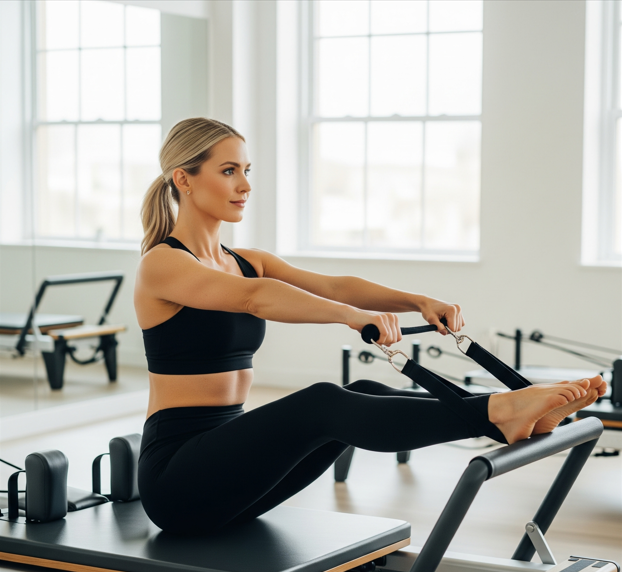
A: A mat is sufficient to begin. As you progress, you may explore resistance bands, Pilates rings (magic circles), or reformer equipment for added challenge.
⚠️ Safety Tips & Common Mistakes
🚫 Don’ts
✖ Rush through movements, control is key!
✖ Hold your breath (always coordinate breath with movement).
✖ Force your body into painful positions.
✖ Arch your lower back during supine exercises, keep ribs knitted together.
✅ Do’s
✔ Focus on quality over quantity.
✔ Engage your core during every exercise.
✔ Use a mat for comfort and support.
✔ Keep your neck relaxed by imagining space between your ears and shoulders.
✔ Listen to your body and modify as needed.
📅 Sample Weekly Pilates Schedule
| Day | Focus | Duration |
|---|---|---|
| Monday | Full Body (The Hundred, Roll-Up, Single Leg Circles, Saw) | 20–25 min |
| Wednesday | Mobility & Stretch (Cat Cow, Thread the Needle, Glute Stretch, Spine Stretch Forward) | 15–20 min |
| Friday | Core Strength (Pilates Abs Series: Hundred, Criss-Cross, Scissors, Roll-Up) | 25–30 min |
| Weekend | Active Recovery (gentle stretching and breathwork) | 10–15 min |
🌟 Pro Tip
Pair your pilates routine with cardio and strength training for a balanced workout with pilates that delivers total-body results! Consistency and proper form matter more than intensity master the basics before advancing. For an added challenge, try slowing down your repetitions to increase time under tension, or incorporate small props like a Pilates ball between your legs to deepen core engagement.