Step into strength! The lunge exercise is a powerhouse move that builds functional strength, improves balance, and boosts lower-body flexibility all in one dynamic motion.
🦵 What Are Lunges?
Lunges exercises are a fundamental lower-body workout that targets the quadriceps, gluteals, hamstrings, and core, while challenging your stability and flexibility. Think of them as a “single-leg squat” that prepares your body for real-world movements, such as walking, running, and climbing stairs. Incorporating lunges exercises into your routine not only builds strength but also improves balance and functional mobility. 🏋️♂️🔥
Unlike bilateral movements like squats, lunges force each leg to work independently, revealing and correcting muscle imbalances that might otherwise go unnoticed. Whether you’re an athlete chasing performance or someone simply wanting to move through daily life with ease, lunges belong in your routine.
✨ Key Benefits of Lunges Exercise
✅ Builds leg strength and muscle tone – Hello, sculpted glutes and quads!
✅ Improves balance and coordination through unilateral training
✅ Enhances functional flexibility for daily activities and sports
✅ Boosts hip mobility and core stability
✅ No equipment needed – just your bodyweight and a little space
✅ Corrects muscle imbalances – Each leg works independently, revealing asymmetries
✅ Prepares for advanced movements – A solid foundation for Nordic curls, knee extension exercises, and more
🏃 How to Do Lunges Workout with Proper Form
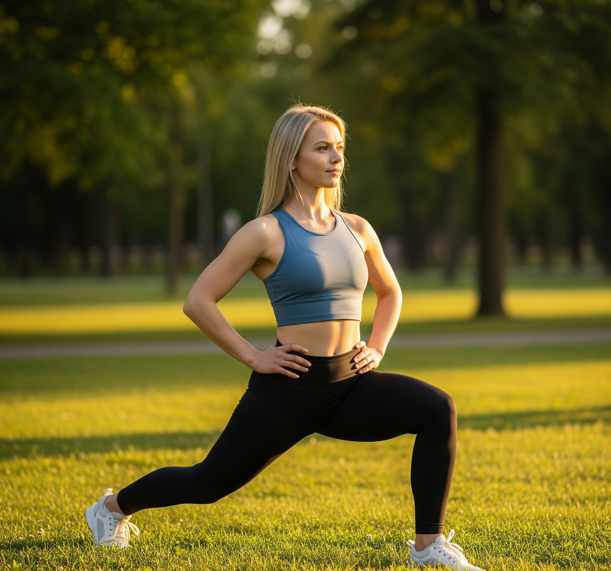
1️⃣ Basic Forward Lunge
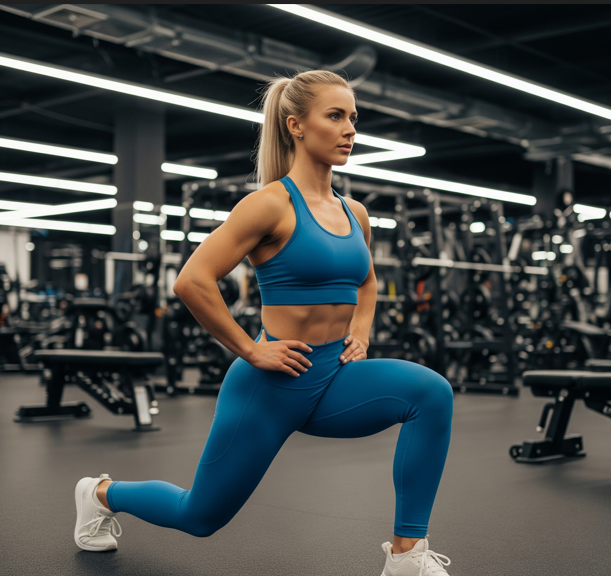
- Stand tall with feet hip-width apart, hands on hips or relaxed
- Step forward with one foot, landing heel-first
- Lower hips until both knees form 90-degree angles
- Keep the front knee aligned with the ankle, back knee hovering just above the floor
- Push through the front heel to return to the start
- Alternate legs for 10-12 reps per side
2️⃣ Reverse Lunge (Easier on Knees)
- From a standing position, step backward instead of forward
- Lower into lunge position (same 90-degree angles)
- Push through the front heel to return to the start
- This variation reduces stress on the knees while still targeting the glutes and quads
- Alternate legs for 10-12 reps per side
3️⃣ Lateral Lunge (For Inner Thigh Focus)
- Step wide to the side instead of forward or back
- Bend the stepping knee while keeping the other leg straight
- Push off to return to the center
- Great for targeting the adductors and improving lateral stability
4️⃣ Walking Lunge (For Endurance)
- Perform forward lunges consecutively while moving across the room
- No resetting to center between reps
- Increases cardiovascular demand and builds endurance
5️⃣ Split Squat (Isometric Hold)
- Start in a lunge position and hold the bottom for 10-30 seconds
- Focus on maintaining perfect alignment
- Builds stability and endurance in the working leg
Modifications:
- Beginner: Hold onto a chair for balance, reduce depth
- Advanced: Add dumbbells, kettlebells, or pulse at the bottom
🧘 Complementary Stretches for Lunges
To get the most from your lunge training and maintain flexibility, incorporate these stretches:
- Standing quad stretch – After lunges, gently pull your heel toward your glute to release the front of the thigh
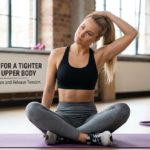
- Levator scapulae stretch – Counteract any upper back tension that can accumulate during lunges by gently tucking your chin and rotating your head
- Wall pushups – A gentle chest and shoulder opener to balance the forward posture of lunges
Pairing lunges with these stretches keeps your entire kinetic chain mobile and resilient.
📋 Quick Reference Table
| Lunges Muscles Worked | Difficulty Level |
|---|---|
| Quadriceps | Beginner to Advanced |
| Glutes | Adjustable Intensity |
| Hamstrings | No Equipment Needed |
| Core Stabilizers | Balance Challenge |
⚠️ Safety Tips & Common Mistakes
🚫 Don’ts
✖ Let front knee extend past toes – Keep it aligned with your ankle to protect your knee joint
✖ Round your back – Keep chest proud and core engaged to protect your spine
✖ Rush the movement – Control is key for proper lunge form; momentum defeats the purpose
✖ Let back knee slam the floor – Control the descent; lightly tap or hover
✖ Neglect the warm-up – Cold muscles don’t lunge well; incorporate wall pushups and gentle mobility first
✖ Ignore tight hips – Tight hip flexors limit lunge depth; address them with regular stretching
✅ Do’s
✔ Start with bodyweight to master proper lunge form before adding weight
✔ Keep movements slow and controlled – The eccentric (lowering) phase should take 2-3 seconds
✔ Engage your core throughout each rep – Your core protects your spine
✔ Use a mirror to check your alignment – Watch that front knee stays stacked over the ankle
✔ Breathe rhythmically – Inhale as you lower, exhale as you push back up
✔ Stretch after – Incorporate standing quad stretch and levator scapulae stretch post-workout to maintain flexibility
✔ Progress gradually – Add depth, then volume, then weight in that order
🔄 Progression Path for Lunges
| Level | What It Looks Like | When to Progress |
|---|---|---|
| Beginner | Bodyweight reverse lunges, supported | When you can complete 3 sets of 10 with perfect form |
| Intermediate | Forward lunges, walking lunges, light dumbbells | When you feel stable and controlled throughout |
| Advanced | Weighted lunges, Bulgarian split squats, plyometric lunges | When you can handle heavy load without wobbling |
🌟 Final Thought
Lunges are more than just a leg exercise; they’re a mirror for your body’s imbalances, a builder of functional strength, and a foundation for more advanced movements like Nordic curls and knee extension work. Master them with control, respect the range of motion, and your knees, hips, and future self will thank you. 🦵🔥