
The quadratus lumborum exercise targets your deep core stabilizer muscles (the ql stretch) that connect your ribs to your pelvis. Often called the “hidden culprit” of lower back pain, tight QL muscles can make bending, twisting, or even standing painful. This stretch is a game-changer for desk workers, athletes, and anyone with persistent lower-back tension.
The quadratus lumborum (QL) is a deep, often-overlooked muscle that plays an outsized role in your daily comfort and mobility. Shaped like a rectangle (quadratus means “four-sided” in Latin), it connects your pelvis to your spine and your lowest rib to your lumbar vertebrae. Its primary job is to stabilize your pelvis when you walk, lift one leg, or stand on one foot. But when this muscle becomes chronically tight – from prolonged sitting, repetitive movements, or muscle imbalances- it can trigger a cascade of problems: nagging lower back pain, restricted side-bending, and even referred pain into the hips and buttocks.
This is why targeted QL stretching is essential for anyone dealing with persistent lower back tension that seems to resist other stretches. For a complete approach to back health, understanding how the QL interacts with surrounding muscles like the quadratus lumborum and glutes can help you build a routine that addresses the whole system, not just one part.

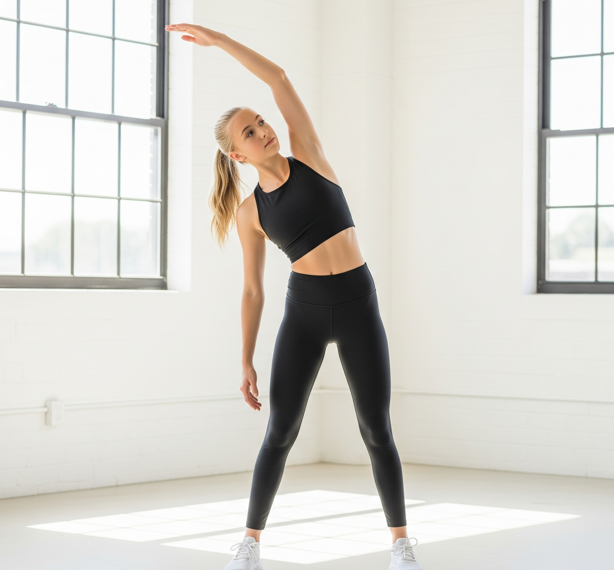
This stretch targets the deep side muscles of your lower back, offering quick relief from stiffness or tension. Simply lean sideways while keeping your hips stable for an effective release.
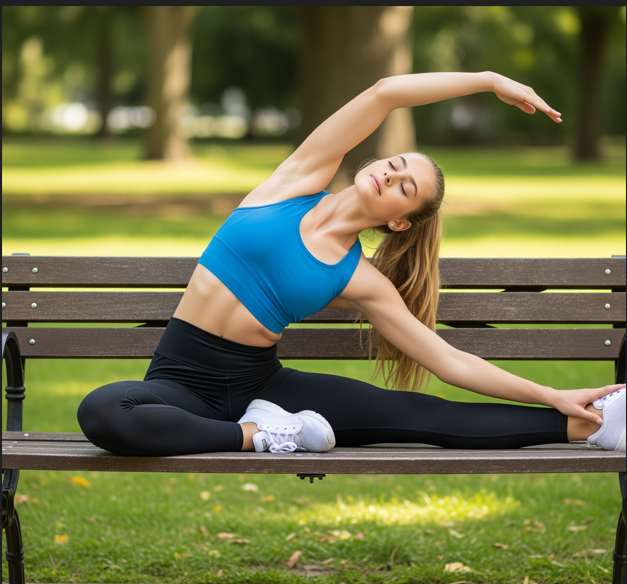
Perfect for office workers, this seated stretch helps ease lower back tightness without leaving your chair. Gently bend sideways while holding your seat for support and stability.
The QL stretch might feel subtle, but its effects ripple through your entire posterior chain – releasing tension where it’s stored deepest and restoring mobility you didn’t realize you’d lost.
✅ Relieves Lower Back Pain – Eases tension from sitting, standing, or poor posture.
✅ Improves Flexibility – Enhances side-bending and rotational mobility for daily movements.
✅ Supports Core Stability – Helps maintain better posture and spinal alignment.
✅ Reduces Stiffness – Perfect after long flights, workouts, or hours at a desk.
✅ Promotes Relaxation – A gentle yet effective way to release deep tension.
✅ Corrects Muscle Imbalances – Addresses asymmetrical tightness that can lead to uneven gait and compensatory injuries
✅ Enhances Breathing Mechanics – Releases tension around the lower ribs, allowing for fuller, deeper breaths
✅ Prevents Sciatic Irritation – Reduces pressure on the lumbar spine that can contribute to nerve compression
✅ Improves Athletic Performance – Restores full range of motion for rotational sports, lifting, and running
✅ Supports Digestive Function – Gentle side-bending can stimulate abdominal organs and improve overall comfort
From pain relief to better breathing, these ten benefits transform a simple side bend into a comprehensive tool for back health – addressing both the symptoms and root causes of chronic tension.
| Time | Benefit | Best Practice |
|---|---|---|
| Morning | Wakes up stiff QL after sleep | Gentle standing version |
| Midday Break | Relieves accumulated desk tension | Seated version at desk |
| Post-Workout | Releases tightened muscles after exercise | Hold 30-45 seconds per side |
| Before Bed | Releases day’s tension, prepares for sleep | Combine with deep breathing |
| After Long Drive/Flight | Immediate decompression | Stretch as soon as possible |
For a complete morning routine, combine this stretch with ten morning stretches that awaken your entire body.
| Stretch Version | Recommended Hold | Best For | When to Use |
|---|---|---|---|
| Standing QL Stretch | 20-30 seconds per side | Quick relief, full range of motion | Midday breaks, post-workout, mornings |
| Seated QL Stretch | 20-30 seconds per side | Desk workers, gentle release | During work hours, travel, when standing isn’t practical |
Modifications:
Muscles Worked | Difficulty Level |
Quadratus Lumborum (QL) | Beginner to Intermediate |
Obliques, Lower Back | Adjustable Intensity |
🔹 Engage Your Core – Prevents over-arching the lower back.
🔹 Move Slowly – Avoid jerky movements to protect your spine.
🔹 Breathe Deeply – Helps release tension for better flexibility.
❌ Overarching the Back – Keep ribs slightly tucked to avoid strain.
❌ Holding Breath – Reduces the stretch’s effectiveness.
❌ Rushing the Stretch – Slow, controlled movements work best.
❌ Ignoring Both Sides – Always stretch evenly to prevent imbalances.
Yes – absolutely. The QL attaches to your pelvis, so when it becomes chronically tight, it can pull the pelvis out of alignment. This creates compensation patterns in the hips, often leading to pain in the hip joint, greater trochanter (outside of hip), or even mimicking bursitis symptoms. Stretching the QL regularly can relieve this referred hip pain. For comprehensive hip relief, combine this stretch with targeted glute stretches that address the entire hip complex.
The QL often tightens repeatedly because it’s compensating for weak or inhibited muscles elsewhere – typically the glutes, deep core, or opposite hip stabilizers. If you stretch without strengthening the supporting muscles, the underlying imbalance remains. This is common in runners and desk workers alike. Incorporate exercises like bird dog exercise and side planks to build endurance in the muscles that should be doing the work, allowing your QL to finally stay relaxed.
Both – but the order and balance matter. Stretch first to release acute tightness and restore range of motion, then strengthen the surrounding core and glute muscles to prevent recurrence. Think of it as releasing a cramped muscle before training it to work correctly. A balanced routine might include QL stretches followed by core workouts that build stability without overloading the lower back.
Yes – significantly. Sleeping on your side with your top leg dropped forward (common “banana position”) can shorten the QL on the top side and overstretch it on the bottom side. This often leads to waking up with one-sided lower back stiffness. Try placing a pillow between your knees to keep your pelvis stacked and neutral. For more tips on morning mobility, explore our ten morning stretches guide designed to undo nighttime tightness.
Yes – this is surprisingly common. Sitting on a thick wallet lifts one side of your pelvis, creating a chronic imbalance that forces your QL on that side to work overtime to stabilize your spine. Over hours and days, this leads to unilateral tightness and pain. The fix is simple: remove your wallet before sitting. For overall posture improvement during long workdays, pair this awareness with a chair workout that counteracts all the imbalances created by prolonged sitting.
Whether you need a standing quadratus lumborum stretch for quick relief or a seated quadratus lumborum stretch for a desk break, these moves help boost flexibility and ease tension quickly. Add them to your daily routine for a happier, more mobile lower back!