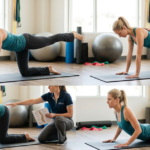

Welcome to a different kind of movement. Unlike forcing a muscle to stretch, Somatic Stretching uses gentle pandiculation (contracting, then slowly releasing) to retrain your brain’s control over your muscles. This targets the tightness caused by a stressed nervous system, not just short muscles. Think of it as hitting “reset” on a tense, frozen muscle like you would on a glitchy computer. 🖥️
🌟 Key Benefits of Somatic Stretching
-
🧠 Rewires Chronic Tension Patterns – Stops your muscles from staying “stuck on” due to stress, improving true flexibility without force.
-
💆♀️ Rapid Stress Reset – Lowers cortisol and shifts you from “fight/flight” to rest/digest in just 2-3 minutes.
-
🦿 Pain-Free Mobility – Relieves lower back, neck, and hip stiffness at the neural level (great for desk workers).
-
⚡ Effortless Flexibility Gains – Your muscles learn to lengthen voluntarily, so you gain flexibility that lasts longer than traditional stretching.
-
🩹 Complements Somatic Therapy Exercises – Ideal for healing trauma-held tension, fibromyalgia, or chronic fatigue.
🔥 Somatic Warm-Ups: Prepare Your Nervous System
Before diving into deeper stretching exercises, these warm ups gently “wake up” your brain-muscle connection. Think of it like tapping a sleepy friend on the shoulder before asking them to dance. 💃
Warm-Up #1: The Jaw Release (Releases facial & neck tension)
Why: Your jaw holds massive stress. Releasing it here makes all other somatic stretches more effective.
Steps:
-
Rest your tongue on the roof of your mouth (just behind front teeth).
-
Slowly lower your jaw just 1 inch, like you’re about to yawn but stopping halfway. 😲
-
Gently clench (10% effort) for 2 seconds, then take 6 seconds to close your mouth extremely slowly.
-
Rest 10 seconds. Feel your temples and neck soften.
Modification: If you have TMJ pain, skip the clench entirely, just do the slow opening/closing without any effort.
Warm-Up #2: The Shoulder Clock (Wakes up the upper back)
Why: Perfect for desk workers. This somatic exercise resets rounded shoulders.
Steps:
-
Sit or lie down: Imagine your right shoulder is the hand of a clock. 🕒
-
Contract slowly: Lift your shoulder toward your ear (10% effort) that’s 12 o’clock.
-
Release even slower: Roll it down to 6 o’clock, taking 8 seconds. Feel the muscles “melt.”
-
Rest 10 seconds: Repeat on left side. Then do both shoulders together.
Beginner tip: Don’t actually roll just lift straight up, then lower straight down. Rolling can confuse the brain signal.
Warm-Up #3: The Pelvic Clock (Hip & low back awareness)
Why: Most people have “frozen” pelvises from sitting. This restores natural movement.
Steps:
-
Lie on your back, knees bent. Imagine a marble sitting inside your pelvis.
-
Contract: Gently tilt the marble toward your belly button (posterior tilt) 10% effort, hold 3 seconds.
-
Release: Slowly tilt toward your feet over 6 seconds.
-
Rest. Feel your lower back flatten and re-arch naturally.
🕐 Total warm-up time: 3-4 minutes. Never skip these they double the effectiveness of your main stretching exercises.
🧘♂️ Stretching Exercises: Full-Body Somatic Routine
Now that you’re warmed up, here are 3 powerful somatic stretches targeting major tension zones. Each is a complete somatic release exercise on its own.
Exercise #1: The Standing Fold Release (Hamstrings & lower back)
Best for: Tight hamstrings, desk posture, runners
Step-by-step:
-
Stand with feet hip-width apart, knees soft (not locked). 🦵
-
Contract: Gently press your feet into the floor and slightly pull your kneecaps up (20% effort). Hold 3 seconds.
-
Release: Slowly hinge at your hips, allowing your upper body to hang toward the floor over 8 seconds. Let your head hang heavy like a ragdoll. 🪆
-
Rest: Stay folded for 15 seconds. Notice if your hamstrings feel “longer.”
-
Return to standing by slowly rolling up one vertebra at a time (6 seconds).
Modifications:
-
Beginner: Bend knees deeply, rest hands on thighs or a chair.
-
Advanced: Hold a light weight (2-3 lbs) to increase sensory feedback.
💡 Analogy: Imagine a drawstring bag. The contraction is pulling the string tight. The slow release is watching the bag open on its own no yanking.
Exercise #2: The Seated Twist Release (Spine & ribs)
Best for: Mid-back stiffness, shallow breathing, stress
Step-by-step:
-
Sit on the floor or a firm chair. Feet flat. Spine tall. 🪑
-
Contract: Gently twist your torso to the right only 10 degrees no forcing! Use your hand on your knee for gentle resistance. Hold 3 seconds.
-
Release: Untwist glacier-slow over 8 seconds. Imagine un-wringing a wet towel.
-
Rest: Sit neutral for 15 seconds. Notice if your breath feels deeper on that side.
-
Repeat on left side.
Common mistake: Twisting too far. In somatic, less rotation = more learning. 10 degrees is plenty.
Exercise #3: The Lying Leg Slide (Hip flexors & psoas)
Best for: Lower back pain, hip tightness, runners/cyclists
Step-by-step:
-
Lie on back, knees bent, feet flat. Arms relaxed at sides. 🛌
-
Contract: Gently press your right foot into the floor as if you’re about to slide it away from you (but don’t move yet!). Hold 3 seconds at 15% effort.
-
Release: Slowly slide your right heel away along the floor until your leg is straight take 8 seconds.
-
Rest: Pause 15 seconds. Feel the front of your hip “open.”
-
Return: Slide the leg back just as slowly (6 seconds) or let gravity do it.
-
Repeat on left side.
Modification for low back pain: Place a small pillow under your head and only slide halfway. Never arch your back during the movement.
📊 Quick Reference Table
| Muscle Groups Worked | Difficulty Level |
|---|---|
| Paraspinals (deep back muscles), erector spinae, hamstrings, hip flexors (psoas), glutes, jaw muscles, shoulders, diaphragm | 🟢 Beginner to Intermediate – No equipment, low intensity, requires focus (not fitness) |
Note: Works via neuromuscular re-education, not muscle fatigue. All stretching exercises here are actually neural resets, not tissue pulls.
🛡️ Safety Tricks & Common Mistakes
✅ Safety Tricks (Do This)
-
🤏 Less is More – Use only 10-20% of your max contraction. If you feel a shake, you’re trying too hard.
-
👃 Breathe First – Never hold your breath. Exhale on the release to deepen nervous system calm.
-
🐢 Slow = Somatic – Count 6-8 seconds for every release. Speed kills the brain-retraining effect.
-
🧃 Hydrate & Wait – Wait 2 minutes before repeating the same move to let sensory feedback register.
-
🌡️ Warm Ups First – Never skip the warm-ups section above. Cold muscles = less brain learning.
❌ Common Mistakes (Avoid This)
-
💪 Grunting & Pushing – That’s gym stretching. Somatic is lazy, gentle, and almost boring. No pain.
-
⏩ Skipping the Pause – Not resting 10-15 seconds after release = no neurological learning.
-
📱 Rushing Through – Doing 5 reps fast is useless. One perfect slow rep beats 10 rushed ones.
-
🔁 Confusing with Yoga – In what is somatic yoga? Answer: No holding poses. You only contract then release. If you’re holding a shape, you’re doing yoga, not somatic.
-
❄️ No Warm-Up – Doing stretching exercises without somatic warm-ups is like driving a car with a frozen engine. You’ll get poor results.
❓ FAQ’s
Here are answers to the most common questions people have when starting somatic exercises. Think of this as your “myth-busting” corner. 🧠💬
1. 🤔 What is somatic yoga, and is it the same as somatic stretching?
Great question! What is somatic yoga? It’s a common search term, but here’s the truth: Traditional yoga involves holding poses (like Downward Dog for 5 breaths). Somatic yoga is a hybrid it borrows yoga shapes but applies pandiculation (contract/pause/release) instead of static holding. Somatic stretching is broader and includes any movement that retrains the brain-muscle connection, with or without yoga shapes. Think of somatic yoga as a subtype of somatic stretching. 🧘♀️✨
2. 🆓 How is this different from regular stretching?
Regular stretching (like reaching for your toes) yanks on tight muscles, which can trigger a stretch reflex your muscle actually fights back to protect itself. 😖 Somatic stretching first contracts the muscle gently, then releases so slowly that the reflex doesn’t fire. Result? The muscle learns to let go voluntarily. It’s like persuasion vs. force.
3. ⏰ How often should I do somatic workouts?
For best results: 5-10 minutes daily. Yes, daily! Because you’re retraining your nervous system, consistency beats intensity. Even 3 minutes of somatic release exercises each morning can rewire chronic tension in 2-3 weeks. Unlike gym workouts, you cannot overdo these; they’re gentle on joints. 🗓️
4. 🩺 Can somatic therapy exercises help with back pain?
Absolutely. Most chronic back pain comes from learned muscle bracing due to stress or old injuries. Somatic therapy exercises directly address that by teaching the brain to “un-brace.” Many people with lower back tightness, sciatica-like symptoms, or even fibromyalgia find huge relief. (Always check with your doctor first if you have an acute injury or herniated disc, though!) ✅
5. 🧠 Why does somatic stretching feel so weird at first?
Because you’re used to doing (effort, pushing, sweating). Somatic feels like… almost nothing. That’s the point! 🎯 Your nervous system is used to “loud” signals. Somatic uses whispers. The “weird” feeling is actually your brain paying attention to sensation again a sign it’s working. Stick with it for 5 sessions; it’ll click.
6. 👶 Is this safe for beginners/seniors?
Yes and highly recommended! Because somatic exercises use zero bouncing, zero joint strain, and zero pain, they’re ideal for:
-
Older adults with arthritis 🧓
-
Desk workers with stiff necks 💺
-
People recovering from injury (with medical clearance)
-
Anyone who hates “hard” workouts
Just start with 10% effort, move slower than you think, and breathe.
7. 📱 Can I do somatic stretching while lying in bed?
Absolutely! In fact, morning somatic workouts are best done on a mattress or carpet. Your muscles are already relaxed from sleep, so the brain retraining works faster. Try the Lying Leg Slide (above) right after waking up. You don’t even need to sit up. 🛌💤
8. 🔄 How many repetitions should I do?
1-3 slow reps per movement. That’s it. Seriously. Because each rep includes a 6-8 second release + 15 second rest, one perfect rep already changes your muscle tone. More reps can actually confuse the learning. Quality over quantity a hard lesson for fitness lovers! 📉
9. 🎵 Do I need music or a guide?
Not necessary, but helpful. Many people prefer silence or soft ambient sounds to feel internal sensations. If you want guidance, search for “somatic release exercises audio” but avoid loud, fast music. Your brain needs quiet to rewire. 🎧🤫
10. 💰 Is this a real therapy or just a trend?
Somatic stretching is based on Clinical Somatic Education (developed by Thomas Hanna in the 1980s) and draws from Feldenkrais and Hanna Somatics. It’s taught in physical therapy, pain management clinics, and trauma recovery programs. So yes it’s real, evidence-informed, and growing fast as people discover somatic exercises work where other methods failed. 🏆
11. 🌡️ Do I really need warm-ups? Can’t I just start stretching?
You can skip warm-ups but you’ll get about 50% less benefit. 🥶 Why? Your nervous system needs a “handshake” before you ask it to change deeply. The 3-minute somatic warm-ups above (Jaw Release, Shoulder Clock, Pelvic Clock) are non-negotiable for best results. Think of them as unlocking your phone before using an app. Small step, huge difference.
12. 🦵 How are these stretching exercises different from yoga or Pilates?
Great question! In yoga, you hold a stretch (like a seated forward fold for 30 seconds. In Pilates, you repeat strength movements. In somatic stretching exercises, you:
-
Contract gently (10-20% effort)
-
Pause
-
Release glacier-slow (6-8 seconds)
-
Rest (10-15 seconds)
That’s it. No holding. No reps for strength. Just one perfect cycle = neural learning. It’s a completely different category of movement. 🧬
🌈 Final Tip for True Flexibility
Most people stretch against their muscles’ will. Somatic workouts teach your muscles to want to let go. Practice this for 5 minutes each morning (after your warm-ups!), and within 2 weeks, you’ll feel a kind of flexibility that’s soft, sustainable, and shockingly freeing. Like untying a knot you didn’t know you tied. 🎈