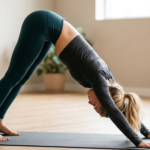
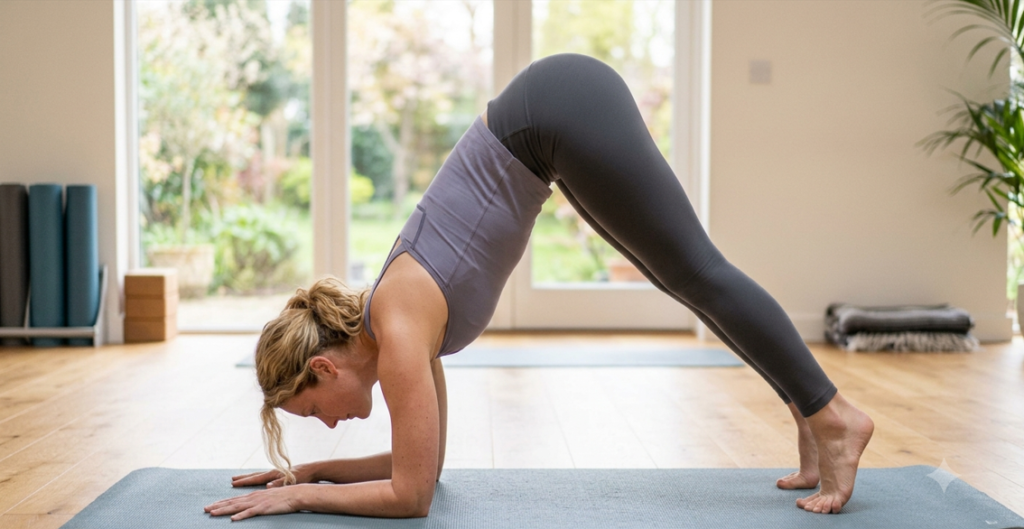
The dolphin pose yoga (Ardha Pincha Mayurasana) is a fantastic, accessible inversion that serves as a powerful bridge between a gentle stretch and a strengthening workout. This yoga pose the dolphin primarily targets your shoulders, upper back, and hamstrings, while also building core and arm strength . Think of it as a more accessible version of a headstand or a forearm stand; it allows you to experience the benefits of an inversion without the full weight on your head. This pose is perfect for building the foundation for more advanced yoga poses dolphin while delivering a deep, therapeutic stretch . Practicing the dolphin pose in yoga is truly a game-changer for your overall mobility and strength.
💪 Key Benefits of Practicing Dolphin Pose
This is more than just a stretch. Incorporating the dolphin yoga pose into your routine offers a wealth of physical and mental benefits :
-
Strengthens and Tones: Builds significant strength in your shoulders, arms, core, and legs. It’s an excellent weight-bearing exercise that tones the upper body and prepares you for more challenging inversions .
-
Boosts Flexibility: Deeply stretches the hamstrings, calves, and arches of your feet, while simultaneously opening the shoulders and chest. This full-body stretch enhances your overall flexibility .
-
Relieves Stress: Calms the brain and helps relieve stress, mild depression, and anxiety. The gentle inversion encourages blood flow to the head, which can have a soothing effect on the nervous system .
-
Therapeutic Effects: It can help relieve headaches, insomnia, back pain, and fatigue. It is also known to help with the symptoms of menopause and menstrual discomfort .
-
Improves Digestion: The slight inversion and compression of the abdomen can help improve digestion and relieve gastrointestinal issues .
📝 Step-by-Step Instructions: How to Perfect Your Dolphin Pose
Follow these steps to safely come into the pose. It’s a great idea to warm up your spine and shoulders first with a few rounds of cat cow stretch and thread the needle stretch to prepare your body .
-
Start in Tabletop: Begin on your hands and knees. Ensure your wrists are directly under your shoulders and your knees are under your hips .
-
Set Your Forearms: Lower your forearms to the mat, keeping them parallel. Your elbows should be directly under your shoulders . Interlace your fingers (tucking your pinky fingers in for comfort) or keep your palms flat for stability .
-
Lift Your Hips: Curl your toes under. On an exhale, press firmly into your forearms and lift your knees off the floor .
-
Create the “V”: Gently push your hips up and back, straightening your legs as much as your hamstring flexibility allows. Your body should form an inverted “V” shape .
-
Lengthen Your Spine: Keep your head between your upper arms. Actively press your forearms down and lengthen your tailbone toward the ceiling to create space in your spine .
-
Breathe and Hold: Hold the pose for 30 seconds to one minute, breathing deeply . With each exhale, try to lift your hips a little higher and gently press your heels toward the floor.
✨ Modifications for All Levels
-
For Beginners: If you’re new to dolphin pose, it’s perfectly okay to keep your knees slightly bent and your heels lifted . This reduces the demand on your hamstrings and lower back, allowing you to focus on the shoulder opening. Focus on a stable forearm base and a long spine before trying to push the heels lower .
-
For Advanced: To deepen the pose, walk your feet closer to your elbows to increase the hamstring stretch . For an added challenge, try lifting one leg toward the sky (Three-Legged Dolphin Pose) .
-
For Tight Hamstrings: If you feel a sharp pull, keep your knees bent. This is a sign that you need to work on your hamstring flexibility, and bending the knees is the safest way to do so .
📊 Complete Quick Reference Table
Here’s the clean, reader-friendly version you can copy-paste directly into your content:
| Muscle Groups Worked | Difficulty Level |
|---|---|
| Primary: Shoulders, Arms, Core, Hamstrings, Calves | Intermediate |
| Secondary: Upper Back, Chest, Glutes | Beginner to Intermediate |
⚠️ Safety Tips & Common Mistakes to Avoid
🛡️ Safety Tricks (Do’s)
-
Warm Up First: Always warm up your spine and shoulders before attempting Dolphin Pose. A few rounds of cat cow stretch and thread the needle stretch are excellent preparation .
-
Protect Your Neck: Keep your head in a neutral position between your arms. Do not let it hang or press heavily into the floor .
-
Engage Your Core: Hug your navel toward your spine to support your lower back and prevent it from over-arching .
-
Press the Floor Away: Actively press your forearms and palms into the mat to create lift in your shoulders, taking the weight off your neck .
❌ Common Mistakes (Don’ts)
-
Collapsing the Shoulders: Letting your shoulders sink down towards the floor. Always push the floor away to keep your shoulders active and lifted away from your ears .
-
Elbows Drifting Apart: Placing your elbows too wide. Keep them shoulder-width apart to maintain a stable base .
-
Forcing the Heels Down: Pushing your heels to the floor at the expense of a rounded back. Your heels don’t need to touch the floor. Focus on a long, straight spine first .
-
Neglecting Your Neck: Looking forward towards your hands can compress your neck. Keep your gaze softly on the mat .
❓ FAQ’s
1. What muscles does the dolphin pose work?
The dolphin yoga pose mainly works the shoulders, upper back, core, and the back line of the legs (hamstrings and calves). Your forearms and serratus muscles also work hard to keep you lifted .
2. How is Dolphin Pose different from Downward Dog?
The main difference is the base. Dolphin pose uses the forearms on the floor instead of the hands. This reduces wrist load but increases the demand on your shoulders .
3. Is Dolphin Pose beginner-friendly?
Yes! It’s a great alternative to headstands and forearm stands for beginners. Just keep your knees bent and heels lifted, and focus on a stable base and a long spine .
4. Why do my shoulders burn in Dolphin Pose?
This pose is a significant shoulder strengthener. If it burns immediately, try shifting more weight back into your feet and bending your knees slightly to reduce the load on your upper body.
5. How long should I hold Dolphin Pose?
For beginners and as a warm-up, holding for 15-30 seconds is great. As you build strength, you can hold it for up to one minute or longer, as long as your breathing remains smooth and your neck feels comfortable.
💡 Quick Tip
If you have tight shoulders or are working on your flexibility, try this pro-tip: place a rolled-up towel or a yoga block under your forearms. This can help to increase the opening in your shoulders without adding extra strain