👋 Introduction: What is the Couch Stretch?
If you sit at a desk all day, your hips are likely screaming for a break. The couch stretch exercise is widely considered the “King of all stretches” for a reason it targets the deep hip flexors (psoas) and quads like nothing else. Imagine your hip flexors as tight rubber bands; when you sit for hours, those bands shrink and pull on your lower back. This couch stretch acts like a pair of scissors, cutting that tension loose to restore your natural flexibility. Unlike the Kneeling Hip Flexor Stretch, the couch stretch puts your rear leg into extension against a wall, providing a deeper, more intense release of the couch stretch hip flexor complex. Whether you are an athlete or a desk worker searching for effective couch exercises, mastering the couch stretch is a game-changer for your posture, your couch stretch benefits, and your overall flexibility.
🎯 Why the Couch Stretch Beats Other Hip Openers
Most people start their flexibility journey with a Standing Quad Stretch or a Low Lunge Stretch, and those are great entry points. But the couch stretch for hip flexors takes things to another level. By anchoring your shin against a wall, you force the hip into full extension, something a simple Standing Quad Stretch cannot replicate. This makes the couch stretch for tight hip flexors the go-to choice for runners, cyclists, and anyone who spends hours seated. If you are new to this movement, start with a couch stretch beginner variation (covered in the instructions below) and gradually work toward the full couch stretch progression. For a complete hip-opening routine, pair the couch stretch for hips with a Pigeon Pose for glute release, a Butterfly Stretch for adductor flexibility, Glute Stretches to activate the posterior chain, a Lizard Pose for deep hip flexion, and a Frog Stretch to open the groin. Together, these movements, combined with the couch stretch quads release, create a balanced, full-body approach to mobility. Whether you are doing a quick home stretch couch session or a full couch exercises routine, the couch stretch should be the anchor of your practice.
✨ Key Benefits of the Couch Stretch
-
Unlocks Hip Flexors: Directly targets the psoas and rectus femoris, improving flexibility for squats and lunges.
-
Relieves Lower Back Pain: By loosening tight hips, you reduce the pull on your lumbar spine (a common issue from sitting).
-
Improves Posture: Counteracts “tech neck” and anterior pelvic tilt by opening the front of the body.
-
Boosts Athletic Performance: Better hip extension means more power in running and jumping.
-
Mental Reset: Holding this deep stretch requires focus and breathing, helping to calm the nervous system.
📝 Step-by-Step Instructions: How to Do the Couch Stretch
Preparation: What You’ll Need
Before you begin, gather your equipment. You will need a wall, a couch, or a sturdy box (a coffee table or bed frame also works). For comfort, use a yoga mat or a thick cushion for your knees; trust us, your kneecap will thank you. If you have sensitive knees, consider doubling up on padding. Clear the space around you so you have room to lunge forward without knocking into furniture. The couch stretch exercise is simple, but setup matters.
-
Set Up: Get Into Starting Position
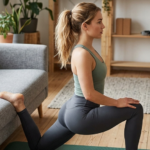
Kneel on the floor with your back facing the wall or couch. Your feet should be flat against the wall, toes pointing up or slightly outward (whatever feels natural). Your body should be facing away from the wall, as if you are about to crawl forward. At this point, your knees are on the ground, and your feet are touching the base of the wall. -
Adjust the Angle: Fine-Tune Your Distance
Slide your knees forward (away from the wall) until your feet are pressed flat against the wall and your knees are a few inches away from it. The goal is to have your shin vertical or slightly angled forward. If your feet slip, try pressing your toes into the wall for grip. This distance will determine the intensity of the couch stretch for hip flexors the closer your knee is to the wall, the more intense the stretch. -
The Lift: Engage Your Core and Glutes
Keeping your torso upright, squeeze your glutes and gently drive your hips forward. Lift your chest up and imagine a string pulling the crown of your head toward the ceiling. This creates a neutral spine and prevents your lower back from arching. Think of it as “tucking your tailbone” slightly; this small pelvic tilt is crucial for targeting the hip flexors safely and effectively. -
The Position: Bring One Leg Up
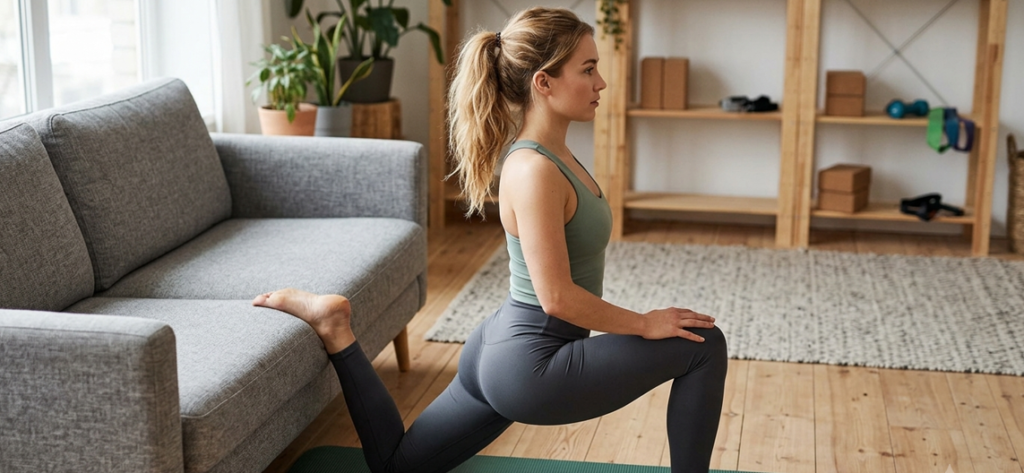
Now, bring one back leg up so your shin is vertical against the wall, and your knee is resting on the ground (on your cushion). Your front foot should be flat on the floor in front of you, knee bent at roughly 90 degrees like a lunge position. Your front knee should be directly above your ankle. Keep your torso upright and your hands on your front knee or hips for balance. You are now in the starting position of the couch hip flexor stretch. -
The Stretch: Sink Into the Release
Gently press your hips forward and squeeze your back glute. You should feel a deep stretch in the front of your thigh and hip of the back leg. Imagine you are trying to push your hip bone toward the wall behind you. Keep your ribs down and your core lightly engaged. Do not let your lower back arch if it does, you have gone too deep. Hold for 30–60 seconds, breathing slowly and deeply. Switch sides and repeat.
🔧 Modifications for Every Level:
-
Beginner (Couch Stretch Beginner): Do not go all the way to the wall. Keep your torso upright and place your back foot on a low step or block instead of the wall if the full position is too intense. You can also place a pillow between your back thigh and the wall to reduce the angle. Focus on simply feeling a gentle stretch; there is no rush. Even a partial couch stretch delivers benefits.
-
Intermediate: Perform the stretch as described above with your shin vertical against the wall. Hold for 45 seconds per side.
-
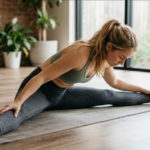
Advanced (Couch Stretch Progression): Once comfortable, lean your torso backward toward the wall, bringing your shoulders closer to the ground. This increases the intensity of the couch stretch quad release. You can also try lifting your front foot off the ground or reaching your arms overhead to deepen the stretch. For an even more advanced variation, try the couch stretch for hips with your front leg extended straight out in front of you (like a split).
-
Desk Worker Modification: If you are tight from sitting all day, start with a Standing Quad Stretch or Low Lunge Stretch first to warm up the tissue before attempting the couch stretch for tight hip flexors.
⏱️ Duration & Frequency:
Hold for 30–60 seconds per side, 2–3 sets per leg. Aim to practice the couch stretch 3–5 times per week for best results. Consistency beats intensity; even 30 seconds a day can dramatically improve your flexibility over time.
🛡️ Safety Tricks & Common Mistakes
Safety Tricks:
-
Pad the Knee: Always use a cushion or mat under your bottom knee to protect the patella. A folded yoga blanket works perfectly.
-
Warm Up First: Do a light home stretch couch routine or some Glute Stretches to warm up the tissue before diving into this deep stretch. Cold muscles are more prone to injury.
-
Breathe Deeply: Inhale through your nose, exhale through your mouth to relax into the couch stretch hip flexor position. Holding your breath creates tension and defeats the purpose.
-
Support Your Back: If your lower back arches too much, slightly tuck your pelvis (posterior tilt) before pushing forward. You can also place a pillow under your front hip for support.
Common Mistakes:
-
Arching the Back: Do not let your lower back sag. Keep your ribs down and core lightly engaged. If your back arches, you are compensating and not targeting the hip flexor.
-
Holding Your Breath: This creates tension; focus on slow, steady breathing. Count your breaths instead of the seconds.
-
Going Too Deep Too Fast: If you feel sharp pain in the knee, stop immediately. This is not a “no pain, no gain” situation. Ease into the couch stretch gradually.
-
Forgetting the Glute Squeeze: You must squeeze the glute of the back leg to properly target the hip flexor and protect the spine. Without the squeeze, you are just hanging on your joints.
❓ FAQs
Q: What is the couch stretch good for?
A: The couch stretch is excellent for opening tight hip flexors and quads, relieving lower back pain, and improving posture. It is highly recommended for runners, cyclists, and office workers.
Q: How long should I hold the couch stretch?
A: For optimal flexibility gains, aim to hold the stretch for 30 to 60 seconds per side, performing 2-3 sets. Consistency is more important than duration.
Q: Can beginners do the couch stretch?
A: Yes, but with modifications. Couch stretch beginner variations include keeping the torso upright, using a lower surface for the back foot, and focusing on breathing rather than depth.
Q: Is the couch stretch better than the kneeling hip flexor stretch?
A: Both are effective, but the couch stretch is generally more intense because it places the hip in extension against a wall, allowing for a deeper release of the couch stretch hip flexor complex.
Q: Where should I feel the couch stretch?
A: You should feel a deep stretch in the front of your hip and thigh (quadriceps). If you feel it in your lower back, tuck your pelvis slightly to engage your core and protect the spine.
💡 Quick Tip
🔥 Pro Tip: If you find the couch stretch too intense on your knee, try placing a folded blanket behind the knee joint (in the crease) before you press your shin against the wall. This reduces compression and allows for a more comfortable couch stretch progression! Another trick: place a small pillow between your back thigh and the wall to reduce the angle of hip extension. This is especially helpful for couch stretch beginner practitioners who are just starting their flexibility journey. Remember, the goal is a deep stretch, not pain; listen to your body and adjust accordingly.