Introduction: The Muscle of the Soul
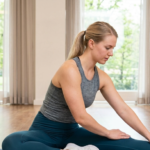
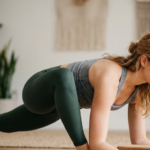
Ever feel like you’re tied to a chair after a long day at the desk? That tightness in your hip and lower back is often your psoas (pronounced so-az) crying out for attention. The psoas is a deep core muscle that connects your spine to your legs, and when it’s tight, it can throw your whole body out of alignment. This psoas stretch guide is designed to help you release that tension and restore your natural range of motion. Think of the psoas as a thick, powerful rubber band connecting your upper and lower body; when it’s short and stiff, it pulls on your back and hips, but when it’s supple, it acts as a shock absorber for your spine. Improving flexibility here is crucial for anyone who sits for a living or trains hard in the gym. By incorporating a psoas muscle stretch into your routine, you aren’t just fixing your hips; you’re potentially alleviating back pain and improving your posture. Let’s dive into how to stretch the psoas muscle effectively and safely.
Key Benefits: Why You Need This Stretch 💪
-
Releases Lower Back Tension: A tight psoas pulls on the lumbar spine, causing discomfort. Stretching it acts like a manual release valve for back pain. Think of it as loosening a knot that’s been tugging at your spine all day. 🔓
-
Improves Hip Flexibility: This is the key to a fluid stride. A psoas release stretch helps you achieve better flexibility in the hip flexors, making walking, running, and squatting feel effortless. It’s like oiling a rusty hinge suddenly everything moves smoothly again. 🏃♀️
-
Posture Correction: By lengthening the psoas major stretch, you allow your pelvis to return to a neutral position, which automatically straightens your posture. Imagine a puppet whose strings have been pulled too tight releasing the psoas lets you stand tall and relaxed instead of hunched and strained. 🧍♀️
-
Stress Relief: The psoas is connected to your diaphragm and nervous system. Releasing it can trigger a parasympathetic response, helping you feel calmer and more grounded. It’s no coincidence that this muscle is often called the “muscle of the soul”; letting go of physical tension often means letting go of emotional tension too. 😌
-
Boosts Athletic Performance: A supple psoas means more power and range in every stride, jump, and lift. Whether you’re a runner, cyclist, or lifter, a tight psoas stretch routine can unlock hidden performance gains by restoring full hip extension. 🏋️♂️
-
Prevents Compensatory Pain: When the psoas is tight, other muscles (like the glutes and hamstrings) overwork to pick up the slack. Regularly doing a psoas hip flexor stretch helps restore balance, reducing the risk of knee, hip, and lower back injuries down the line. 🛡️
-
Improves Breathing Quality: Because the psoas attaches to the diaphragm via connective tissue, a restricted psoas can limit your breath. Releasing it with a lying psoas stretch or kneeling psoas stretch can help you breathe deeper and more freely, something most of us don’t realize we’re missing. 🌬️
-
Enhances Digestive Comfort: A chronically tight psoas can compress the abdominal area and restrict movement in the diaphragm and gut. Gentle psoas stretch exercises can help ease that compression, supporting better digestion and abdominal comfort over time. 🍃
-
Supports Better Sleep: Chronic hip and lower back tension often makes it hard to find a comfortable sleeping position. A relaxing evening supine psoas stretch or standing psoas muscle stretch can calm the nervous system and help you settle into deeper, more restful sleep. 🌙
-
Builds Body Awareness: Learning how to stretch your psoas muscle correctly trains you to feel and control a muscle most people don’t even know they have. That mind-muscle connection carries over into better movement quality in everything from yoga to yard work. 🧠
Step-by-Step Instructions: How to Stretch the Psoas Muscle 📝
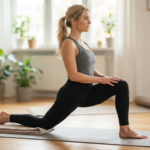
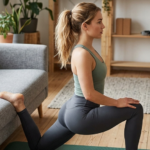
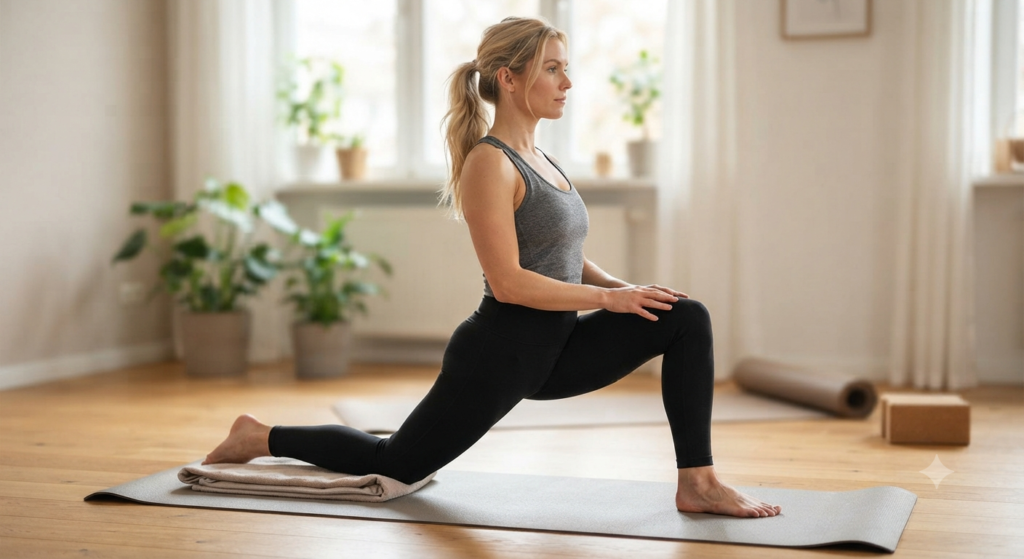
Here is the gold standard for releasing this muscle: the Kneeling Psoas Stretch (also known as the Low Lunge Stretch). This is widely considered the best psoas stretch for most people.
-
Setup: Start in a kneeling position on a mat. Bring your right foot forward so your knee is bent at a 90-degree angle, foot flat on the floor. Your left knee should be on the ground.
-
Alignment: Ensure your right knee is directly above your ankle. Engage your core by doing a slight Pelvic Tilt (tucking your tailbone under) to protect your lower back.
-
The Movement: Gently shift your weight forward until you feel a stretch in the front of your left hip and thigh. Do not arch your back; keep your torso upright.
-
Deepen the Stretch: To intensify this hip flexor psoas stretch, raise your left arm overhead and lean slightly to the right. Hold for 30-60 seconds while breathing deeply.
-
Switch Sides: Release, return to the start, and repeat on the other leg.
🛠 Modifications for Every Body
-
For Beginners: If kneeling is uncomfortable, try the Standing Psoas Stretch. Stand in a split stance, tuck your pelvis, and shift your weight forward. Or try a Supine Psoas Stretch (lying on your back) by pulling one knee to your chest while extending the other leg flat.
-
For Advanced Users: Try the Couch Stretch. Place your back foot up against a wall or couch while in a lunge position. This is an intense, tight psoas stretch and requires caution.
-
Alternative Option: The Figure-Four Stretch or Glute Bridge are great complementary exercises to balance the hips, though they target different muscle groups (glutes/hamstrings). The Butterfly Stretch is also excellent for adductor flexibility, which supports the hips.
Quick Reference Table 📊
Here is a snapshot of what you are working on.
| Muscle Groups Worked | Difficulty Level |
|---|---|
| Psoas Major & Minor (Deep Hip Flexors) | Beginner to Intermediate |
| Iliacus (Inner Hip Muscle) | Modification available for all levels |
| Rectus Femoris (Quadriceps) | Time: 30-60 seconds per side |
| Tensor Fasciae Latae (TFL) | Equipment: Mat (optional) |
⚠️ Safety Tricks & Common Mistakes
To get the most out of your psoas stretch exercises, avoid these pitfalls:
🛑 Common Mistakes:
-
Arching the Back: If you arch your lower back instead of tucking your pelvis, you won’t stretch the psoas; you’ll just compress your spine.
-
Bouncing: Avoid bouncing movements. The psoas is a deep muscle; it requires a slow, steady hold to release.
-
Holding Your Breath: Breathing is key. If you hold your breath, you tense up, defeating the purpose of the stretch.
-
Rushing: Don’t rush through the how-to stretch psoas major process. Give the muscle time to “melt” into the stretch.
✅ Safety Tricks:
-
Use a Pillow: If your kneeling knee hurts, place a folded towel or pillow under it.
-
Engage the Core: Before you move, gently brace your abs. This protects your lower back.
-
Stop if Sharp: You should feel a stretch or mild tension, but never sharp pain.
-
Warm Up: Do this after a hot shower or light cardio when your muscles are warm.
Frequently Asked Questions (FAQs) ❓
Q: How do you stretch your psoas if you can’t kneel?
A: You can perform a standing psoas muscle stretch or a lying psoas stretch. For the lying variation, lie on your back at the edge of a bed, letting one leg hang off the side while hugging the other knee to your chest. This “leg dangle” variation is a gentle way to let the psoas relax and lengthen without any pressure on the knees.
Q: Is it better to stretch the psoas before or after a workout?
A: It is generally safer to perform static psoas stretch yoga or stretching after your workout or as a separate session. Before a workout, dynamic movements are better. Save the deep holds for when your muscles are warm and pliable.
Q: How long does it take to release a tight psoas?
A: Consistency is key. With daily practice of this stretch psoas muscle routine, you may feel relief in a few weeks, but chronic tightness may take longer. Think of it like untangling a knot the tighter it is, the more patience it requires.
Q: What is the difference between the psoas and hip flexors?
A: The psoas is the deepest hip flexor. While the hip flexors and psoas stretch often overlap in exercises, the psoas uniquely connects to the spine, which is why it affects posture so much. The term “hip flexors” is an umbrella that includes the psoas, iliacus, and rectus femoris, but the psoas is the only one that bridges your spine and your leg
Q: How can I tell if my psoas is actually tight?
A: Common clues include a pulling sensation in the front of your hip, a shorter stride when you walk, and stiffness after sitting for long periods. Some people also notice lower back discomfort because the psoas influences pelvic position. If you feel like you’re always “tucked” or can’t fully extend your hip backward, that’s a classic sign of a tight psoas stretch deficiency.
Q: Is it safe to stretch the psoas if I have lower back pain?
A: It can be safe, but it depends on the cause of your pain. If the stretch causes your lower back to arch or increases your pain, the technique needs adjustment. A good rule of thumb: proper form beats pushing deeper. If you have persistent back pain, get it assessed before starting a new psoas release stretch routine .
Q: Can I overstretch my psoas?
A: Yes, and it’s more common than you’d think. Overstretching can cause a dull, achy feeling in the lower abdomen or even disrupt sleep if you stretch too aggressively before bed. If you feel worse the next day, back off, take a rest day, and focus on gentle psoas stretch exercises rather than forcing the muscle .
Q: How often should I do a psoas stretch?
A: There’s no universal rule, but many people benefit from gentle stretching most days. Start with short, regular sessions rather than aggressive marathon stretches. The goal is steady progress think “little and often” rather than “no pain, no gain”.
Q: Can walking help loosen a tight psoas?
A: Absolutely. Gentle walking keeps the hips moving through a natural range, which can reduce stiffness after long periods of sitting. It’s not a substitute for a dedicated best psoas stretch routine, but it’s a great daily habit to support your flexibility work.
Q: What is the “leg dangle” stretch and is it effective?
A: The leg dangle is a lying psoas stretch where you lie on your back at the edge of a bed, hug one knee to your chest, and let the other leg hang off the side. It’s incredibly effective because it lets gravity do the work, gently lengthening the psoas in a relaxed position. Physical therapists often recommend it for people who sit all day.
Q: Can a tight psoas affect my breathing?
A: Yes. The psoas connects to the diaphragm through connective tissue, so a restricted psoas can limit how deeply you breathe. Releasing it with a supine psoas stretch or kneeling psoas stretch can help you breathe more freely something most people don’t realize they’re missing until they feel the difference.
💡 Quick Tip
Try the “Somatic Release” Trick: Before you even get into position for your psoas muscle stretch, lie on your back and do 10 slow Pelvic Tilts. This wakes up your core and prepares the nervous system for the psoas release stretch, making the stretch feel much more effective!