

The Knees to Chest Stretch is like giving your lower back a gentle hug; it targets tight hip flexors, relieves spinal compression, and improves flexibility for better mobility. Perfect for athletes, desk workers, or anyone needing quick tension relief!
This simple yet powerful movement is a cornerstone of many rehabilitation programs and yoga practices for good reason. By drawing your knees toward your chest, you create a gentle flexion in the lumbar spine that counteracts the extension and compression caused by prolonged sitting or standing.
The stretch works synergistically with other foundational movements like pelvic tilts to restore neutral alignment and release tension in the powerful muscles surrounding your lower back and hips. Whether you’re an athlete cooling down after leg day or an office worker seeking midday relief, this stretch adapts to your needs.
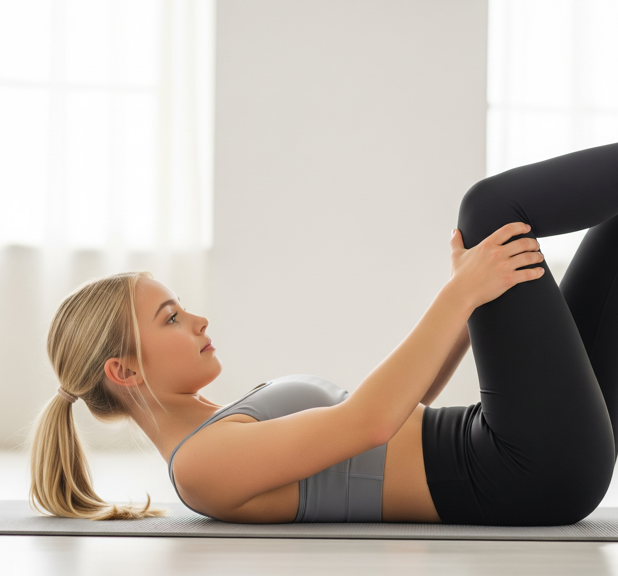
✅ Relieves Lower Back Tension – Decompresses the spine after sitting or standing
✅ Enhances Hip Flexibility – Loosens tight hip flexors and glutes
✅ Improves Circulation – Encourages blood flow to stiff muscles
✅ Reduces Stress – Calms the nervous system with mindful breathing
✅ Pre-Workout Prep – Gently warms up the lower body for activity
✅ Improves Sleep Quality – Performing this stretch before bed relaxes the nervous system and releases physical tension, making it easier to fall asleep and stay comfortable throughout the night.
✅ Supports Digestive Comfort – The gentle compression of the abdomen can stimulate digestion and relieve bloating or gas discomfort after meals.
✅ Enhances Body Awareness – Regular practice trains you to recognize tension patterns in your lower back and hips, helping you address discomfort before it becomes problematic.
Together, these benefits make the Knees to Chest Stretch far more than a simple flexibility exercise. It’s a full-system reset that addresses physical tension, mental stress, and even digestive function. For a complete lower-body flexibility routine, consider pairing it with glute stretches and hamstrings work to target all the major muscle groups that influence back health.
To truly master the Knees to Chest Stretch, it helps to understand exactly what you’re stretching. The primary muscles targeted include:
| Muscle Group | Role | Why It Gets Tight |
|---|---|---|
| Erector Spinae | Keeps spine upright | Prolonged sitting, poor posture |
| Gluteus Maximus | Hip extension | Inactivity, driving, desk work |
| Piriformis | Hip rotation | Sitting, running imbalances |
| Hamstrings | Knee flexion | Overuse, lack of stretching |
When these muscles become chronically tight, they can contribute to conditions like sciatic nerve stretches irritation or posterior pelvic tilt stretch patterns. Regular practice of the Knees to Chest Stretch helps maintain flexibility in all these areas, reducing the risk of compensatory injuries elsewhere in the body.
Bend knees, feet flat on the floor (like a “bridge” position).
Clasp hands around your shin, gently pulling it toward you.
Or bend it for less intensity.
Breathe deeply each exhale helps deepen the stretch.
Repeat on the other leg for balanced flexibility.
While nearly everyone can benefit, these groups find the Knees to Chest Stretch especially valuable:
🧑💼 Desk Workers – Counters the hip flexor shortening and lower back compression caused by hours of sitting. Pair with standing hip flexor stretches for complete relief.
🏃♀️ Runners – Loosens tight glutes and hamstrings that accumulate mileage. Essential for preventing injuries and maintaining stride length.
🧓 Older Adults – Maintains hip mobility and back flexibility safely from a supported floor position. Gentle enough for daily practice.
🤰 New Mothers – Helps restore core and back comfort after pregnancy (once doctor-approved). Complements core workouts during postpartum recovery.
💪 Weightlifters – Provides counter-stretch for squatting and deadlifting patterns. Use during cooldown after leg workouts.
😴 Those with Sleep Issues – The calming nature of this stretch makes it ideal for bedtime routines aimed at improving sleep quality.
The Knees to Chest Stretch is versatile enough for any time of day, but certain moments maximize its benefits:
| Time | Why It’s Ideal |
|---|---|
| Morning | Gently wakes up the spine after hours of stillness; prepares body for the day |
| Post-Workout | Calms the nervous system and begins the recovery process for lower body muscles |
| Midday Break | Quick tension release for desk workers; pairs well with chair workout stretches |
| Before Bed | Signals your body that it’s time to rest; improves sleep quality |
| After Long Drives | Counteracts spinal compression from sitting in a car seat |
For a complete morning routine, combine this stretch with ten morning stretches to awaken your entire body.
Aspect | Details |
Muscles Worked | Lower back, Hips, Glutes |
Difficulty | Beginner-friendly |
Best For | Flexibility, Post-workout recovery |
🛏️ Cushion Your Spine – Use a yoga mat or towel to protect your tailbone on hard floors.
👐 Hold Behind Thighs – Support your legs by clasping hands above the knees (not on joints).
🌬️ Sync with Breath – Inhale to relax, exhale to gently deepen (no forcing!).
🤸 Yanking Knees – Pull smoothly no jerky movements!
🦵 Locking Extended Leg – Keep it slightly bent if hamstrings scream.
📱 Rushing the Hold – Hold 20+ seconds per side for real benefits.
Consult your doctor or physical therapist first. For many disc issues, gentle flexion stretches like this can help, but individual conditions vary. Your healthcare provider may recommend exercises for lower back pain that are specifically tailored to your diagnosis.
Muscular imbalances are normal due to daily habits, sports preferences, or previous injuries. Consistent practice on both sides will gradually reduce this imbalance. For deeper work on asymmetry, explore single-leg RDL exercises that strengthen each side independently.
Yes! A gentle stretch in the glutes is expected and beneficial. If you feel sharp pain, ease off. For targeted glute work, our glute stretches guide offers additional variations.
Happy baby pose involves grabbing the outsides of your feet with knees bent outward, while knees to chest keeps knees together toward your torso. Both are excellent; happy baby adds inner thigh stretching. They work well together in a full body stretching sequence.
For some types of sciatica, yes-particularly when the sciatic nerve is irritated by tight piriformis or glute muscles. The gentle stretch can relieve pressure. For more targeted relief, see our sciatic nerve stretches guide.
Imagine your lower back is melting into the floor 🫠 no arching!