✨ Introduction
Meet the Sphinx Pose, a gentle, heart-opening backbend that mimics the majestic creature it’s named after. This foundational sphinx pose yoga posture is the perfect antidote to our modern, desk-bound lives, as it powerfully counteracts the effects of slouching and sitting for hours. By targeting your spine, chest, and abdominal muscles, this pose not only improves posture but also invites a sense of courage and emotional release. Think of it as a conscious “wake-up call” for your entire back body, helping you feel taller, lighter, and more expansive.
While the Sphinx Pose is a wonderful standalone stretch, it also serves as a gentle precursor to the deeper backbend of Cobra Pose think of it as the “little sibling” that prepares your spine for more intensity. For a complete spinal wellness routine, many yoga teachers recommend pairing it with the Cat-Cow Stretch, which warms up the spine with rhythmic flexion and extension, making the static hold of Sphinx feel even more accessible and rewarding. Whether you’re new to yoga or a seasoned practitioner, the Sphinx yoga pose offers a safe and effective way to build spinal flexibility and core strength, bridging the gap between dynamic movement and sustained, heart-opening stillness.
🏆 Key Benefits of the Sphinx Pose
Incorporating the sphinx pose into your routine unlocks a treasure trove of physical and mental rewards:
-
💪 Strengthens the Spine: Builds strength in the erector spinae muscles (the long muscles running along your spine), supporting better posture and reducing lower back pain.
-
❤️ Opens the Chest & Lungs: Expands the chest cavity, encouraging deeper breathing and improving lung capacity a boon for those who feel tight or anxious.
-
🧘♀️ Stimulates Abdominal Organs: Gently massages the digestive organs, which can help improve digestion and alleviate mild discomfort.
-
😌 Relieves Stress & Fatigue: The gentle backbend helps release pent-up tension and fatigue, calming the mind and reducing symptoms of mild depression.
-
🤸 Improves Flexibility: Increases flexibility in the shoulders, chest, and abdominal muscles, creating a more fluid and comfortable range of motion.
🪜 Step-by-Step Instructions: How to Do Sphinx Pose in Yoga
1. Start on Your Belly (Beginner-Friendly Base)
-
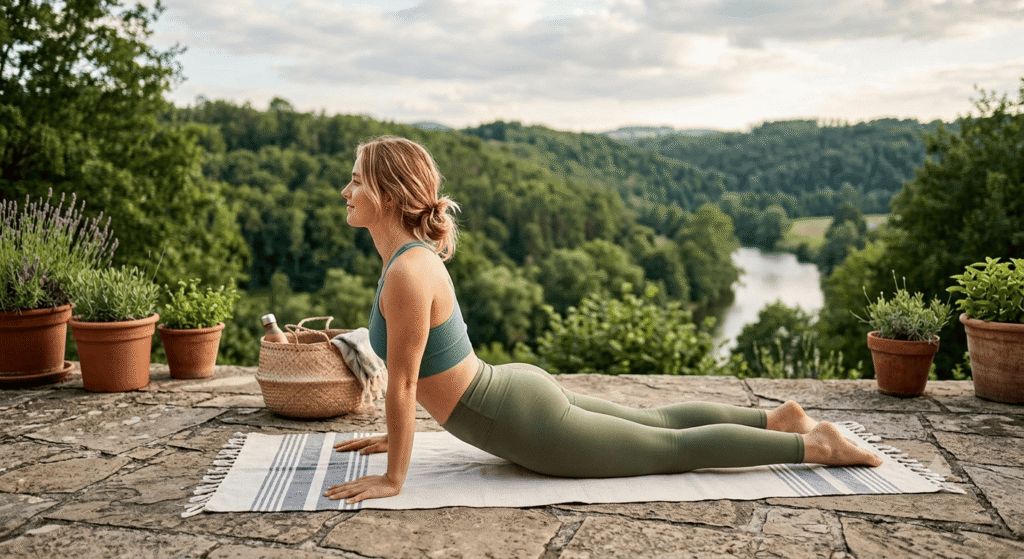
Lie flat on your stomach with your legs extended behind you, tops of the feet resting on the mat. Keep your feet hip-width apart.
2. Position Your Forearms
-
Place your forearms on the floor, parallel to each other, with your elbows directly under your shoulders. Your palms should be flat on the mat, fingers pointing forward.
3. The Lift (The “Sphinx” Rise)
-
On an inhalation, gently press down through your forearms and palms. Slowly lift your chest and head off the mat, arching your spine backward. Keep your lower ribs on the floor.
4. Engage & Open
-
Roll your shoulders back and down, away from your ears. Gaze softly forward or slightly upward without cranking your neck. Your backbend should come from your upper and mid-back, not your lower spine.
5. Hold & Breathe
-
Stay in the pose for 5–10 deep breaths. With each inhale, imagine lengthening your spine; with each exhale, try to sink a little deeper into the backbend.
Modifications:
-
🔹 Beginner: Place a folded blanket under your pelvis for extra support. If your lower back feels strained, walk your elbows slightly forward to reduce the arch.
-
🔹 Advanced: To deepen the pose, walk your hands forward and lift your forearms off the mat, transitioning into a Cobra Pose. Alternatively, lift your thighs off the mat for a stronger backbend.
🔍 Quick Reference Table
| Muscle Groups Worked | Difficulty Level |
|---|---|
| Erector Spinae (Spine), Glutes, Chest, Shoulders, Abdominals (Stretched) | Beginner to Intermediate |
⚠️ Safety Tricks & Common Mistakes to Avoid
✅ Safety Tricks:
-
Squeeze Your Glutes: Gently squeeze your glute muscles as you lift. This “locks” the pelvis in place and protects your lower back from over-arching.
-
Keep the Lower Ribs Down: Focus on lifting your chest up and forward, not just arching your lower back. Imagine your lower ribs are glued to the mat.
-
Neutral Neck: Avoid cranking your neck backward. Keep your cervical spine in a neutral extension—gaze slightly forward, not straight up at the ceiling.
❌ Common Mistakes:
-
Sagging Shoulders: Letting your shoulders collapse up toward your ears. Always roll them down and back to open the chest fully.
-
Locked Legs: Clenching your buttocks too tightly or locking your knees. Keep your legs active but relaxed to avoid tension.
-
Holding Your Breath: The sphinx pose is a breathing exercise! Holding your breath increases tension. Breathe deeply and evenly to release stress.
-
Over-Arch the Lower Back: Pushing the lift too far down into the lumbar spine. The stretch should be felt in the mid and upper back, not just the lower spine.
❓ FAQ’s
Q1: Is Sphinx Pose good for lower back pain?
A: Yes, when done correctly. The Sphinx Pose is a gentle, active backbend that strengthens the spinal erectors, which support the lower back. However, if you have severe lower back pain or a herniated disc, please consult a doctor or modify the pose by keeping the elbows further forward to reduce the arch.
Q2: What is the difference between Sphinx Pose and Cobra Pose?
A: Great question! In Sphinx Pose yoga, your forearms remain on the ground, keeping the lift lower and safer for the lower back. In Cobra Pose, you press up onto your hands with straight arms, creating a much deeper backbend. Sphinx is typically considered a preparatory pose for Cobra.
Q3: Can I do Sphinx Pose if I have a wrist injury?
A: Absolutely. You can easily modify the sphinx yoga pose by making fists with your hands or resting your forearms on a bolster or folded blanket. This takes the pressure off the wrists entirely.
Q4: How often should I practice Sphinx Pose to see results?
A: To improve spinal flexibility and strength, aim to include sphinx pose in yoga sequences 3-4 times a week. Even holding it for a minute daily can dramatically improve your posture and reduce upper back tension.
💡 Quick Tip
Boost Your Backbend: To instantly improve your flexibility in this pose, try this mental trick: instead of focusing on pushing your chest up, focus on pulling your shoulder blades down your back. This subtle cue instantly creates more space and openness in the chest, turning a simple stretch into a powerful, heart-opening experience.