
Types of PNF Stretching

Gastroc Stretches for Pain-Free Movement


PNF stretching is like ‘hacking’ your nervous system for faster flexibility gains. It’s the gold standard for athletes and rehab professionals.

Proprioceptive Neuromuscular Facilitation (PNF) combines passive stretching with muscle contraction to improve flexibility, range of motion, and muscle recovery. It’s especially effective for tight hamstrings, hips, and shoulders.

If you’ve been stretching for weeks or months without seeing significant improvement in flexibility, PNF may be the missing piece. Unlike static stretching, which simply lengthens a muscle, PNF works with your nervous system to override the stretch reflexthe protective mechanism that contracts a muscle when it senses too much tension too quickly. By contracting the muscle before stretching it, you temporarily “reset” this reflex, allowing for a deeper, safer stretch.

Regular PNF practice also enhances body awareness (proprioception), helping you understand where your joints and muscles are in space. This improved awareness translates to better form during exercises like reverse lungessingle leg RDL, and kettlebell workouts. For a complete flexibility routine, combine PNF with dynamic stretching before activity and static stretching for recovery.

PNF Stretching

Types of PNF Stretching

💪 Key Benefits of PNF Stretching

Boosts flexibility faster than static stretching

Improves muscle strength at extended ranges

Enhances body awareness (proprioception)

✅ Reduces injury risk by improving muscle control

Great for rehabilitation post-injury

✅ Overrides the Stretch Reflex – Allows for deeper, safer stretching by temporarily relaxing the muscle’s protective response

✅ Improves Neuromuscular Coordination – Strengthens the connection between brain and muscle for better movement control

✅ Effective for Stubborn Muscle Groups – Particularly useful for hamstrings, hip flexors, shoulders, and calves

✅ Supports Rehabilitation – Used by physical therapists for recovery from injuries like rotator cuff issues and stretches for shin splints

✅ Enhances Athletic Performance – Prepares muscles for explosive movements like jump squats and burpees

🧠 Anatomy of PNF Stretching: How It Works

PNF stretching works by targeting two key neurological mechanisms:

MechanismWhat It DoesHow PNF Uses It
Stretch ReflexMuscle contracts when stretched too quickly or too farContracting the muscle before stretching temporarily “fatigues” this reflex, allowing deeper stretch
Autogenic InhibitionMuscle relaxes after a strong contractionThe 6-second isometric contraction triggers relaxation, enabling greater range of motion
Reciprocal InhibitionWhen one muscle contracts, its opposite relaxesContracting the opposing muscle (e.g., quad during hamstring stretch) forces the target muscle to relax

🧠 Muscles Worked in PNF Stretching

PNF stretching can be applied to virtually any muscle group, but it’s most effective for:

  • Hamstrings – using hold-relax or contract-relax techniques

  • Hip Flexors – using reciprocal inhibition with glute contraction

  • Shoulders – using HRAC for rotator cuff and chest opening

  • Calves – using contract-relax for gastrocnemius and soleus

  • Quadriceps – using hold-relax for knee flexion

  • Upper Back – using HRAC for thoracic mobility and scapular retractions

For targeted muscle release, combine PNF with gastroc stretchstanding soleus stretchcalf stretches, and upper trap stretch for complete flexibility development.

👥 Who Should Use PNF Stretching

PNF stretching is ideal for:

  • Dancers and gymnasts – develops extreme flexibility safely

  • Rehabilitation patients – recovers range of motion after injury

  • Weightlifters – improves squat depth and overhead mobility

  • Runners – increases stride length and hip flexibility

  • Older adults – maintains functional range of motion

  • Anyone who has plateaued in static stretching – breaks through flexibility barriers

  • Yoga practitioners – deepens poses with advanced techniques

  • Anyone recovering from hamstring strains, shoulder impingement, or lower back tightness

It works especially well when combined with chin tuck stretch, doorway stretch, and wall angel stretch for complete upper body mobility.

Types of PNF Stretching

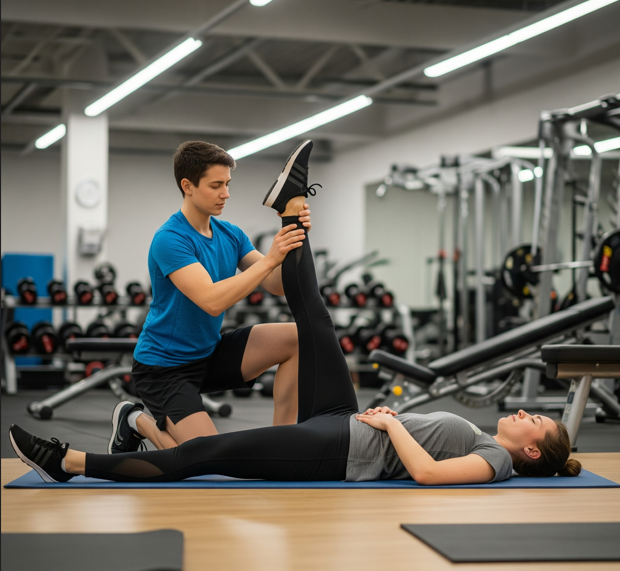
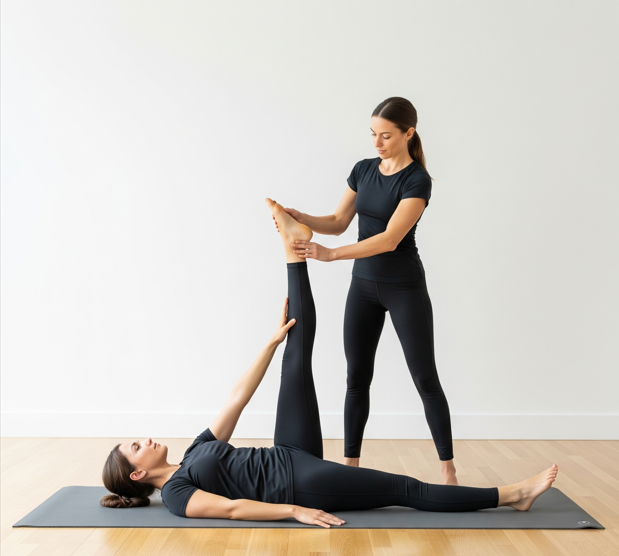
Hold-Relax (HR) Technique

Hold-Relax (HR) Technique

The beginner-friendly PNF method! Stretch, isometrically contract the muscle, then relax deeper. Perfect for safely increasing flexibility in tight areas like hamstrings.
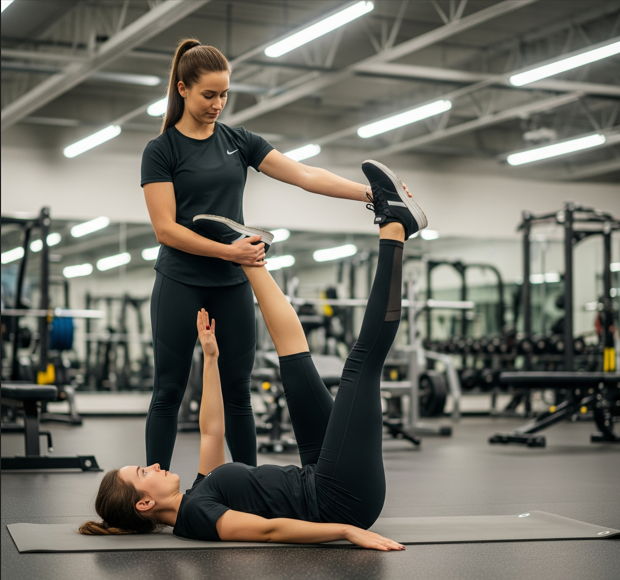
contract relax CR technique

Contract-Relax (CR) Technique

Active tension release! Push against resistance before stretching further. The go-to for rehab pros to rebuild mobility after injuries
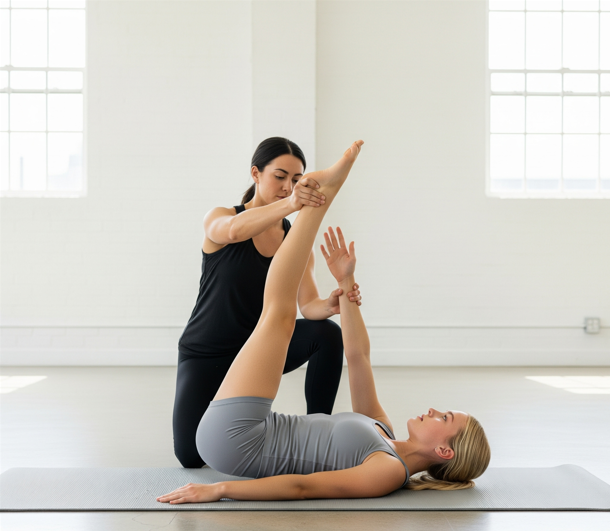
Hold-Relax-Agonist-Contraction (HRAC)

Hold-Relax-Agonist-Contraction (HRAC)

Advanced PNF magic! Combines isometric holds with opposing muscle contractions for maximum range-of-motion gains. Ideal for dancers and athletes needing extreme flexibility
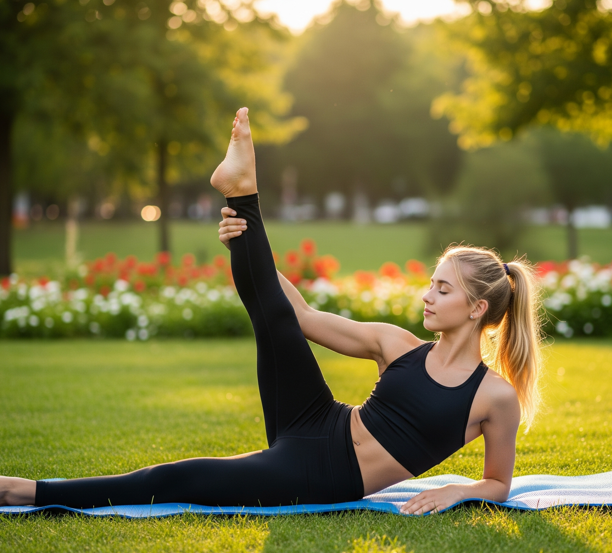
Reciprocal Inhibition Technique

Reciprocal Inhibition (RI) Technique

Work smarter, not harder! Uses opposing muscle contractions to 'trick' tight muscles into relaxing. Great for stubborn muscle groups like hip flexors

How to Do PNF Stretching 📝

1️⃣ Hold-Relax (HR) Technique

  • Move into a passive stretch (e.g., hamstring stretch)
  • Hold for 10 sec, then contract the muscle isometrically (without moving) for 6 sec
  • Relax and deepen the stretch for 30 sec

2️⃣ Contract-Relax (CR) Technique

  • Stretch the target muscle passively
  • Contract the muscle concentrically (e.g., push against resistance) for 6 sec
  • Relax and move deeper into the stretch

3️⃣ Hold-Relax-Agonist-Contraction (HRAC)

  • Passive stretch → isometric hold (6 sec)
  • Relax → immediately contract the opposing muscle (e.g., quads during hamstring stretch)
  • Hold new stretch for 30 sec

4️⃣ Reciprocal Inhibition (RI) Technique

  • Passive Stretch: Gently stretch target muscle (e.g., calf stretch)
  • Activate Opposing Muscle: Contract the antagonist muscle (e.g., tibialis anterior by pulling toes up) for 6 sec
  • Relax & Deepen: Release and immediately deepen stretch for 30 sec
  • Repeat: 2-3 cycles per muscle group

Modifications:

  • Beginner: Use a strap/partner for support
  • Advanced: Add pulses in the stretched position

Quick Reference Table

PNF TypeBest For
Hold-Relax (HR)Beginners, tight muscles, hamstrings, quadriceps, calves
Contract-Relax (CR)Intermediate flexibility, active tension release, rehabilitation settings, shoulders, hip flexors
Hold-Relax-Agonist-Contraction (HRAC)Advanced range of motion, maximum flexibility gains, dancers, athletes, stubborn muscle groups
Reciprocal Inhibition (RI)Stubborn muscle groups, hip flexors, calves, chest, upper back, using body’s natural reflexes
Modified Hold-RelaxThose who prefer gentle progression, post-injury recovery, older adults
Contract-Relax-Agonist-Contraction (CRAC)Elite athletes, sport-specific flexibility, advanced rehabilitation

Safety Tricks 🛡️

✔ Warm up with light cardio first – Cold muscles are more prone to injury

✔ Use a partner, towel, or strap for control – Especially for HRAC and advanced techniques

✔ Breathe steadily throughout – Never hold your breath; exhale during contraction

✔ Progress gradually – Increase intensity over weeks, not minutes

✔ Hydrate well after sessions – Muscles need water to recover and adapt

✔ Stop if sharp pain occurs – Mild tension is normal; sharp pain is a stop signal

❌ Avoid These Mistakes

✖ Bounce during contractions – Smooth, controlled movements are key

✖ Hold your breath – Breathe steadily to maximize flexibility gains

✖ Force beyond pain – Discomfort ≠ pain; sharp pain means STOP

✖ Skip warm-up – Cold muscles are more prone to strain

✖ Overdo frequency – 2-3 times per week is sufficient for most; muscles need recovery

✖ Neglect opposing muscle groups – Balance is essential for joint health

FAQ

How often should I do PNF stretching?

For best results, aim for 2-3 times per week per muscle group. PNF is intense; muscles need 48 hours to recover between sessions. Incorporate into your how to improve flexibility routine for accelerated gains.

Yes, when started slowly. Begin with Hold-Relax (HR) technique using a strap or towel. Avoid advanced techniques like HRAC until you’re comfortable with the basic patterns. Pair with stretching exercises for foundational flexibility.

Yes. Tight hamstrings and hip flexors often contribute to lower back pain. PNF stretching for these muscle groups can reduce strain on the lumbar spine. Combine with cat cow stretchchild’s pose, and knees to chest stretch for comprehensive relief.

Hold-Relax uses an isometric contraction (no movement). Contract-Relax uses a concentric contraction (movement against resistance). Both are effective; Hold-Relax is gentler, while Contract-Relax is often used in rehabilitation settings.

Yes, using a strap or towel. For example, lie on your back with a strap around your foot for a hamstring stretch. Perform the contraction by gently pressing your heel into the strap. For reciprocal inhibition, contract the opposing muscle without a partner.

Quick Tip:

Pair PNF with dynamic stretching pre-workout and static stretching post-workout for ultimate results!