Introduction 🤸
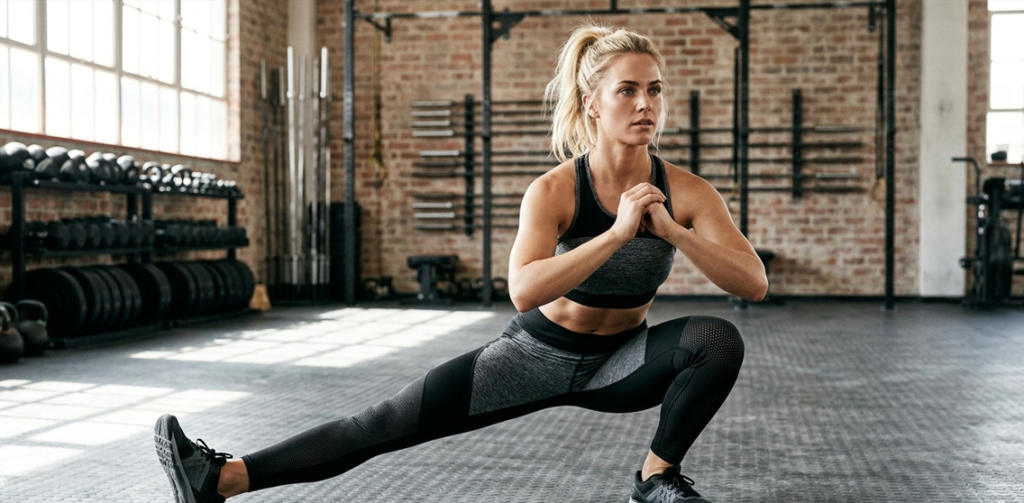
The Cossack Squat is a dynamic side-to-side squat that targets your inner thighs (adductors), hips, and groin while challenging your ankle mobility. Think of it as a deep, flowing dance move, part stretch, part strength-builder that teaches your body how to move through a full range of motion rather than getting stuck in a rigid squat position. Unlike traditional glute stretches that only target the rear, the Cossack Squat opens up your entire lower body laterally, making it a superior choice for balanced mobility.
Key Benefits 🌟
-
Boosts Hip Flexibility 🦩 – Dramatically improves flexibility in the groin, hips, and lower back, making everyday movements like bending down or stepping over objects feel effortless.
-
Strengthens through Full Range 💪 – Unlike static stretches, the Cossack Squat builds active flexibility and control, reducing injury risk during sports or sudden lateral moves.
-
Improves Ankle Mobility 👟 – The deep shift from side to side loosens stiff ankles, which is a hidden game-changer for deeper squats and pain-free running.
-
Mental Focus & Flow 🧠 – Requires balance and coordination, offering a meditative “flow state” as you rhythmically shift weight. Great for breaking up long sitting sessions.
Step-by-Step Instructions 📝
-
Start Wide – Stand with your feet 2–3 times shoulder-width apart, toes pointed slightly outward (like a sumo stance).
-
Shift & Sit – Shift all your weight onto your right leg. Bend your right knee deeply, sitting your hips back while keeping your left leg completely straight with the heel on the floor.
-
Find the “Floor Reach” – Imagine you’re sweeping the floor with your hand. Lower your torso toward your bent knee, keeping your chest up. Your straight leg’s inner thigh should feel a strong stretch.
-
Push & Flow – Push through your bent heel to rise slightly, then smoothly shift your weight to the left leg, repeating the motion on the other side.
-
Repeat – Continue flowing side to side for 30–60 seconds.
Modifications 🔄
| Level | Adjustment |
|---|---|
| Beginner | Place a yoga block or pillow under your sitting hip. Hold onto a chair or doorframe for balance. Keep the squat shallow (thigh parallel to the ground). |
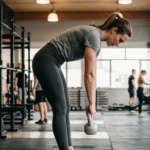
| Advanced | Hold a goblet squat weight (dumbbell or kettlebell) at your chest. Pause for 3 seconds at the bottom. Lift your straight leg’s heel off the floor. |
Quick Reference Table
| Category | Details |
|---|---|
| Muscle Groups Worked 🧬 | Primary: Adductors (inner thighs), Gluteus medius, Hip flexors. Secondary: Quads, Ankles, Core stabilizers. |
| Difficulty Level 📊 | Intermediate (Beginner-friendly with modifications) |
⚠️ Safety Tricks & Common Mistakes
🟢 Safety Tricks (Do This!)
-
Warm up first – 5 minutes of light walking or leg swings before attempting deep Cossack Squats.
-
Keep your heel planted on the straight leg – lifting it strains the knee ligaments.
-
Use a “touch and go” approach – Never bounce or force the stretch. Gently sink into it like settling into a warm bath.
-
Shorten your stance if you feel sharp groin pain – wider is not always better for tight bodies.
🔴 Common Mistakes (Avoid!)
-
Rounding the lower back leads to disc pressure. Keep your chest proud and spine neutral.
-
Letting the bent knee collapse inward – This torques the knee joint. Drive your bent knee outward toward your pinky toe.
-
Rushing the shift – Jerky movements cause muscle pulls. Slow down until you feel controlled flexibility, not momentum.
-
Holding your breath – Deprives muscles of oxygen. Exhale as you sink, inhale as you rise.
❓FAQs
1. 🆚 Cossack squat vs side lunge: What is the difference?
Great question! A side lunge is a strength move where you step into the lunge and return to center. A Cossack squat keeps both feet planted on the ground as you shift weight side to side. Think of the side lunge as a “step-and-return” and the Cossack squat as a “flowing shift.” Cossacks demand more flexibility and ankle mobility, while side lunges are more beginner-friendly for building lateral strength.
2. 🦵 Why does my knee hurt when doing Cossack squats?
Knee pain usually comes from one of three things:
-
Your bent knee is caving inward → Fix: Actively push your bent knee outward toward your pinky toe.
-
Your stance is too wide → Fix: Bring your feet in by 4–6 inches.
-
You’re dropping too fast → Fix: Control the descent like a slow elevator.
👉 Safety trick: Never let your bent knee travel past your toes. Keep your shin as vertical as possible.
3. 🏋️ What is a goblet Cossack squat?
A goblet Cossack squat is the advanced version, where you hold a single dumbbell or kettlebell at your chest (like holding a goblet). The added weight:
-
Increases strength demand on your quads and glutes
-
Acts as a counterbalance, making the deep stretch feel more stable
-
Builds core engagement
Pro tip: Start with just 5–10 lbs. Too much weight too soon kills the flexibility benefit.
4. 🔄 How many Cossack squats should I do per day?
For mobility & flexibility (not strength):
-
Beginners: 5–8 slow reps per side (1–2 sets)
-
Intermediate: 10–12 reps per side (2–3 sets)
-
Advanced: 15 reps + 3-second pause at bottom (3 sets)
Best used as: Warm-up (before leg day), cool-down stretch, or active recovery on rest days. Avoid maxing out daily 3–4 times per week is plenty.
5. 🧘 Can’t get deep in a Cossack squat, am I broken?
Not at all! Most people can’t touch the floor on day one. Think of it like learning to do the splits; it takes weeks or months. Try these fast fixes:
-
Elevate your heel on a small book (improves ankle flexibility)
-
Hold a doorframe with both hands
-
Only go as deep as feels like a “strong stretch,” not sharp pain
Remember: Shallow and controlled > deep and wobbly.
6. 👴 Are Cossack squats safe for bad knees or older adults?
Yes, with modifications. If you have knee arthritis, meniscus tears, or chronic pain:
-
✅ Use a chair for support
-
✅ Keep the movement very shallow (30–45 degree knee bend)
-
✅ Place a yoga block under your sitting hip as a “depth limiter”
-
❌ Never do them on a cold morning, warm up with seated leg lifts first
When in doubt: Ask a physical therapist. For healthy knees, Cossacks actually protect them by strengthening stabilizer muscles.
7. ⚡ How to do jump squats and why pair them with Cossack squats?
How to do jump squats correctly:
-
Start in a regular squat position (feet shoulder-width apart).
-
Lower your hips back and down like you’re sitting into a chair.
-
Explosively jump upward, driving through your entire foot.
-
Land softly with bent knees to absorb impact.
-
Immediately sink into the next squat and repeat.
Why pair them?
-
Cossack Squats build lateral flexibility and hip opening.
-
Jump squats build vertical power and explosive strength.
-
Together, they create a complete lower-body routine: mobility + power.
Sample combo: 8 Cossack Squats (slow & controlled) → 10 Jump Squats (explosive) → Rest 60 seconds. Repeat 3 rounds.
8. 🍑 What are the best glute stretches to pair with Cossack squats?
Since Cossack Squats already work your glute medius (side glutes), add these glute stretches for a full posterior chain release:
| Stretch | How to do it | Best for |
|---|---|---|
| Pigeon Pose 🕊️ | Bring one knee forward behind your wrist, extend the other leg back. Sink hips down. | Deep glute max stretch |
| Figure-Four Stretch 🔟 | Lie on back, cross one ankle over the opposite knee. Pull the bottom leg toward your chest. | Tight piriformis & lower back |
| Lying Glute Bridge Hold 🌉 | Lift hips toward ceiling and hold for 20 seconds. | Active glute activation before Cossacks |
Pro tip: Do these after Cossack Squats as a cool-down, not before. Cold glutes don’t stretch well.
Final Pro Tip 🎯: Practice your Cossack squat next to a low table or couch. It mentally reassures you that a “safety seat” is nearby, which paradoxically increases flexibility because your nervous system relaxes. Then, once you’ve mastered the flow, add how to do jump squats on alternating days to build explosive power without sacrificing mobility.