Ever feel like your body is stuck in “forward-fold mode” after a long day of sitting? The Scorpion Stretch is your ultimate reset button, a powerful, feel-good move that cracks open a tight chest, unlocks stiff hips, and gives your hard-working lower back some serious relief. This isn’t just another stretch; it’s a full-body twist that works like a chiropractic tune-up, counteracting all that hunching and slouching we do, leaving you feeling longer, looser, and more flexible than ever before. For best results, always pair it with a gentle warm-up like Cat-Cow Stretch to prepare your spine for the deep rotation ahead.
🏆 Key Benefits of the Scorpion Stretch
Adding this dynamic stretch to your routine is a game-changer. Here’s why you will love it:
-
🦵 Deep Hip Flexor Release: It’s the ultimate antidote to “sitting disease,” targeting and stretching the hip flexors that get painfully short and tight from too much desk time.
-
🧘♂️ Spinal Mobility & Flexibility: This move promotes flexibility and health in your spine through a gentle, controlled twist, helping you move with more ease and less stiffness.
-
💪 Full Front-Body Opening: It’s a one-stop shop for counteracting a hunched posture by stretching the chest, shoulders, and abdominals while also working the glutes and lower back.
-
🧠 Posture Correction & Mind-Body Connection: By forcing you to slow down and breathe, it improves body awareness and helps rebalance your entire frame, boosting overall flexibility and coordination.
-
🔥 Relieve Sciatic Nerve Tension: This stretch can help alleviate mild sciatica discomfort by opening up the hip and glute areas, reducing pressure on the sciatic nerve.
🗺️ Step-by-Step Instructions for Perfect Form
Ready to feel the sting? Follow these steps to nail the perfect Scorpion Stretch.
-
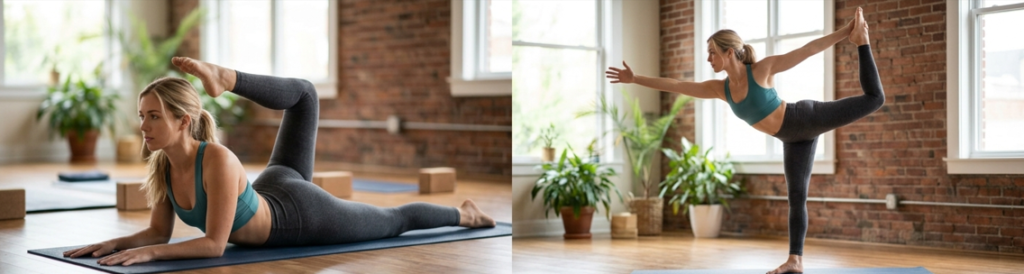
Starting Position: Lie face down on your mat with your legs extended long. Extend your arms straight out to your sides in a “T” position, with your palms pressing firmly into the floor.
-
The Lift: Bend your left knee to a 90-degree angle, bringing your foot toward your glute.
-
The Twist: Engage your core and lift your left knee off the floor. Slowly rotate your hip and bring your bent leg across your body, reaching your left foot toward your right hand.
-
The Stretch: Keep both shoulders and palms planted on the mat as you twist. Go only as far as feels comfortable. You should feel a deep stretch along your chest, shoulder, and hip.
-
Hold & Breathe: Hold the position for five deep, even breaths. Focus on breathing into the space you are creating.
-
Release & Repeat: Gently unwind and return to the starting position. Repeat on the other side to complete the set.
➡️ Modifications to Suit Your Flexibility
-
🧘♀️ For Beginners: Don’t worry if your foot doesn’t touch the floor! Keep your toes near the opposite knee and focus on maintaining the shoulder position. Place a blanket under your forehead to keep your neck neutral.
-
🏋️♂️ For Advanced: Want to intensify? Try to reach your foot all the way to your opposite hand. You can also plant the hand on the same side as your lifted leg and press into it to spiral your chest open further for a deeper twist and advanced flexibility challenge.
🧠 Quick Reference Table
| Muscle Groups Worked | Difficulty Level |
|---|---|
| Primary: Hip Flexors, Glutes, Lower Back, Chest, Shoulders | Intermediate |
| Secondary: Quads, Abdominals, Obliques, Mid-Back Muscles | (Accessible to all with modifications) |
🚨 Common Mistakes & Safety Tips
Avoid these common errors to get the most out of your stretch and stay safe.
❌ Common Mistakes
-
Rushing the Movement: Moving too quickly into the twist without proper alignment is a recipe for injury. Slow and steady win this race.
-
Cranking Your Neck: Lifting your head or twisting your neck to “see” your foot misaligns your spine. Keep your head resting comfortably or aligned with your body.
-
Forcing the Range of Motion: Pushing your foot to the floor when your hips aren’t ready can compress the lower back. Let the stretch be a sensation of opening, not pain.
🛡️ Safety Tips
-
Warm Up First: Never do this cold! Incorporate it at the end of a workout when your joints are lubricated and your muscles are warm.
-
Core Engagement: Keep your core muscles engaged to protect your lower back and spine throughout the movement.
-
Listen to Your Body: If you feel any sharp pain, or compression in your lower back or SI joint, back off immediately.
-
Know When to Skip: Avoid this stretch if you have a back, shoulder, or hip injury, hypermobility in the spine, or are recovering from abdominal surgery. Consult a doctor if unsure.
❓FAQs About Scorpion Stretch
1. Is the Scorpion Stretch bad for your back?
Not if done correctly! When performed with proper form and core engagement, it’s actually beneficial for spinal health. However, forcing the twist or having existing back issues can cause strain. Always listen to your body and never push into pain.
2. Can beginners do the Scorpion Stretch?
Absolutely! Beginners should focus on the modified version, keeping the bent knee closer to the opposite knee rather than reaching for the hand. The goal is the stretch sensation, not how far you can go.
3. How often should I do the Scorpion Stretch?
You can do it daily as part of your cool-down routine. For best results, aim for 2-3 sets on each side, holding for 30 seconds to 1 minute per side. Consistency beats intensity!
4. What’s the difference between Scorpion Stretch and Scorpion Pose in yoga?
Great question! While both involve a similar twisting motion, Scorpion Stretch is typically done lying face down (prone) on the floor. Scorpion Pose (Vrschikasana) in yoga is an advanced inversion where you’re balancing on your forearms with legs arched overhead a completely different beast!
5. Does Scorpion Stretch help with lower back pain?
Yes! It can be incredibly relieving for mild lower back tension by stretching the glutes, hip flexors, and spinal muscles. However, if you have chronic or severe back pain, consult a healthcare professional before trying it.
6. Should I feel it in my shoulders too?
Definitely! The scorpion stretching motion opens the chest and shoulders as you twist, so a gentle pull in the front of your shoulder is normal. If you feel sharp pain in the shoulder joint, ease off the stretch.
7. Can I do the Scorpion Stretch during pregnancy?
Generally, it’s not recommended during pregnancy, especially in the second and third trimesters, due to the deep twist on the abdomen. Always consult your healthcare provider first.
8. How long should I hold the Scorpion Stretch?
Hold for 30-60 seconds per side, or 5-8 deep breaths. This allows your muscles enough time to release and lengthen safely.
9. What if my shoulders lift off the mat?
That’s a sign you’re pushing too far! The goal is to keep both shoulders grounded. Reduce the range of motion until you can maintain that shoulder connection.
10. Is Scorpion Stretch good for runners?
Absolutely! Runners often have tight hip flexors and glutes. This stretch is a fantastic post-run cool-down move to restore flexibility and prevent stiffness.
⚡ Quick Tip
To get the most out of your Scorpion Stretch, think of it as a mindful dance rather than a competition with your body. Start each session with 5-10 minutes of gentle warm-up like cat-cow stretches or light cardio to get your blood flowing and joints lubricated. As you twist, let your breath guide you: inhale to create space in your spine, exhale to gently sink deeper into the rotation, and never force the movement beyond what feels like a pleasant opening. Remember that consistency trumps intensity; doing this stretch daily for just 60 seconds per side will yield better results than one intense session per week. Finally, visualize your spine as a spiral staircase, twisting gradually from the base to the top, which helps distribute the rotation evenly and protects your lower back from unnecessary compression.