
Praying Stretch
Relieve Tight Shoulders in 30 Seconds
Like hitting the ‘reset button’ for your upper body, this stretch melts away tension in your shoulders, upper back, and arms.
This stretch (also called Reverse Prayer Pose) focuses on your shoulder rotators, upper back muscles, and forearm flexors perfect for counteracting computer hunch or weightlifting tightness.
If you’ve ever finished a long day of typing, gaming, or lifting with tight wrists, stiff shoulders, or a burning sensation in your forearms, the praying stretch is your solution. This simple yet powerful movement targets multiple tight areas simultaneously – releasing tension in the wrists, forearms, shoulders, and upper back in one fluid motion.
Unlike single-joint stretches, the praying stretch works with the natural connections of your upper body. When you bring your palms together behind your back, you’re not just stretching your wrists – you’re externally rotating your shoulders, opening your chest, and lengthening the muscles that shorten from hours of forward posture. This makes it one of the most efficient stretches for anyone who spends time at a desk, behind a wheel, or under a barbell.
Regular practice of the praying stretch also prepares your upper body for more demanding movements. Flexible wrists and shoulders improve your form during push exercises, wall push-ups, and chest workouts at home. For a complete upper body routine, combine this stretch with forearm stretching exercises and upper trap stretch to address tension from multiple angles.
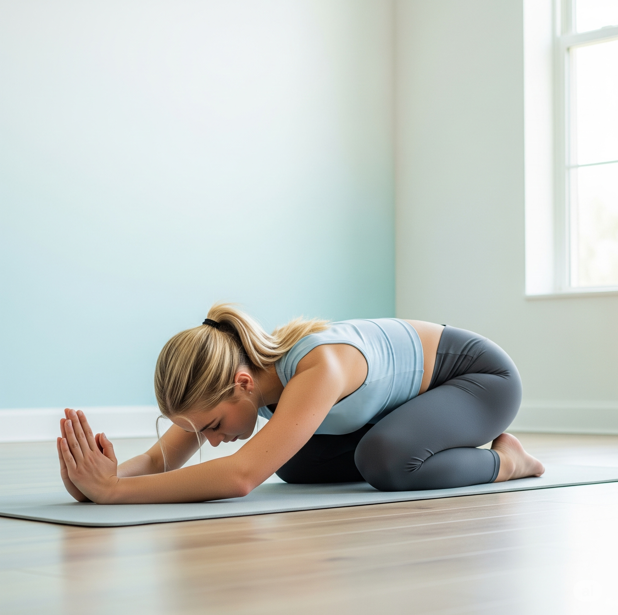
Praying Stretches
💪 Key Benefits of Calf Stretches
✅ Relieves shoulder stiffness from desk work or driving
✅ Improves flexibility for overhead movements
✅ Opens tight chest muscles to improve posture
✅ Reduces wrist and forearm tension from typing
✅ Calms the mind through mindful breathing
✅ Enhances Wrist Mobility – Essential for activities like kettlebell workouts, push exercises, and wall push-ups
✅ Prevents Carpal Tunnel Syndrome – Regular stretching reduces compression on the median nerve
✅ Improves Shoulder External Rotation – Counteracts the internal rotation caused by desk work and weightlifting
✅ Supports Upper Back Posture – Allows scapular retractions and rhomboid muscle stretch to work more effectively
✅ Reduces Elbow Strain – Releases tension in muscles that attach to the medial epicondyle (golfer’s elbow)
🧠 Anatomy Deep Dive: The Muscles of the Praying Stretch
The praying stretch targets a complex chain of muscles that connect the wrists to the shoulders:
| Muscle Group | Location | Function | Why It Gets Tight |
|---|---|---|---|
| Wrist Flexors | Inner forearm | Bend wrist forward; control grip | Typing, gripping, phone use |
| Wrist Extensors | Outer forearm | Bend wrist backward; open hand | Mouse use, weightlifting |
| Pronator Teres | Inner elbow area | Rotates forearm palm-down | Desk work, repetitive rotation |
| Pectoralis Minor | Upper chest | Connects ribs to shoulder blade | Forward hunch, shallow breathing |
| Anterior Deltoid | Front shoulder | Lifts arm forward | Overdeveloped from pressing movements |
| Subscapularis | Rotator cuff | Internally rotates shoulder | Poor posture, lack of external rotation work |
🧠 Muscles Worked in the Praying Stretch
The praying stretch targets several important muscles in the wrists, forearms, shoulders, and upper back. These include:
Wrist Flexors & Extensors – muscles that control wrist movement and grip strength
Pronator Teres – the muscle near the inner elbow that rotates the forearm palm-down
Pectoralis Minor & Major – chest muscles that shorten from forward posture
Anterior Deltoid – the front shoulder muscle, gently stretched during the movement
Subscapularis – a rotator cuff muscle responsible for shoulder internal rotation
Upper Trapezius – the muscle running from neck to shoulders, released as shoulders open
If your wrists or shoulders feel tight, you can also include wrist exercises, forearm stretching exercises, and doorway stretch before or after to release tension and improve overall upper body mobility.
👥 Who Should Do the Praying Stretch
This stretch is ideal for:
Desk workers and remote professionals – counteracts the “computer hunch” posture
Weightlifters and gym-goers – balances internal rotation from pressing movements
Smartphone users and gamers – releases wrist and forearm tension
Yoga practitioners – prepares wrists and shoulders for weight-bearing poses
Rock climbers and gymnasts – maintains flexibility in overworked forearms and shoulders
Runners and cyclists – releases upper body tension that affects arm swing
Musicians – guitarists, pianists, and string players benefit from flexible wrists
Older adults – maintains shoulder and wrist mobility for daily activities
Anyone recovering from wrist strain or shoulder tightness – gentle stretching restores mobility
Anyone with poor posture – essential for opening the chest and shoulders
It works especially well when combined with stretches like arm stretches, triceps stretches, and upper trap stretch for complete upper body mobility.
How To Perform the Prayer Stretch 📝
Start Standing
- Feet hip-width apart, spine tall
Position Arms
- Bring palms together behind your back
- Fingers pointing downward
Keep palms pressed firmly together
Rotate Hands
- Slowly flip fingers upward toward the shoulder blades
- Keep palms pressed together
Move only as far as comfortable
Lift and Hold
- Gently raise hands as high as comfortable
- Hold for 15-30 seconds while breathing deeply
Feel the stretch across wrists, forearms, shoulders, and chest
Modifications:
- Beginner: Use a strap between hands if you can’t bring palms together
- Advanced: Add ankle circles while rolling for extra mobility.
Quick Reference Table
| Stretch Variation | Muscles Worked | Difficulty Level |
|---|---|---|
| Standard Praying Stretch | Wrist flexors, wrist extensors, pronator teres, anterior deltoid, pectoralis minor, subscapularis, upper trapezius | Intermediate |
| Seated Praying Stretch | Wrist flexors, wrist extensors, pronator teres, anterior deltoid, pectoralis minor, subscapularis | Beginner to Intermediate |
| Praying Stretch with Strap | Wrist flexors, wrist extensors, shoulder rotators | Beginner |
| Advanced Praying Stretch | Wrist flexors, wrist extensors, pronator teres, pectoralis major/minor, anterior deltoid, subscapularis, rhomboids | Advanced |
Safety Tricks 🛡️
✔ Warm up wrists first – Gentle circles for 10-15 seconds before the stretch
✔ Keep chest open and proud – Prevents shoulder rounding during the movement
✔ Use a mirror to check your form – Ensures shoulders are level and spine tall
✔ Move slowly – Never force the hands higher; let gravity and breath guide you
✔ Breathe deeply – Exhale as you lift; oxygen helps muscles relax
✔ Stop if sharp pain occurs – Mild tension is normal; sharp pain is a stop signal
❌ Avoid These Mistakes
✖ Forcing hands too high – Go gradually; flexibility builds over time
✖ Rounding shoulders forward – Keep chest open; the stretch should open, not collapse
✖ Holding your breath – Breathe deeply to relax into the stretch
✖ Rushing the movement – Slow, controlled rotation protects the wrists
✖ Locking elbows – Keep a slight bend to avoid joint strain
✖ Skipping warm-up – Cold wrists are more prone to strain
FAQ
How often should I do the praying stretch?
For best results, aim for 2-3 times daily, especially if you type, game, or lift weights. Hold each stretch for 15-30 seconds. Incorporate into your 5-minute daily stretching routine for consistency and long-term flexibility gains.
Can the praying stretch help with carpal tunnel syndrome?
Yes. Gentle stretching of the wrist flexors reduces pressure on the median nerve. Combine with wrist exercises, wrist flexor stretch, and forearm stretching exercises for a complete wrist and hand mobility routine.
Why do my shoulders feel tight during this stretch?
The praying stretch requires shoulder external rotation – a movement that’s often limited in people with desk jobs or those who do a lot of pressing exercises. This tightness is normal initially. With consistency, your shoulders will gradually open. For additional shoulder work, explore rotator cuff exercises and scapular retractions.
Is the praying stretch safe for tennis elbow?
Yes, when performed gently. The stretch targets the wrist flexors and pronator teres, which are involved in tennis elbow. Avoid forcing the movement. For comprehensive recovery, combine with forearm stretching exercises and upper trap stretch to address contributing tension.
Can this stretch improve my posture?
Absolutely. The praying stretch opens the chest and externally rotates the shoulders – directly counteracting the rounded posture caused by sitting and screen time. It allows chin tuck stretch and scapular retractions to work more effectively for complete posture correction.
Quick Tip:
Pair with chest-opening stretches for complete upper body flexibility!